On Sunday 1 November 2026 at 1:02 pm French time (12:02 pm in the UK), 116 skippers will set sail from Saint-Malo for the Route du Rhum 2026, the 13th edition of the Route du Rhum-Destination Guadeloupe. Their goal: to reach Pointe-à-Pitre single-handed, non-stop and unassisted, after a crossing of more than 3,500 nautical miles of the Atlantic. Held every four years since 1978, France’s most famous transatlantic race brings together giant trimarans, IMOCA monohulls from the Vendée Globe (the solo non-stop round-the-world race) and amateur boats on the same start line. Who the favourites are, which route to take between north and south, how long the crossing will last: here is how to make sense of the 2026 edition.
Summary
- 1. The Route du Rhum 2026 in key figures
- 2. A race like no other
- 3. The 6 boat classes
- Ultim, the giants of the sea
- Ocean Fifty, close combat
- IMOCA, the Vendée Globe boats
- Class40, the largest fleet
- Vintage Multi and Vintage Mono, the memory of the race
- 4. The course, from Saint-Malo to Pointe-à-Pitre
- 5. Records and great moments
- 6. Notable events in the race's history
- 1986, the disappearance of Loïc Caradec
- 2002, the edition of heavy damage
- 2022, a postponed start and a series of capsizes
- 7. The favourites for the 2026 edition
- 8. How to follow the Route du Rhum 2026?
- 9. Frequently asked questions
The Route du Rhum 2026 in key figures
| Edition | 13th |
| Start | Sunday 1 November 2026, 1:02 pm French time (12:02 pm UK), Saint-Malo |
| Finish | Pointe-à-Pitre, Guadeloupe |
| Distance | 3,542 nautical miles, around 6,560 km |
| Format | Single-handed, non-stop and unassisted |
| Skippers entered | 116 |
| Classes | 6 |
| Frequency | Every 4 years, since 1978 |
| Record | 6 d 19 h 47 min 25 s (Charles Caudrelier, 2022) |
Source: official website of the Route du Rhum-Destination Guadeloupe, as of 6 October 2026.
A race like no other
Single-handed and unassisted
Each skipper sails alone for the entire crossing. They helm, trim the sails, manage the weather, repair damage and sleep in snatches of a few dozen minutes. No outside help is allowed at sea, except for weather routing from shore, which is reserved for the Ultims. A technical stopover is still possible, but it costs precious hours.
Monohulls and multihulls on the same start line
No other major solo transatlantic race sends off, at the same time and on the same course, 32-metre trimarans capable of exceeding 40 knots and 12-metre monohulls sailed by amateurs. Each class has its own ranking, and the last Vintage boats can still be at sea two weeks after the first Ultim has finished.
Why the ‘Rhum’?
The race was created in 1978 by Michel Etevenon, in response to the rules of the OSTAR, the single-handed transatlantic race from Plymouth, which had just capped the size of boats allowed to enter. The name pays tribute to the historic rum trade route between the French West Indies and mainland France, and the finish in Guadeloupe anchors the race in that history.
The 6 boat classes
| Class | Type | Length | Entries | Class record |
| Ultim | Foiling trimaran | 32 m | 8 | 6 d 19 h 47 min (Charles Caudrelier, 2022) |
| Ocean Fifty | Trimaran | 15.24 m | 11 | 10 d 21 h 35 min (Erwan Le Roux, 2022) |
| IMOCA | Monohull | 18.28 m | 22 | 11 d 17 h 36 min (Thomas Ruyant, 2022) |
| Class40 | Monohull | 12.19 m | 49 | 14 d 3 h 8 min (Yoann Richomme, 2022) |
| Vintage Multi | Multihull | Variable | 13 | First edition under this name |
| Vintage Mono | Monohull | Variable | 13 | First edition under this name |
Source: official entry list as of 6 October 2026 and official results of the Route du Rhum-Destination Guadeloupe.
Ultim, the giants of the sea
The largest and fastest offshore racing boats in the world. These 32-metre trimarans literally fly above the water thanks to their foils, lifting appendages that raise the hulls to reduce drag. They can exceed 40 knots at top speed and aim for overall victory. In 2022, Charles Caudrelier completed the course at an average of more than 21 knots, a record that illustrates the class’s technological leap.
Alone on board, the skipper can spend long minutes on a single manoeuvre, and the slightest mistake can lead to a capsize. Skippers rely on an onshore routing team that helps them choose the best weather route. Eight trimarans will be on the start line in 2026, including Charles Caudrelier’s new Maxi Edmond de Rothschild.
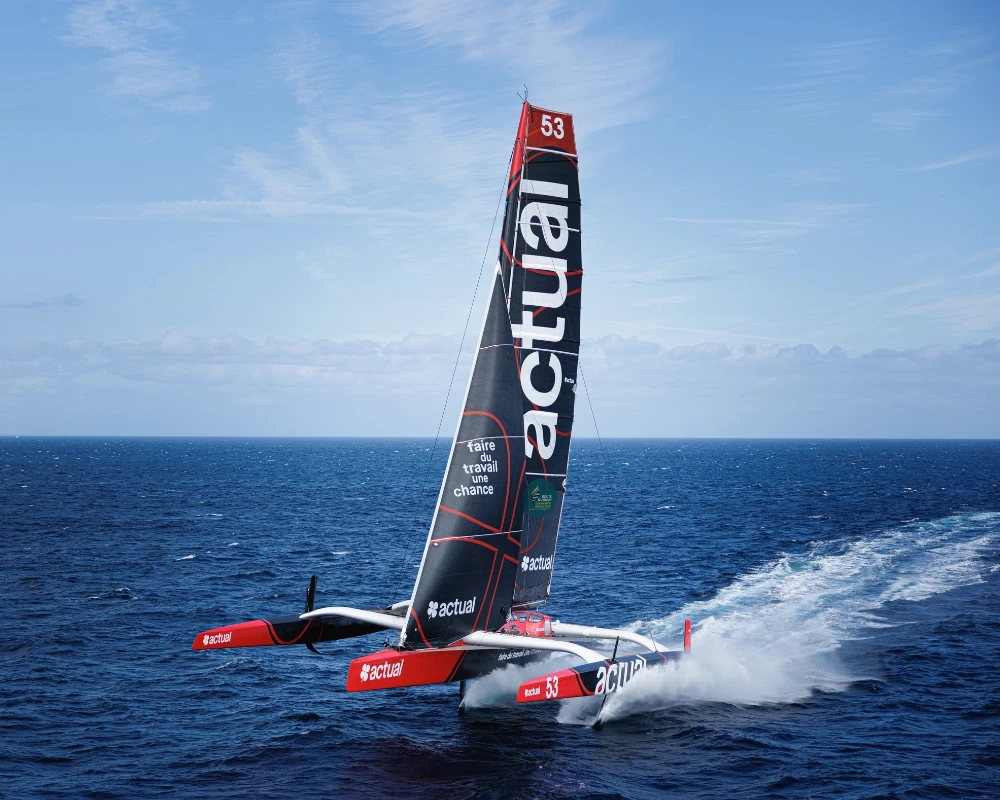 Ultim trimaran (Source: Ronan Gladu)
Ocean Fifty, close combat
Successors to the Multi50s, Ocean Fiftys are 50-foot trimarans, or 15.24 metres. More compact and more affordable than the Ultims, they remain extremely fast and demanding. In 2022, the winner even finished almost a day ahead of the first IMOCA, proof of their potential on this downwind course.
Their tightly controlled rule ensures boats with similar performance, which makes for highly tactical racing. In 2022, Erwan Le Roux snatched victory from Quentin Vlamynck in the last 100 miles, with a lead of just 18 minutes after almost 11 days of racing. The downside of their speed: greater exposure to capsizing, as Thibaut Vauchel-Camus’s misadventure showed the same year. There will be 11 of them on the start line in 2026.
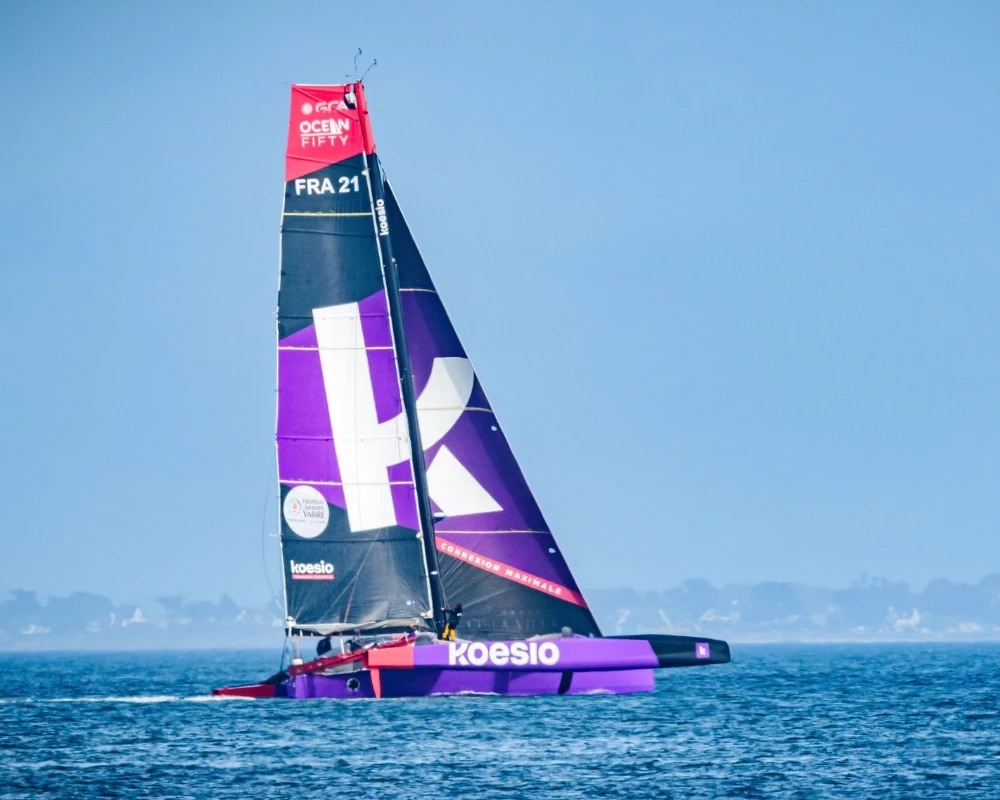 Ocean Fifty trimaran (Source: Wikimedia Commons/Stephan Sprinz)
IMOCA, the Vendée Globe boats
60-foot monohulls, or 18.28 metres, designed for solo round-the-world racing. Most recent boats are fitted with foils that partially lift them out of the water, allowing them to reach speeds once reserved for multihulls. In 2022, Thomas Ruyant won at an average of more than 12 knots after a close duel with Charlie Dalin.
For the class, the Route du Rhum is a key event: it is one of the qualifying races for the next Vendée Globe and a chance to test boats and sailors in real conditions. The 2026 fleet will bring together 22 skippers, combining seasoned favourites such as Jérémie Beyou, Sam Goodchild and Thomas Ruyant with newcomers discovering single-handed sailing at the highest level.
Class40, the largest fleet
With 49 boats, it is the best-represented class. These 12.19-metre monohulls follow a rule designed to keep costs down, which opens the race to amateurs and professionals alike. As the boats are close in performance, the gaps are made mainly through strategy, endurance and the ability to push the boat hard day and night.
Class40 is also the class of human stories: sailors from the French West Indies or the Pacific, business owners fulfilling a lifelong dream, young talents cutting their teeth before aiming higher. Its skippers like to describe it as their Olympic Games. With Yoann Richomme, two-time winner and class record holder, absent, the 2026 edition looks wide open.
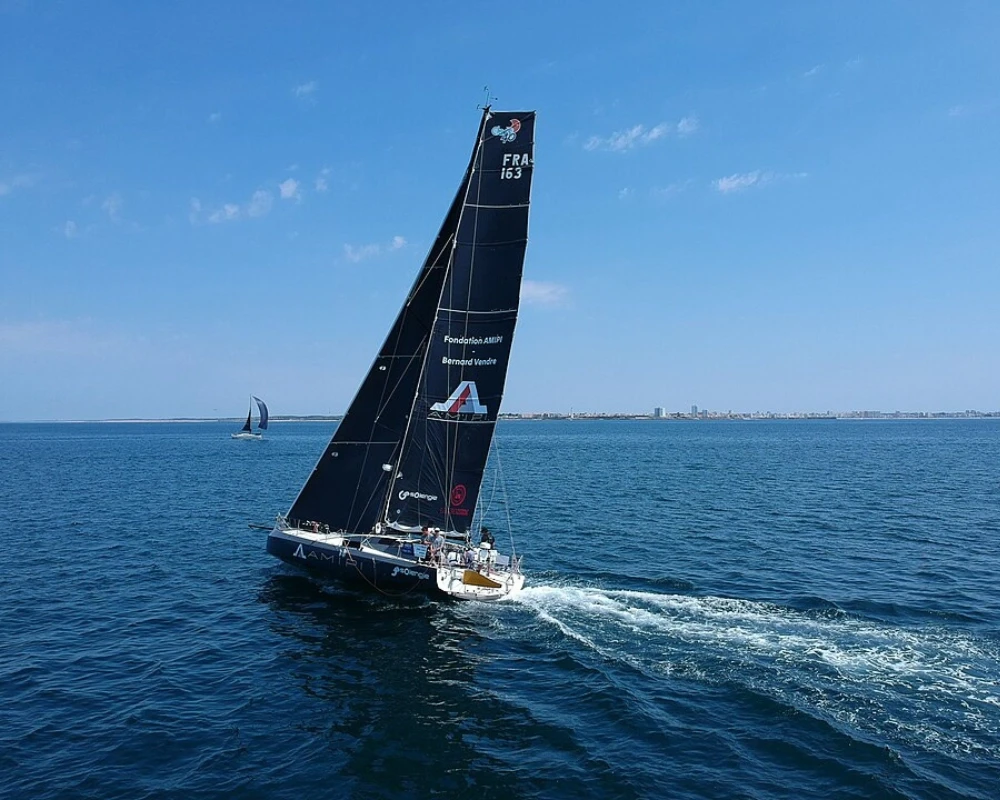 Class40 monohull sailing boat (Source: Wikimedia Commons/Baptiste Hulin)
Vintage Multi and Vintage Mono, the race’s living history
Successors to the former Rhum Multi and Rhum Mono categories, these two classes welcome boats that do not fit the other rules, including some that have made the race’s history. Former racing multihulls, legendary monohulls or boats built to the designs of past winners, they often have several decades of sailing behind them.
These classes attract passionate amateur sailors as well as big names in sailing returning to the adventure. In 2026, Francis Joyon, winner of the 2018 edition, will race in Vintage Multi, while Jean Le Cam, an iconic figure of the Vendée Globe, will race in Vintage Mono. With 13 multihulls and 13 monohulls on the start line, these two fleets account for almost a quarter of the entries.
The course, from Saint-Malo to Pointe-à-Pitre
A direct route, but no set course
Between the old privateer port of Saint-Malo and Guadeloupe, each skipper is free to choose their route. Apart from the exclusion zones set by the race management, the main constraint is to round the island of Basse-Terre before crossing the finish line in Pointe-à-Pitre, a final passage that is often decisive in fickle winds.
Northern or southern route?
The first strategic choice is made as soon as the fleet leaves the English Channel. The direct northern route is the shortest but exposes the boats to November depressions and heavy seas. The longer southern route skirts the Azores high to pick up the trade winds, those steady winds that carry the boats towards the West Indies. The Bay of Biscay, often rough at this time of year, is the first real test: this is where much of the damage occurs.
Race duration by class
It all depends on the class. The fastest Ultims arrive in less than a week, the IMOCAs and Ocean Fiftys in around 11 days, the Class40s in 14 to 16 days, and the last boats in the Vintage classes after three weeks or more at sea.
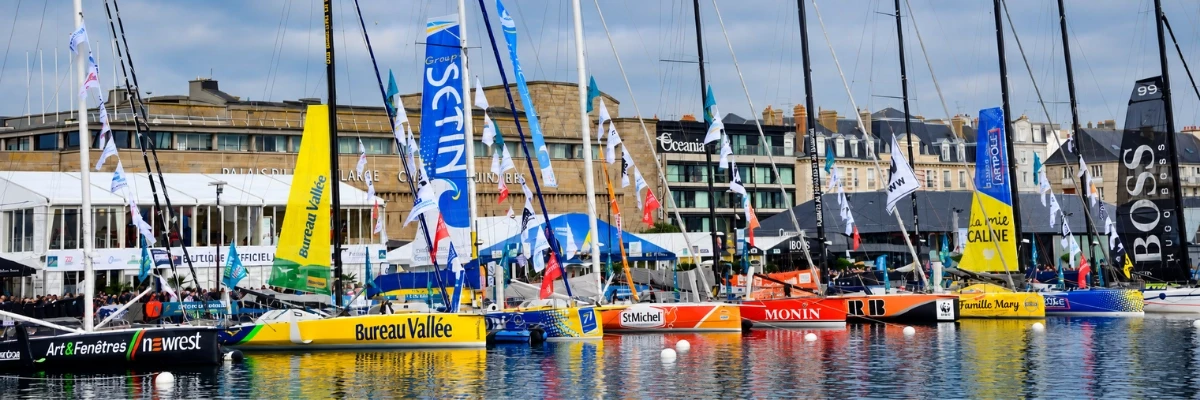
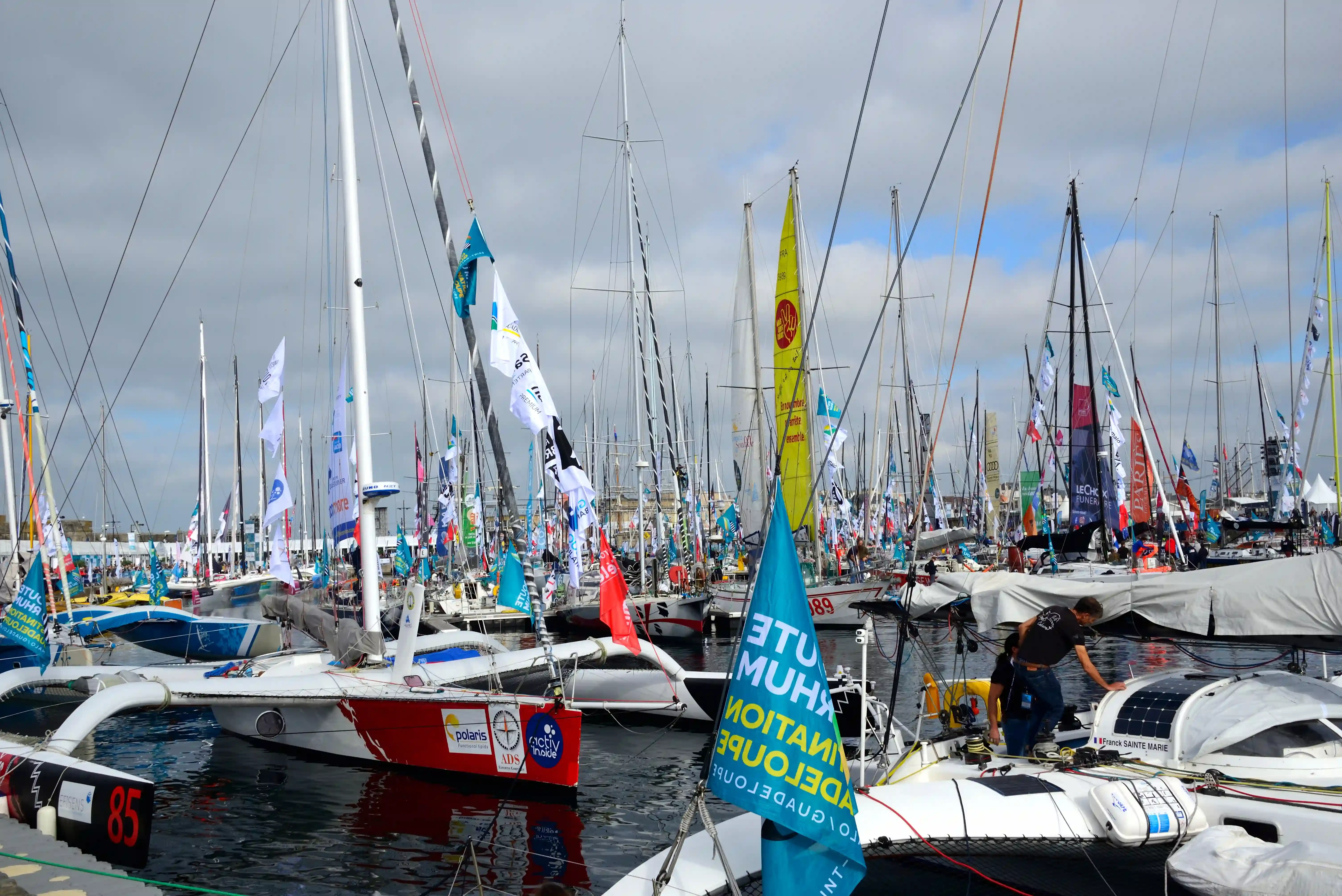 Skippers’ boats in the port of Saint-Malo for the 2018 Route du Rhum (Source: Adobe Stock)
Records and great moments
Route du Rhum winners
Since 1978, overall victory has always gone to a multihull: first with no particular rule, then to the 60-foot trimarans of the ORMA class and finally to the giants of the Ultim class. The race record belongs to Charles Caudrelier, who sailed from Saint-Malo to Pointe-à-Pitre in 6 days, 19 hours, 47 minutes and 25 seconds in 2022. He will return in 2026 to defend his title on a brand-new trimaran. Here are the winners of each edition, the first to reach Pointe-à-Pitre across all classes.
| Edition | Winner | Boat | Category | Race time |
| 1978 | Mike Birch | Olympus Photo | Multihull, no class | 23 d 6 h 58 min |
| 1982 | Marc Pajot | Elf Aquitaine | Multihull, no class | 18 d 1 h 38 min |
| 1986 | Philippe Poupon | Fleury Michon VIII | Multihull, no class | 14 d 15 h 57 min |
| 1990 | Florence Arthaud | Pierre 1er | Multihull, no class | 14 d 10 h 8 min |
| 1994 | Laurent Bourgnon | Primagaz | 60-foot multihull | 14 d 6 h 28 min |
| 1998 | Laurent Bourgnon | Primagaz | ORMA 60 | 12 d 8 h 41 min |
| 2002 | Michel Desjoyeaux | Géant | ORMA 60 | 13 d 7 h 53 min |
| 2006 | Lionel Lemonchois | Gitana 11 | ORMA 60 | 7 d 17 h 19 min |
| 2010 | Franck Cammas | Groupama 3 | Ultim | 9 d 3 h 14 min |
| 2014 | Loïck Peyron | Banque Populaire VII | Ultim | 7 d 15 h 8 min |
| 2018 | Francis Joyon | IDEC Sport | Ultim | 7 d 14 h 21 min |
| 2022 | Charles Caudrelier | Maxi Edmond de Rothschild | Ultim | 6 d 19 h 47 min |
Source: official results of the Route du Rhum-Destination Guadeloupe, 1978 to 2022 editions.
Legends of the Rhum
- 1978, 98 seconds for eternity: after 23 days at sea, Canadian Mike Birch and his little yellow trimaran beat Michel Malinovsky by 98 seconds. The same edition was marred by the disappearance of Alain Colas and his trimaran Manureva.
- 1990, Florence Arthaud: the ‘little sweetheart of the Atlantic’ became the first woman to win the race, a victory that made her an icon of offshore racing.
- 2018, a knife-edge finish: Francis Joyon beat François Gabart by just 7 minutes and 8 seconds, the smallest gap after the 98 seconds of 1978.
Notable events in the race’s history
Beyond the victories, the Route du Rhum has also been shaped by tragedies, editions marked by heavy damage and dramatic twists that recall how tough a solo transatlantic crossing in the middle of November can be.
1986, the disappearance of Loïc Caradec
Eight years after Alain Colas, the race suffered its second tragedy. Depressions followed one another across the Atlantic and hit the fleet hard. Loïc Caradec disappeared at sea with his large catamaran, a tragedy that left a lasting mark on the race’s history. Forty years later, his son Tanguy Caradec will in turn be on the start line in 2026, in Vintage Mono, aboard a 50-foot monohull in the colours of Eurvad. For this experienced amateur sailor, taking part is a way of ‘closing the loop’ and paying tribute to his father.
2002, a war of attrition
A succession of storms in the first few days decimated the multihull fleet: capsizes, dismastings and retirements one after another. Symbol of this extraordinary edition, Michel Desjoyeaux won the multihull category in 13 d 7 h 53 min, barely six hours ahead of the first monohull, Ellen MacArthur’s Kingfisher.
2022, a postponed start and a series of capsizes
Scheduled for 6 November, the start was postponed to 9 November due to dangerous weather. The race was no less eventful:
- in Ocean Fifty, Thibaut Vauchel-Camus capsized while leading the fleet, 240 miles from the Azores;
- in Rhum Multi, Brieuc Maisonneuve also capsized and was rescued by Jean-Pierre Dick, diverted by the race management, who went on to win the Rhum Mono category;
- also in Rhum Multi, the leader Gilles Buekenhout capsized 280 miles from the finish and was picked up by a cargo ship;
- first across the line in Rhum Multi, Roland Jourdain received a 90-minute penalty that handed victory to Loïc Escoffier.
The favourites for the 2026 edition
Ultim: Charles Caudrelier, the title holder, will face Armel Le Cléac’h, who is chasing a first Rhum victory in his fifth participation, Thomas Coville and Tom Laperche.
IMOCA: Jérémie Beyou, 2022 class winner Thomas Ruyant and Britain’s Sam Goodchild are among the favourites in a very strong fleet, where Élodie Bonafous is one of the skippers to watch.
Ocean Fifty: a closely matched fleet that promises, as in 2022, a tight finish.
Class40: with two-time title holder Yoann Richomme absent, the race is wide open.
Vintage: Jean Le Cam will race in Vintage Mono and Francis Joyon, overall winner in 2018, in Vintage Multi.
How to follow the Route du Rhum 2026
The Saint-Malo race village
According to the race organisers, the start village will open on 20 October 2026 over almost 70,000 m² along the quays. Entry is free. Visitors can admire the boats from the quays, meet the skippers and watch the boats pass through the locks, a Rhum ritual. Crowds peak over the start weekend, from 30 October to 1 November.
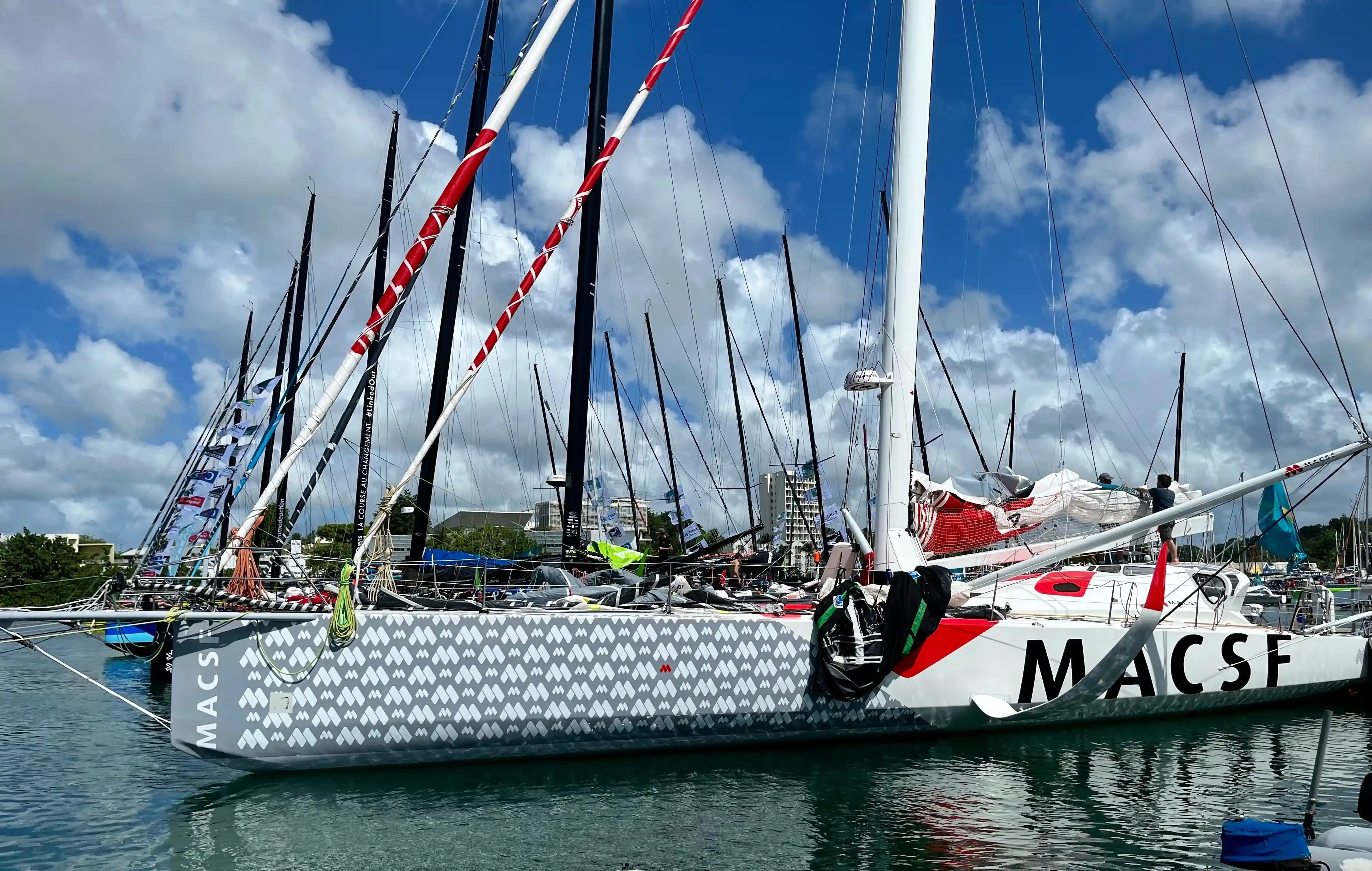 Route du Rhum 2022 boats moored in Guadeloupe (Source: Shutterstock)
Following the race from afar
The official race tracker lets you follow the position of every boat in real time. The start is broadcast live on French television, and daily radio link-ups with the skippers, published on the official race website, keep fans updated throughout the crossing.
The finish in Guadeloupe
For several weeks, Pointe-à-Pitre welcomes the finishers day and night in a festive atmosphere. For those who dream of sailing in turn in the waters where the race reaches its climax, sailing boat hire in the Caribbean makes it possible to reach Les Saintes or Marie-Galante with the trade winds that the skippers chased throughout the crossing.
Frequently asked questions
When does the Route du Rhum 2026 start?
On Sunday 1 November 2026 at 1:02 pm French time (12:02 pm in the UK), from Saint-Malo.
How many skippers are taking part?
116 skippers are entered as of 6 October 2026, across six classes.
What distance do the skippers cover?
3,542 nautical miles, around 6,560 km, on the direct route.
How long does the race last?
From less than 7 days for the fastest Ultims to more than three weeks for some boats in the Vintage classes.
Where does the Route du Rhum finish?
In Pointe-à-Pitre, Guadeloupe, after rounding the island of Basse-Terre.
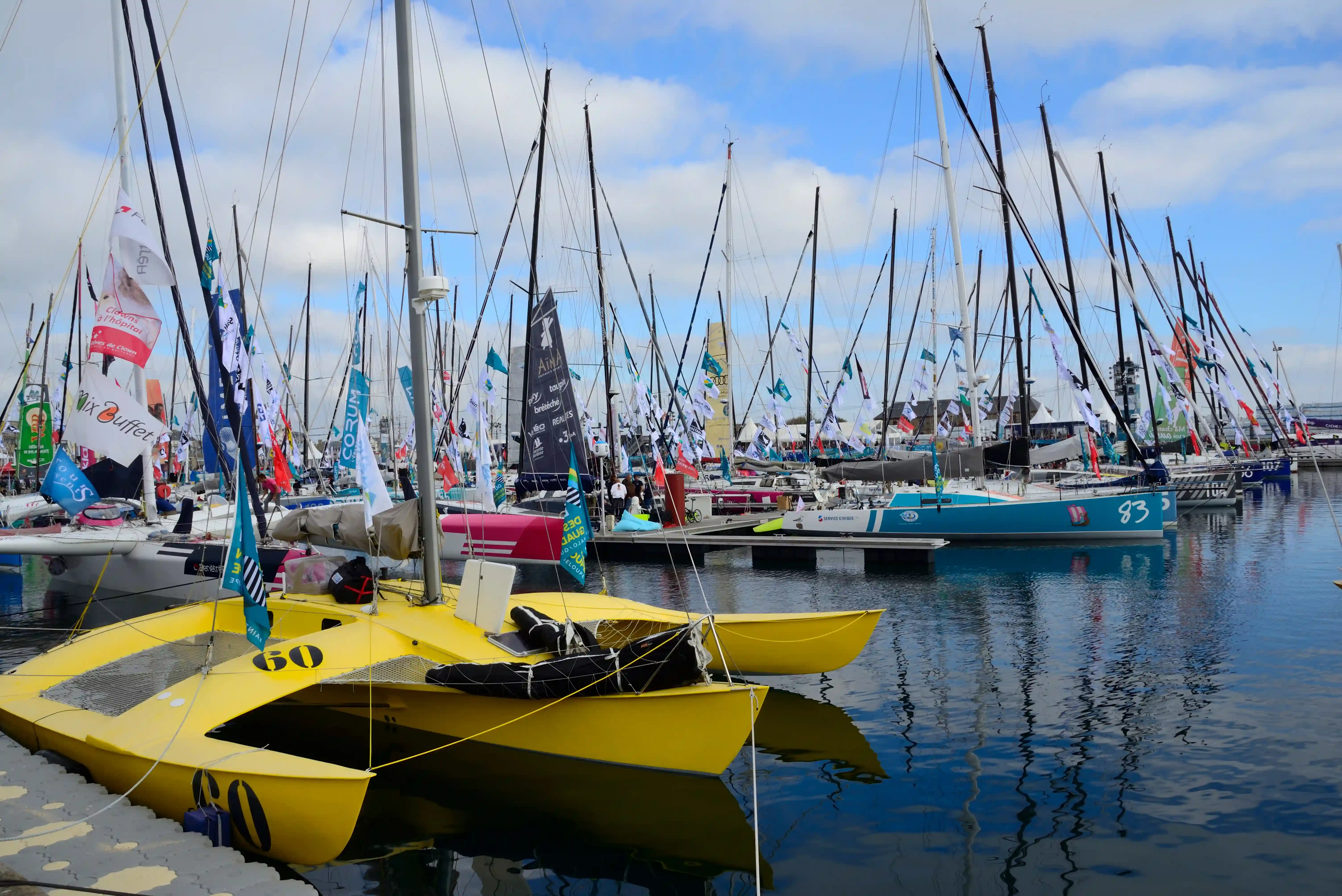 Boats on display before the start in Saint-Malo, 2018 (Source: Adobe Stock)
How often does the Route du Rhum take place?
Every four years. After 2026, the next edition will take place in 2030.
Who holds the Route du Rhum record?
Charles Caudrelier, in 6 days, 19 hours, 47 minutes and 25 seconds, set in 2022.
Can you see the boats up close?
Yes, from the quays of the Saint-Malo village, free and open to all from 20 October 2026. The boats will remain moored there until the start. However, the public cannot go on board: access is reserved for technical teams, skippers and their guests.
Sources
- Route du Rhum-Destination Guadeloupe (2026). Official entry list. routedurhum.com, accessed on 6 October 2026.
- Route du Rhum-Destination Guadeloupe. Official results of the 1978 to 2022 editions. routedurhum.com, accessed on 6 October 2026.