






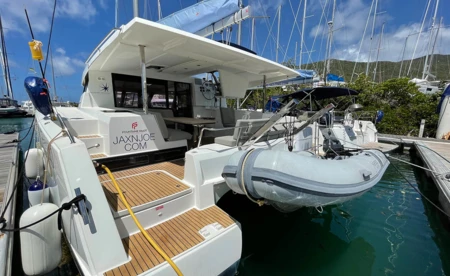
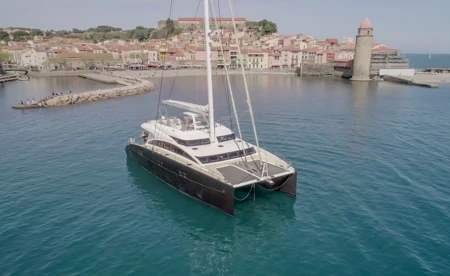
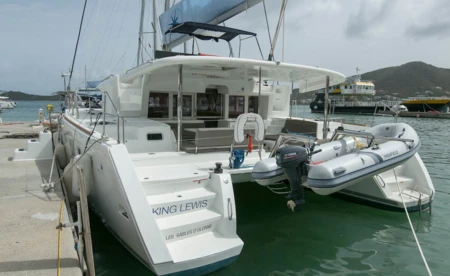
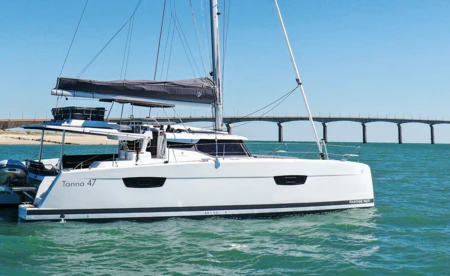

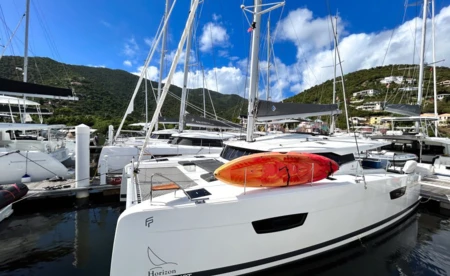
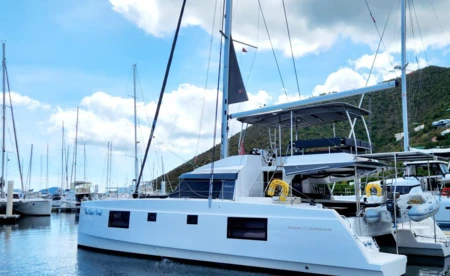

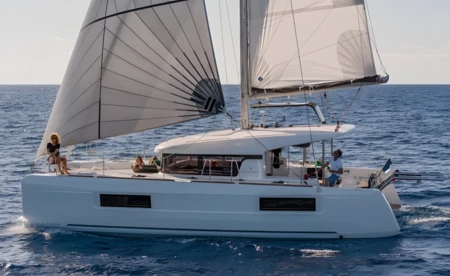
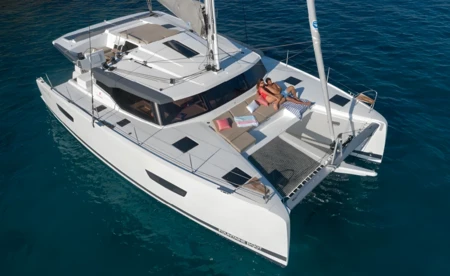
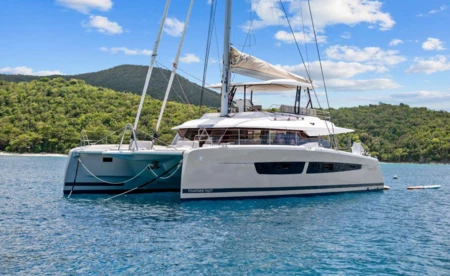
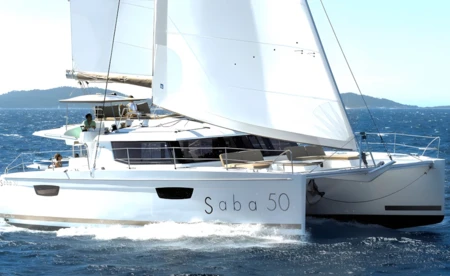
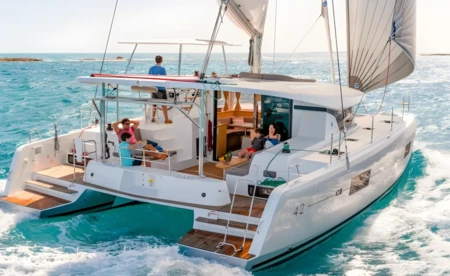
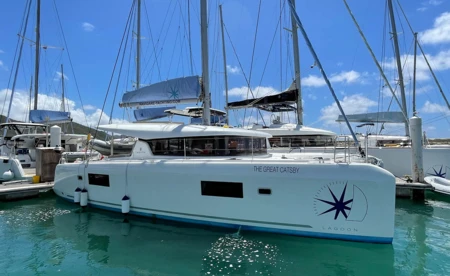
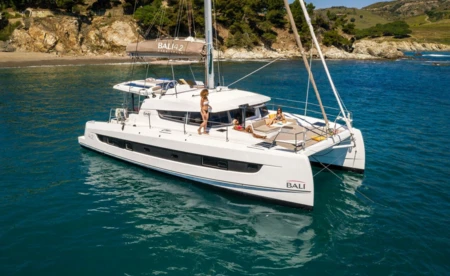
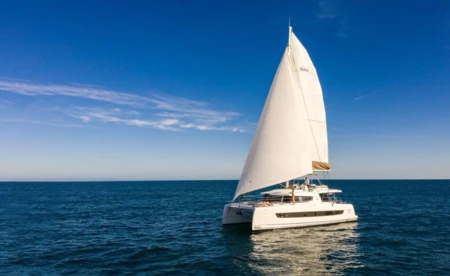
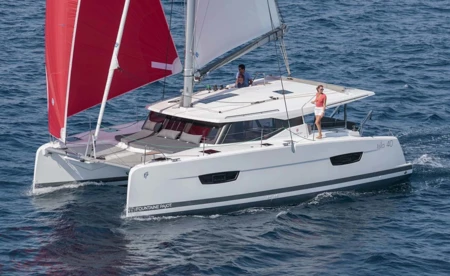
Hiring a catamaran in Tortola means opening the gateway to the British Virgin Islands, one of the finest sailing grounds in the Caribbean. Sheltered anchorages, steady trade winds and short passages within sight of land: the area appeals to families and seasoned crews alike. Discover below the types of boat available, prices by season, the most beautiful stops and all the practical information you need to plan your cruise from Tortola.
The types of catamaran to hire in Tortola
Tortola is the ideal starting point for sailing in the British Virgin Islands. Here, the catamaran is the boat of choice: stability, living space and shallow draught (around 1.20 m, compared with nearly 2 m for a monohull) make it the perfect option for reaching the sheltered anchorages of the Sir Francis Drake Channel. Depending on your crew and your budget, several formats are available:
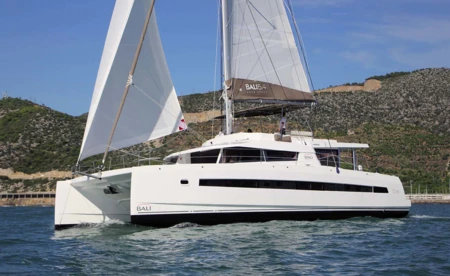
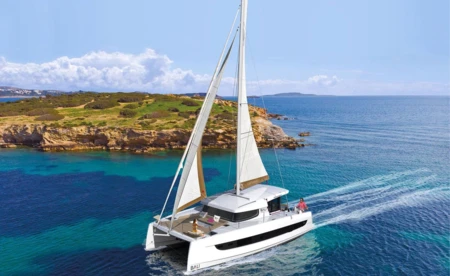
- The sailing catamaran: the most sought-after choice in the area. It combines the thrill of sailing driven by steady trade winds with great comfort on board (cockpit, saloon, trampoline). Its stability reassures less experienced crews and families with children.
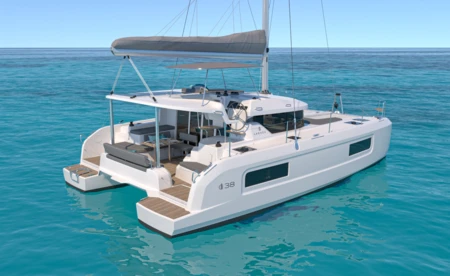
- The large catamaran (over 45 feet) appeals to those seeking maximum space and luxury. Spacious cabins, a flybridge and a bathing platform make it the ideal option for couples, groups or large families without sacrificing privacy.
- The power catamaran: faster between the islands, it leaves you more time to enjoy each stop. A great alternative if no one wants to sail under canvas, while keeping the space and stability typical of a multihull.
- You can also hire a yacht or a monohull sailing yacht to sail in the British Virgin Islands.
The services we offer for your catamaran hire in Tortola
Here are the different services we offer for hiring a catamaran in Tortola:
- The bareboat catamaran hire: if a member of your crew has enough sailing experience, they can take the helm. The boat is entirely private and you enjoy your cruise in complete freedom, with family or friends.
- The skippered catamaran hire: the ideal option if no one can skipper the boat or if you want a completely relaxing holiday. The professional skipper handles the manoeuvres and, thanks to their knowledge of the area, takes you to the finest anchorages and dive spots in the BVI.
- The crewed catamaran hire: this service is included on luxury catamarans over 20 metres and offered as an option on many models between 12 and 20 metres. The crew, usually made up of a captain, a cook and a hostess, will attend to your every need to make your cruise unforgettable!
- The cabin cruise: you book a cabin on board a high-end catamaran that you share with other travellers and a professional crew responsible for navigation, cooking and on-board service. A great option if you want to travel as a couple or without chartering the whole boat.
How much does it cost to hire a catamaran in Tortola?
How much does a week's catamaran hire cost in Tortola? Expect from £3,400 in low season for a mid-sized catamaran to over £17,000 in high season for a large catamaran of more than 60 feet.
The table below gives you a rough idea of average prices for a one-week catamaran hire departing from Tortola. These prices can vary depending on the season, availability, model and age of the boat… Please note: unlike the Mediterranean, here the high season falls in winter (from December to April), a dry and sunny period.
| Type of catamaran | Low season July to October | Mid season May, June and November | High season December to April |
|---|---|---|---|
| Monohull (4 cabins) | £3,300 | £3,800 | £4,500 |
| Catamaran (30 to 40 feet) | £3,400 | £4,500 | £5,300 |
| Catamaran (40 to 50 feet) | £4,000 | £5,500 | £6,000 |
| Catamaran (50 to 60 feet) | £6,500 | £7,200 | £9,200 |
| Catamaran (over 60 feet) | £10,200 | £12,800 | £17,000 |
| Yacht (4 cabins) | £25,500 | £42,500 | £63,800 |
The price includes: the catamaran hire and the main equipment on board (the sails, crockery, bedding, dinghy and outboard motor).
The price does not include: insurance, the skipper and hostess, cleaning (often included in a compulsory pack), fuel, extras (kayak, paddleboard…), provisioning, as well as the national park mooring buoys and the government cruising tax, specific to the BVI.
If you would like to charter a yacht in the British Virgin Islands, please contact us directly to obtain the price list. The price range for this type of model is indeed very wide. Our specialist for the crewed and luxury boat segment can send you the best offers.
We recommend taking out our cancellation insurance for your catamaran hire in Tortola. It covers all members of the crew, whereas individual cancellation insurance or cover through your bank card only protects the cardholder.
We also encourage our clients to take out deposit waiver insurance. On a boat, mishaps happen even to the best sailors. This insurance allows you to recover a significant part of your deposit in the event of sailing-related material damage.
Where to sail from Tortola?
From Tortola, all sailing takes place around the Sir Francis Drake Channel, a very calm inland sea sheltered from the swell by the islands of the archipelago. The legs are short and within sight of land, which makes the area accessible even to less experienced crews. From your base, here are the main stops to reach:
- Tortola is your home port. The largest island in the archipelago, it is home to most of the charter fleet: the marinas of Road Town and Nanny Cay are ideal for boarding, taking your briefing and stocking up before casting off.
- Norman Island and Peter Island to the south of the channel. Norman Island, said to have inspired Treasure Island, is renowned for its caves at Treasure Point and its well-sheltered anchorage at The Bight. Don't miss the Indians islets for snorkelling.
- Virgin Gorda to the east, about a dozen nautical miles from Tortola (around two hours' sailing). There you will discover The Baths, a jumble of granite boulders forming caves and natural pools, as well as the North Sound and its lively marinas (Bitter End, Leverick Bay).
- Jost Van Dyke to the west, 'the pirate island'. Its white sandy beaches and the atmosphere of Great Harbour and White Bay (the famous Soggy Dollar Bar) make it an unmissable stop.
- Anegada to the north, the only flat, coral island in the archipelago. Reserved for slightly more seasoned sailors, it is famous for its coral reef, its lobsters and its flamingos.
When to sail in Tortola?
Tortola's climate is tropical, warm and pleasant all year round thanks to the trade winds. The high season runs from December to April: dry weather, a warm sea and a festive atmosphere in the marinas, with a peak during the Christmas and Easter holidays. The months of May, June and November offer an excellent compromise: it is warm, the winds are gentler and the anchorages less crowded.
Here is an average of the temperatures found in Tortola:
| Temperatures | Jan | Feb | Mar | Apr | May | Jun | Jul | Aug | Sep | Oct | Nov | Dec |
|---|---|---|---|---|---|---|---|---|---|---|---|---|
| Air min (°C) | 23° | 23° | 23° | 24° | 25° | 26° | 26° | 26° | 26° | 26° | 25° | 24° |
| Air max (°C) | 28° | 28° | 29° | 29° | 30° | 31° | 31° | 32° | 31° | 31° | 30° | 29° |
| Sea water (°C) | 27° | 26° | 26° | 27° | 28° | 28° | 29° | 29° | 29° | 29° | 28° | 27° |
The Atlantic hurricane season officially runs from 1 June to 30 November, with a peak risk from August to October. It is best to avoid September and October, the most exposed months. Outside this period, sailing conditions are excellent throughout the year.
Sailing conditions from Tortola
The waters around Tortola are among the easiest sailing areas in the world, ideal for a first catamaran hire. The trade winds blow steadily from the east, averaging between 10 and 20 knots, rarely exceeding Force 6.
The sea is barely formed: the islands surround the area and protect the Sir Francis Drake Channel from the ocean swell. The tides are very weak, the hazards well marked and sailing is done within sight of land, with short legs of a few hours between anchorages. A marina with water and fuel is never far away.
The air temperature varies between 26 °C and 31 °C depending on the season, while the water temperature generally stays above 26 °C. These conditions, combined with calm anchorages and excellent dive spots, make the British Virgin Islands a prime playground for beginners and experienced sailors alike.
The documents required to hire a bareboat catamaran in Tortola
Unlike Croatia or France, no boat licence is legally required to hire a bareboat catamaran in Tortola. However, the charter company will systematically ask you for a sailing CV detailing your experience. If this is deemed insufficient, a professional skipper may be required for your safety.
Bring a passport valid for at least 6 months beyond your return date, along with a return ticket. If you plan to venture as far as the US Virgin Islands (USVI), a visa or ESTA authorisation for the United States will be required.
Useful information for your catamaran hire in Tortola
What is the best time to hire a catamaran in Tortola?
May, June and November offer the best compromise: gentler trade winds, a warm sea and less crowded anchorages. The high season (December to April) remains the most popular period for its dry, sunny weather, while September and October should be avoided due to the hurricane risk.
What budget should you plan for a week's catamaran hire in the BVI?
Expect around £3,400 per week for a mid-sized catamaran in low season, and up to over £17,000 for a large catamaran of more than 60 feet in high season. On top of this budget come fuel, provisioning, the national park mooring buoys and the government cruising tax, specific to the BVI.
Do you need a licence to hire a catamaran in Tortola?
No, no boat licence is legally required to hire a bareboat catamaran in Tortola. The charter company will nonetheless ask you for a sailing CV attesting to your experience; failing that, a professional skipper may be required.
Do you need a visa for the British Virgin Islands?
British nationals and EU citizens do not need a visa for a tourist stay in the British Virgin Islands: a passport valid for at least 6 months beyond your return and a return ticket are sufficient. A stop in the US Virgin Islands (USVI), however, requires ESTA authorisation.
What language is spoken in Tortola?
The official language is English. As a British Overseas Territory, the archipelago keeps driving on the left ashore and a culture strongly shaped by leisure sailing.
What currency is used in Tortola?
The currency used in Tortola is the US dollar (USD), not the euro. Visa and Mastercard are accepted in marinas and large restaurants, but always carry cash for small stops, beach bars and tips.
How do you get to Tortola?
There are no direct flights from the UK. The most common solution is to reach Saint-Martin (SXM), San Juan (Puerto Rico) or Antigua on a transatlantic flight. From there, an inter-island flight or a ferry takes you to Terrance B. Lettsome Airport (EIS), located on Beef Island, right next to the Tortola marinas. We can arrange your transfer to the port of embarkation.
How do I finalise my catamaran booking in Tortola?
Once we have received your hire request, an advisor will contact you by phone to understand your sailing plans. They will then send you boat proposals by email. Once you have found the right catamaran, you can pay a deposit in your client area to confirm the hire and secure the boat.
Do you have to pay to anchor in the BVI national parks?
Yes. Most of the sailing area is designated as a national park. To anchor, snorkel or dive in these zones, you must pick up a paid mooring buoy and pay for a permit, the cost of which depends on the number of passengers. A government cruising tax also applies: these amounts will be communicated to you in your quote and paid on arrival at the marina base.
Good to know
| Number of available boats | 569 |
|---|---|
| Services types | Skipper, Hostess, Chef, Sailor |
| Average price per week | 14 547 € |
| Minimum price per week | 1 575 € |
| Maximum price per week | 95 000 € |