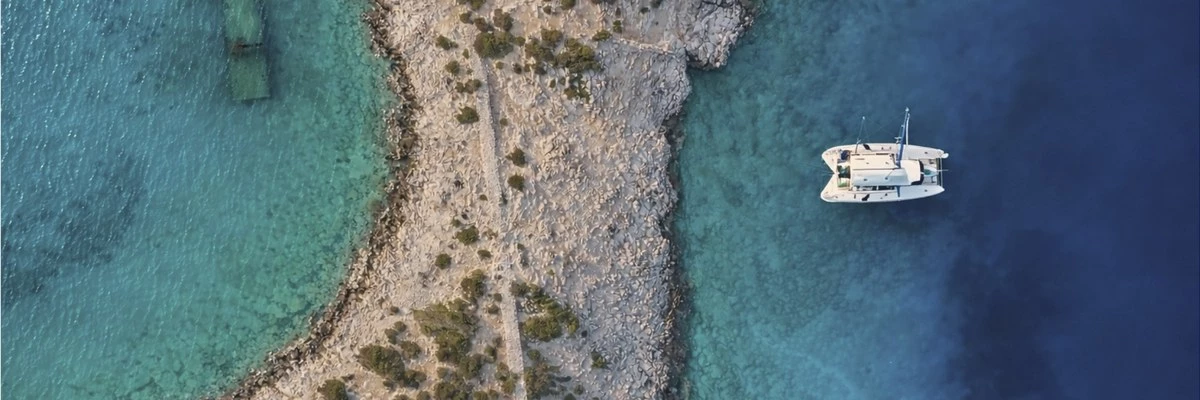
With its 1,000 km of coastline, hidden coves and crystal-clear waters, southern Corsica brings together some of the finest anchorages in the Mediterranean. Between the pink granite of Roccapina, the white limestone cliffs of Bonifacio and the waters of the Gulf of Valinco, the Island of Beauty truly reveals itself from the sea, where no road reaches.
This one-week sailing trip from Ajaccio, from collecting your boat to returning to port, links the most beautiful anchorages in the south. A word before you set sail: the Corsican seabed is home to vast meadows of Posidonia (Neptune grass), a protected plant that is vital to marine life. All along the route, favour patches of light-coloured sand or mooring buoys so you can anchor responsibly.
Summary
- 1. One-week sailing route from Ajaccio
- Day 1: Ajaccio → Cala d'Orzo
- Day 2: Cala d'Orzo → Roccapina Bay
- Day 3: Roccapina Bay → Cala di Roccapina
- Day 4: Cala di Roccapina → Bonifacio
- Day 5: Bonifacio → Anse de l'Abbartello
- Day 6: Anse de l'Abbartello → Porto-Pollo
- Day 7: Porto-Pollo → Ajaccio
- 2. Practical tips for sailing in southern Corsica
- When should you set sail for southern Corsica?
- Where can you anchor in southern Corsica?
- Which base and which boat should you choose?
- 3. Frequently asked questions: sailing in Corsica
One-week sailing route from Ajaccio
Embarkation in Ajaccio
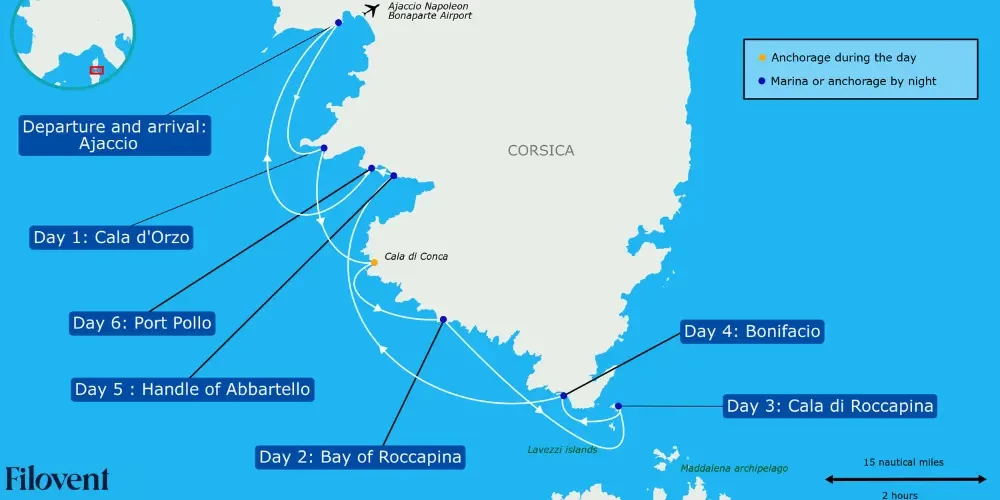
Day 1: Ajaccio → Cala d'Orzo (15 NM, approx. 2h30)
Day 2: Cala d'Orzo → Roccapina Bay (34 NM, approx. 5h40), daytime anchorage in the Cala di Conca
Day 3: Roccapina Bay → Cala di Roccapina (3 NM, approx. 30 min)
Day 4: Cala di Roccapina → Bonifacio (22 NM, approx. 3h40)
Day 5: Bonifacio → Anse de l'Abbartello (38 NM, approx. 6h20)
Day 6: Anse de l'Abbartello → Porto-Pollo (3 NM, approx. 30 min)
Day 7: Porto-Pollo → Ajaccio (20 NM, approx. 3h20)
Disembarkation in Ajaccio
Total distance: around 135 nautical miles over the week
Day 1: Ajaccio → Cala d'Orzo
Your adventure begins in the early afternoon in Ajaccio, the island's largest charter base. You collect your boat at the Tino Rossi marina, ten minutes from the airport, with time to take on supplies. [1] Here you can hire a boat in Corsica and set off straight away.
Leaving the Gulf of Ajaccio, you head south, skirting the Isolella tower and Capo di Muro, the headland that closes off the gulf. On the other side, the Cala d'Orzo awaits, a wild beach reachable only by sea or on foot, ideal for a first quiet anchorage.
Once the anchor is set in the sand, you enjoy a first swim in beautifully clear water, then a stroll along the shore to watch the sunset. Cala d'Orzo offers a well-sheltered sandy bottom, ideal for a peaceful first night before heading for the deep south.
Day 2: Cala d'Orzo → Roccapina Bay
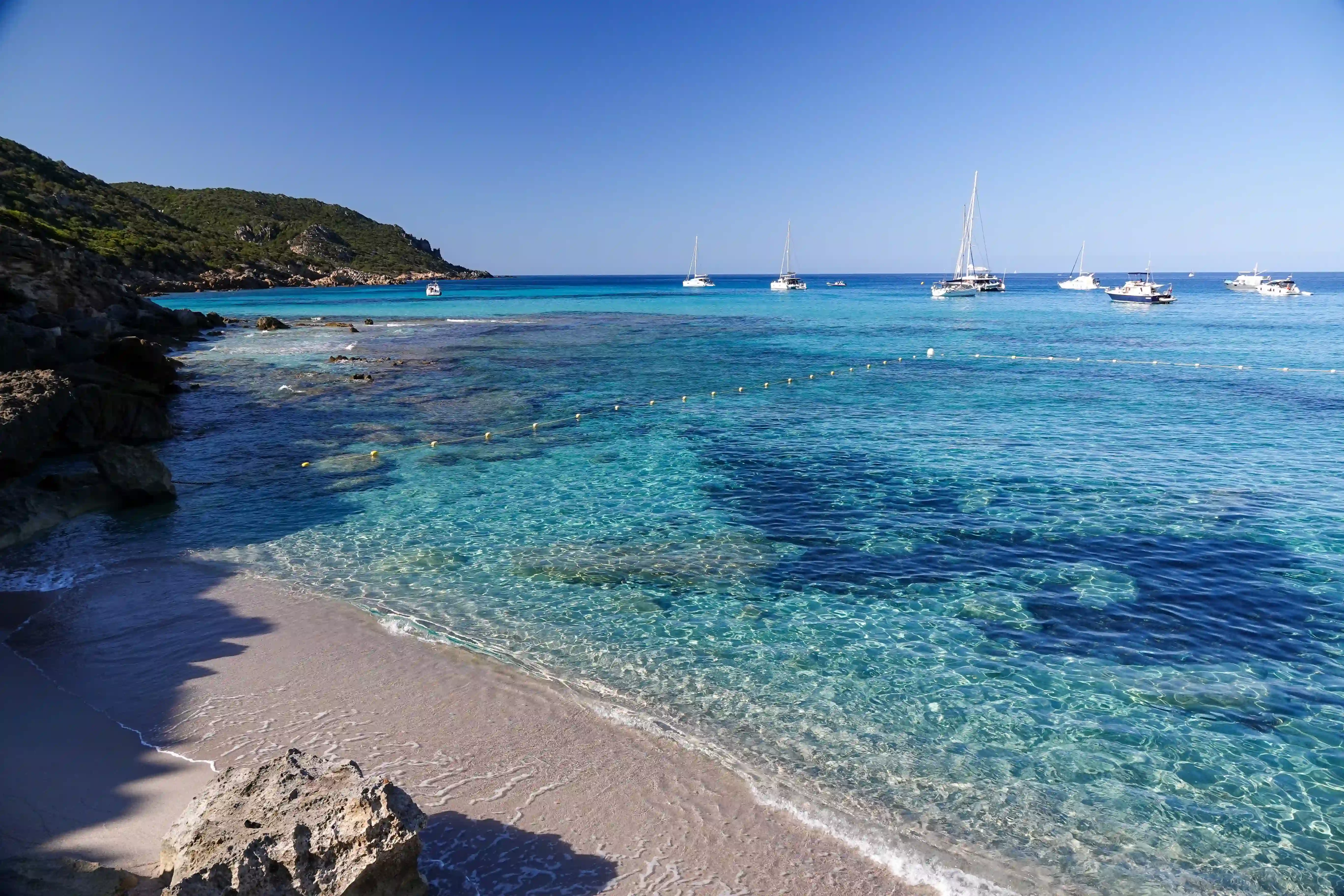
This is the longest leg of the trip, so you weigh anchor early. Along the way, you anchor for lunch in the Cala di Conca, a pretty, still-unspoilt cove with a small beach: the perfect spot for a swim before carrying on south.
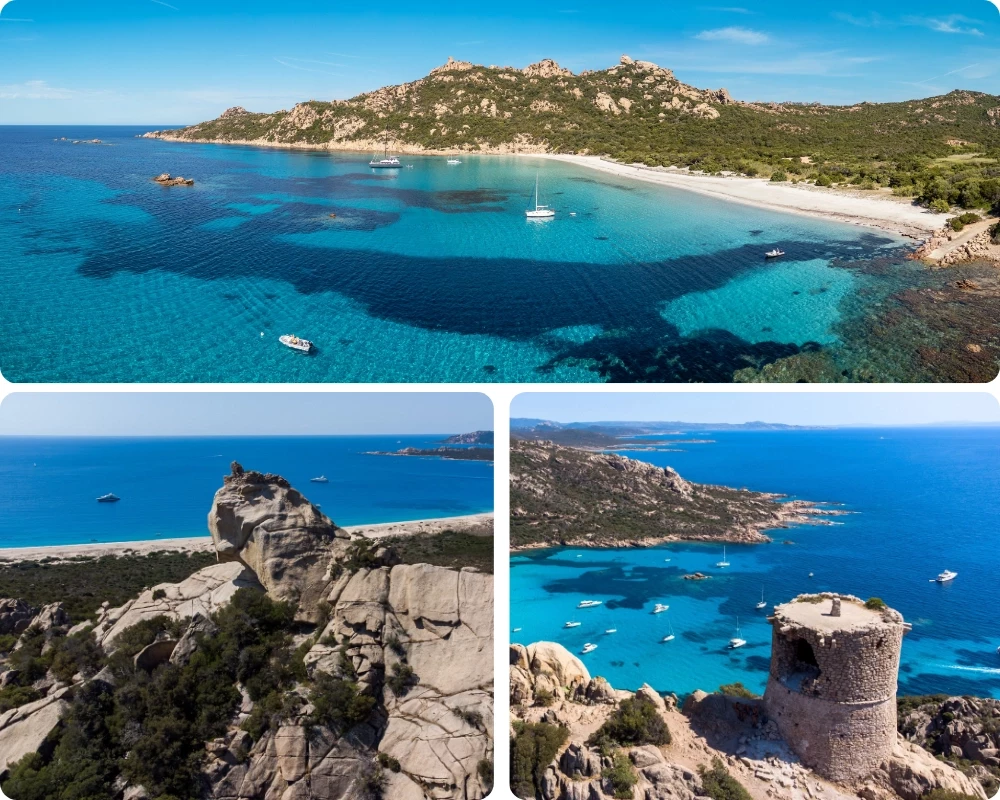
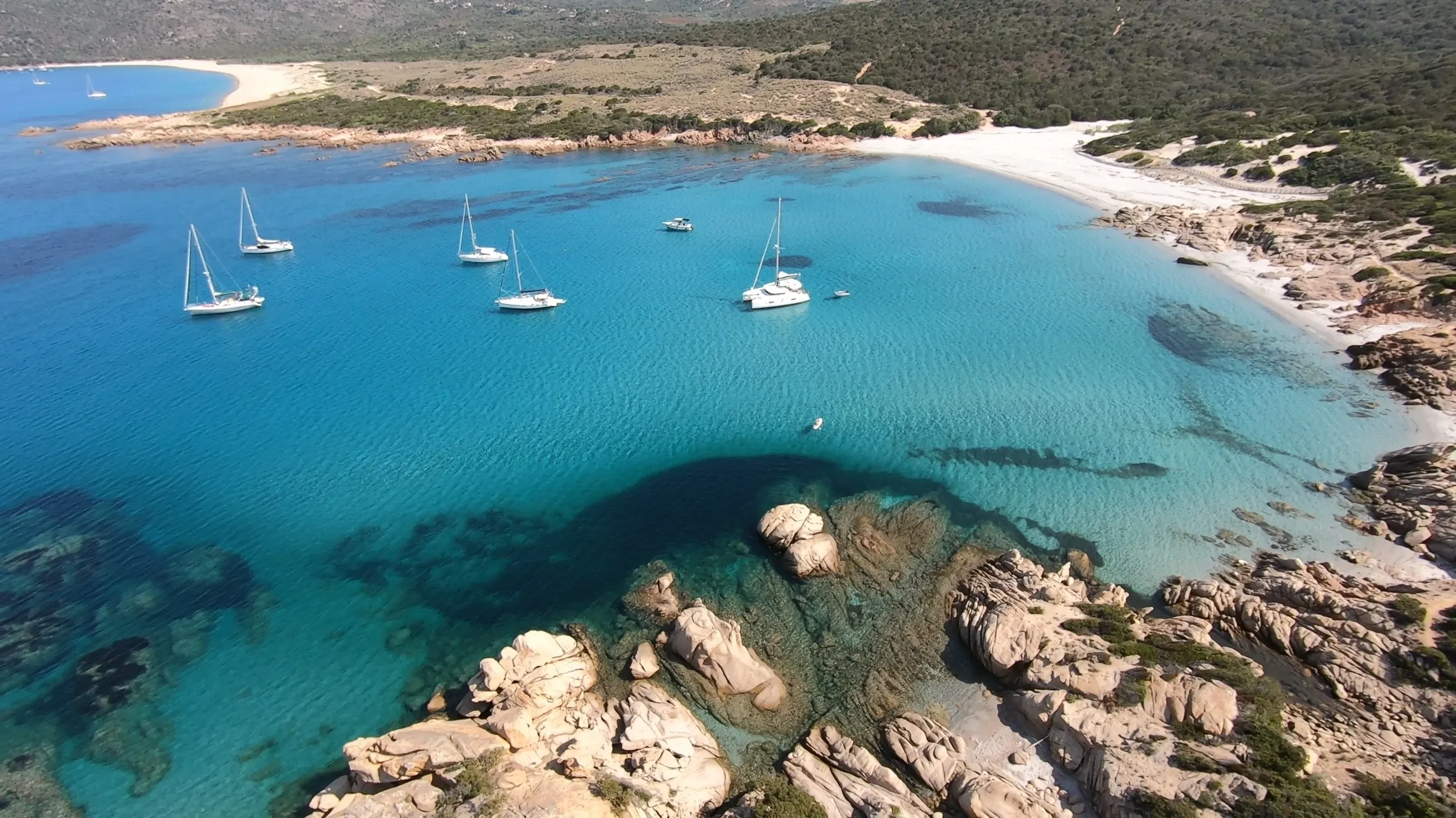
From there, you sail along the wild coast of the Senetosa reserve and its coves, which cannot be reached by land, before arriving at Roccapina Bay. There you drop anchor for the night, watched over by the famous stone lion. This rock, sculpted by erosion, rises above the bay.
At the end of the day, a short walk takes you up to the Genoese tower perched on the heights, where the sweeping view over the bay and the open sea rewards the effort. A memorable setting for this first evening in the deep south.
Day 3: Roccapina Bay → Cala di Roccapina
After the previous day's long leg, a rest day arrives. You barely move: a short hop brings you in front of the Cala di Roccapina and its white-sand beach, whose almost Caribbean waters invite an early-morning swim.
The day is given over to leisure and to exploring the seabed: mask and snorkel to explore the rocks, paddleboarding along the coast or, quite simply, a nap in the shade of the bimini. Roccapina remains a remote, wild place, far from the summer crowds.
You spend a second night at anchor in this picture-postcard setting, gently rocked by the swell. The next day, you set course for the southernmost point of the island.
Day 4: Cala di Roccapina → Bonifacio
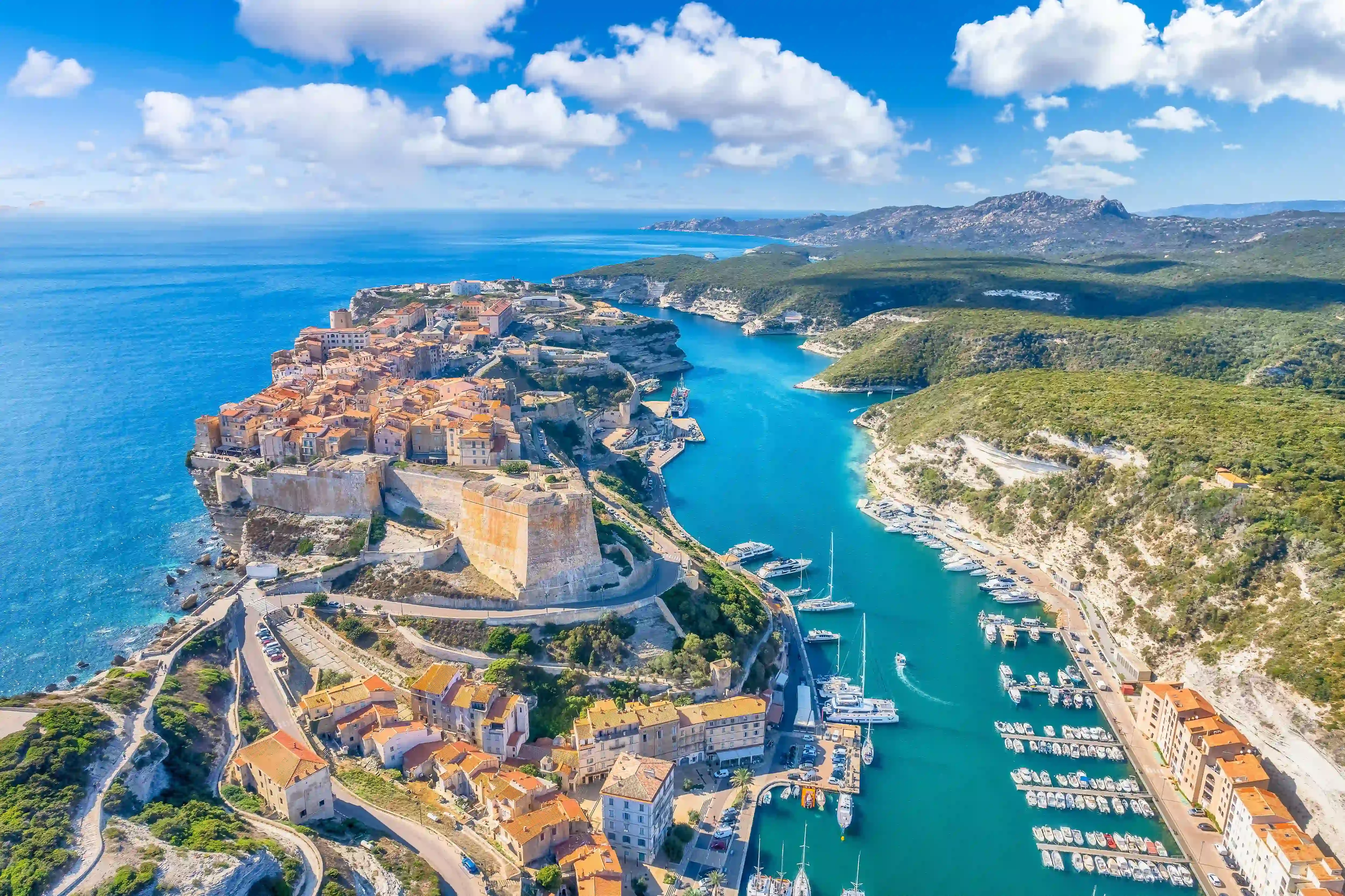
The course is set for the far south of Corsica. As you round Capo di Feno, the landscape changes completely: the granite mountains give way to the white limestone strata that are Bonifacio's hallmark. Sailing into the Strait of Bonifacio, the arm of sea that separates Corsica from Sardinia, is one of the highlights of the trip and, should you wish to extend your journey, an invitation to sail across to the Sardinian coast.
You spend the night in the harbour, at the foot of the cliff. Take time to climb up to the old town, descend the vertiginous King of Aragon's Staircase and dine in the historic quarter. [2]
From Bonifacio, don't miss a trip to the Lavezzi Islands, a granite archipelago listed as a nature reserve, set in waters of a thousand shades of turquoise and ideal for snorkelling. [3]
Day 5: Bonifacio → Anse de l'Abbartello
This is the longest leg of the return: 38 nautical miles due north, mostly under sail. You leave Bonifacio in the morning, cross the Strait of Bonifacio once more and head up the unspoilt coast of Senetosa on your sailing trip along the west coast of Corsica, carried by a Libeccio from the south-west.
You return to the Gulf of Valinco, one of the most beautiful bays on the west coast, and drop anchor for the night in the Anse de l'Abbartello, a quiet, sandy cove on the southern shore of the gulf.
After a long day at sea, you enjoy a peaceful evening, far from the bustle of the harbours, with the pleasure of a swim at sunset in still-warm water.
Day 6: Anse de l'Abbartello → Porto-Pollo
Another restful day arrives in the heart of the Gulf of Valinco. A short crossing takes you to Porto-Pollo, a small resort on the northern shore of the gulf, well known for reliable winds that draw watersports enthusiasts.
You make the most of the morning with a last swim or a paddleboarding session, followed by lunch ashore at one of the village restaurants, a good chance to sample local produce and fresh fish.
You spend your last night here at anchor, with the final leg already in sight: the return to Ajaccio.
Day 7: Porto-Pollo → Ajaccio
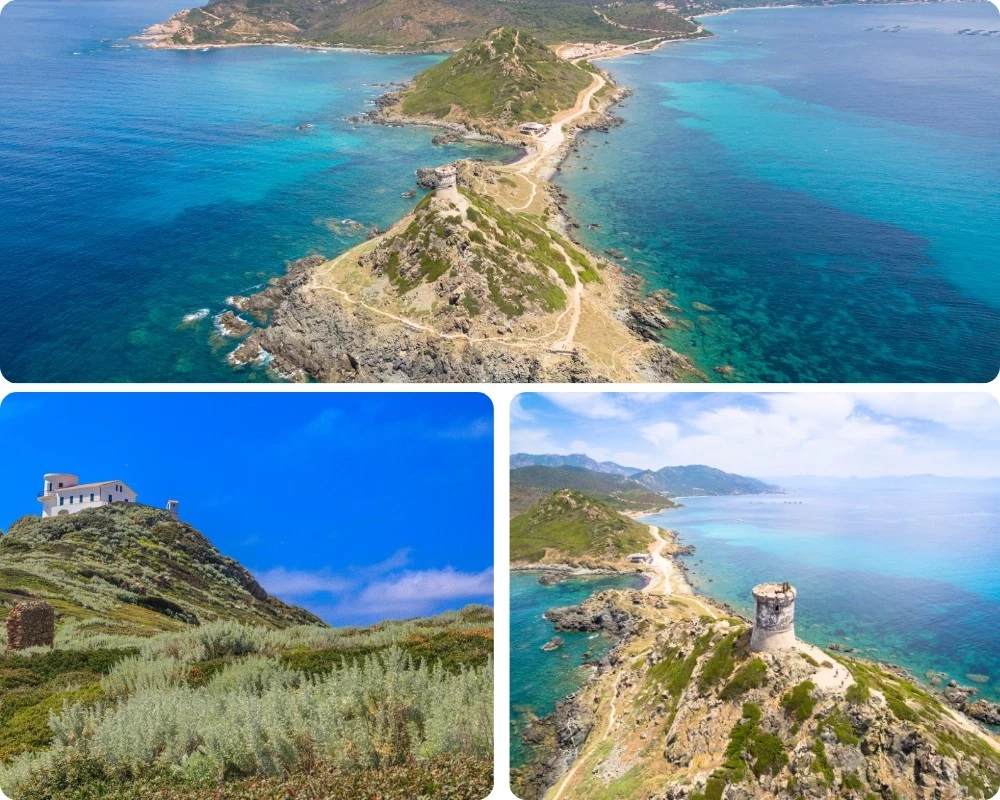
On this final day, you head north, round Capo di Muro one last time and enter the Gulf of Ajaccio. You pass the Sanguinaires Islands, that small protected archipelago which owes its name to the reddish tones its rock takes on in the sun, the natural guardian of the gulf's entrance.
You then return to the Tino Rossi marina to hand back the boat. There's still time to wander through Ajaccio's old town, between the birthplace of Napoleon Bonaparte, the colourful lanes and the seafront terraces.
You head home with your mind still out at sea, full of images of wild coves, white cliffs and unspoilt anchorages in the heart of the Island of Beauty.
Practical tips for sailing in southern Corsica
When should you set sail for southern Corsica?
The best time for a sailing trip in Corsica is June or September: stable weather, fewer crowds and lower charter prices than at the height of summer. The season runs, broadly, from 15 May to 30 September, when sailing conditions and air and water temperatures are at their most pleasant.
As for the winds, the Libeccio (from the south-west) prevails and can be strong, while the Mistral and the Tramontana (from the north and north-west) can pick up, especially in the Strait of Bonifacio. There, the wind funnels through the narrows (a phenomenon often called the Venturi effect) and can blow considerably harder than in the open sea, reaching force 7 or 8 with the Tramontana. Plan this passage carefully and check the weather forecast beforehand.
This navigation itinerary in southern Corsica from Ajaccio totals around 135 nautical miles over 7 days, with legs of between 3 and 38 miles. Following the coast, allow about 50 nautical miles between Ajaccio and Bonifacio.
Where can you anchor in southern Corsica?
To know where to anchor in southern Corsica with peace of mind, it's worth following a few rules. Posidonia (Neptune grass) is protected all along the coast: you may not anchor on the meadows. Always favour clearly visible patches of light-coloured sand or, where available, mooring buoys.
Several stretches of the route are also regulated. In the Bouches de Bonifacio Nature Reserve (which includes the Lavezzi Islands) and along the Senetosa coast, anchoring is restricted or prohibited in some areas. The same applies to the Rondinara and to the Cerbicale Islands, a little further east. Always check an up-to-date nautical app (such as Navily or Bloc Marine) to find out which areas are permitted and to book a buoy if needed.
Which base and which boat should you choose?
Ajaccio is Corsica's largest charter base and the easiest to reach, just a few minutes from the airport. Propriano, in the heart of the Gulf of Valinco, is the ideal alternative if you want to focus on the deep south. And if you prefer to start even further south, you can also opt for boat hire in Santa Giulia, near Porto-Vecchio.
As for the type of boat, the monohull appeals for its sailing feel and its price, while the catamaran offers more space, more stability and a shallow draught, perfect for getting close to the coves. Hiring a catamaran costs more than a monohull, but the extra comfort on board makes up for it. If you lack experience, adding a professional skipper to your yacht charter lets you sail with peace of mind and make the most of your holiday.
Frequently asked questions: sailing in Corsica
Do you need a licence to hire a boat in Corsica?
Under French law, no sailing licence is legally required to hire a sailing boat in Corsica, though charter companies will ask for proof of experience such as an RYA Day Skipper certificate or an ICC, along with a sailing CV. For a motorboat, a valid boating licence is required. In any case, you can take on a professional skipper if you don't sail independently.
How much does a sailing boat in Corsica cost for a week?
A sailing boat in Corsica costs, depending on the type of boat, its size and the season, between around €1,800 per week in low season and over €5,000 for a large sailing yacht or catamaran in high season; the largest boats reach €7,000 and more. On top of this come fuel, harbour fees, the deposit or its insurance waiver, provisioning and, where applicable, the skipper. With a crew of six to eight, the price in low season works out at around €250 per person. Prices are quoted in euros, the charter currency in Corsica. For a tailored estimate, it's best to request a quote from an advisor.
Sailing with or without a skipper?
Without a skipper if you have sufficient experience and a crew that is confident with manoeuvres. Choose a sailing holiday in Corsica with a skipper if you're a beginner, if you'd like to be guided to the finest anchorages or, quite simply, to enjoy a worry-free holiday. A skipper knows the area, its winds and its tricky approaches inside out.
When is the best time for this trip?
The best time for a sailing trip around southern Corsica is June or September, when the weather is stable, anchorages are quieter and charter prices are lower than in peak summer. July and August offer warmer water and more life, both on board and ashore, but with far bigger crowds.
Is this trip suitable for beginners?
Yes, provided you sail with a skipper: two legs (to Roccapina and on the way back from Bonifacio) involve more than five hours at sea, and the wind can pick up in the Strait of Bonifacio. A professional skipper makes the route accessible to all levels.
Southern Corsica is perhaps the most accessible distillation of everything the Mediterranean has to offer at its best: wild anchorages, hilltop villages and waters of rare clarity, all in a single week. And if you'd prefer something more relaxed still, you can also discover the island on a catamaran cruise in Corsica.
From Cala d'Orzo to Bonifacio, by way of Roccapina and the Gulf of Valinco, the Island of Beauty awaits you for your next sailing holiday in Corsica.
Sources used to write this article
- [1] Official Corsica tourist board, Ajaccio (access, Tino Rossi marina): https://www.visit-corsica.com/en/...PORT-AJACCIO-TINO-ROSSI
- [2] Official Corsica tourist board, Bonifacio (old town, King of Aragon's Staircase): https://www.visit-corsica.com/en/...Bonifacio-a-staircase-built-into-the-rock
- [3] Lavezzi archipelago, Bouches de Bonifacio Nature Reserve: https://en.wikipedia.org/wiki/Lavezzi_archipelago