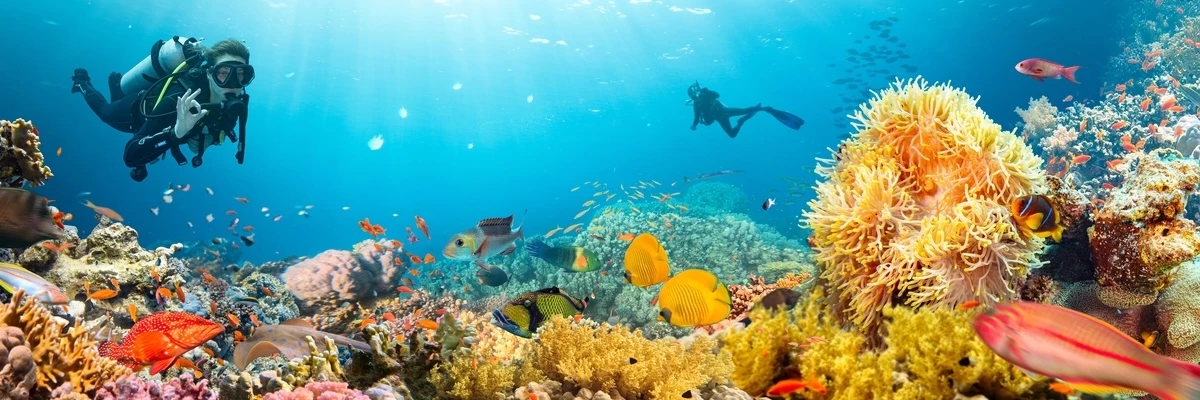
The essentials of a diving cruise
|
“Dives with the manta rays in Bora Bora, drift snorkelling in Taha'a, the sunrises and sunsets… and so much more! By far the best experience we have ever had.” These are the words of a Filovent family returning from its cruise in Polynesia. A diving cruise strings together encounters and landscapes inaccessible from land: each day, the boat sets you down above the most beautiful sites.
Where a classic stay ties you to a club on shore, the boat reaches the most remote sites, those that no day trip can access: pristine reefs, shark passes, intact wrecks. You sleep above the spots and descend as soon as you wake. This complete guide explains who a diving cruise is for, what level it requires, where and when to go, what you will find on board, and how much to budget.
Summary
- 1. What is a diving cruise?
- Day diving or diving cruise: what's the difference?
- How many dives per day?
- Who is a diving cruise for?
- 2. What level and certification do you need?
- 3. Where to dive? The best diving cruise destinations
- The Red Sea (Egypt)
- The Maldives
- Indonesia: Raja Ampat
- The Seychelles
- French Polynesia
- Other flagship destinations around the world
- 4. When to go and at what price?
- 5. On board: the boat and daily life
- The boat equipped for diving
- Safety: insurance, medical certificate, plane-to-dive interval
- What to pack in your suitcase?
- 6. How to choose and book your diving cruise well
- 7. The alternative: rent your boat and dive at the stopovers
- 8. Frequently asked questions about diving cruises
- Do you need a certification to go on a diving cruise?
- What is the difference between a day cruise and a diving cruise?
- How many dives do you do per day?
- Is the diving equipment provided on board?
- What is the best destination to start?
- Is Nitrox useful on a cruise?
- How much does a diving cruise cost?
- Can you dive directly from a rental sailing yacht?
- Does my insurance cover diving during the cruise?
What is a diving cruise?
A diving cruise, often called a liveaboard or dive safari, involves living several days on board a boat entirely dedicated to diving. The vessel carries the equipment, the air, the supervision and the accommodation: it becomes both your hotel and your floating dive centre. The aim is simple: to string together as many quality sites as possible, including those whose remoteness makes them inaccessible from the coast.
Day diving or diving cruise: what's the difference?
This is the first question beginners ask. Day diving departs from a club on shore, brings you back to your hotel every evening and is limited to the sites near the port. A diving cruise, on the other hand, keeps you on board day and night: the boat sails from one spot to another, often overnight, to save you bottom time and reach isolated reefs. More dives, less crowded sites, but a commitment of several days at sea.
How many dives per day?
The usual rhythm is three to four dives per day, frequently including a night dive. Over a week, that represents on average 14 to 20 dives depending on the destination and the itinerary. It is precisely this volume that sets a cruise apart from a classic stay, and that makes it a format designed for divers who want to multiply their dives.
Who is a diving cruise for?
This format appeals above all to regular divers looking for intensity and beautiful sites. It is perfectly suited to diving couples, to groups of friends who charter a boat privately, and to travellers ready to live a few days punctuated by dives. On the other hand, a mixed group needs to be anticipated: a non-diver risks getting bored on board a pure liveaboard, because the whole of life revolves around the dives. Fans of mask-fins-snorkel can nonetheless enjoy snorkelling on certain shallow spots. For a group mixing divers and non-divers, or for a family diving cruise, renting a boat with dives at the stopovers (see the end of the article) is often more suitable: you sail at your own pace and set off to explore the seabeds of Guadeloupe or other tropical sites as the anchorages allow.
What level and certification do you need?
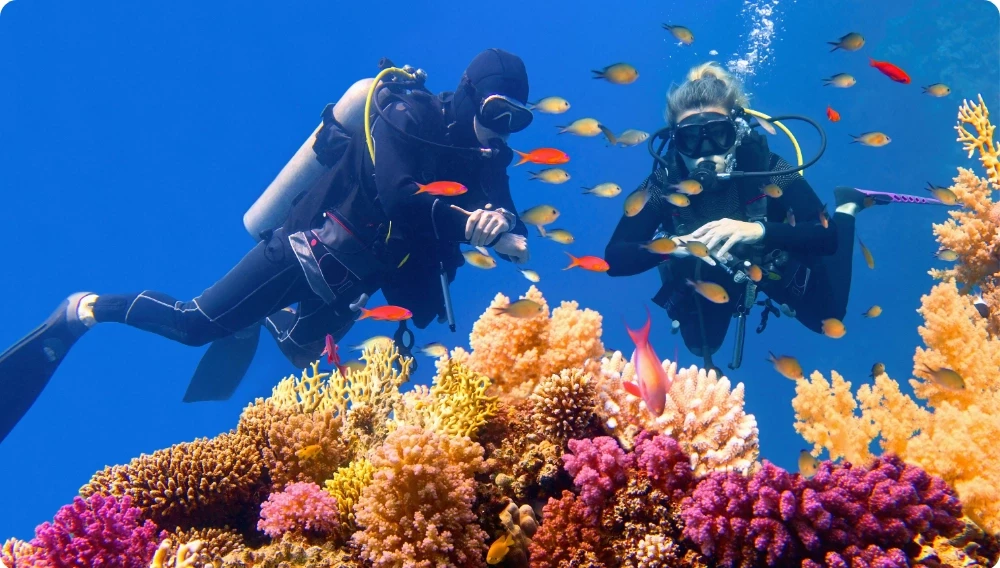
Before making you dream of destinations, a question of eligibility comes up: will you be able to dive on the sites you want? The required level depends on the destination and the conditions (current, depth). Here are the essential benchmarks.
| Level | Equivalence | Depth | Use on a cruise |
| Try dive | No certification, supervised | 6 m | To try out the activity |
| Open Water Diver | Level 1 (CMAS) | 18 m | Access to most beginner cruises |
| Advanced Open Water | Level 2 (CMAS) | 30 m | Often required on sites with current and passes |
| Deep Diver / Level 3 | Deep / autonomous diving | 40-60 m | Technical and offshore itineraries |
In practice, an Open Water / Level 1 certification already opens up many cruises. Itineraries with current (Maldives passes, southern Red Sea) frequently require an Advanced / Level 2 level. Some technical cruises (Galápagos, Socorro, the marine parks of southern Egypt) also require a minimum number of logged dives, often 50, or even a number of recent dives. For intensive cruises, Nitrox certification is strongly recommended: enriched air reduces fatigue and extends dive times over days of three or four dives. Good news: many boats let you take your Open Water, your Advanced or your Nitrox directly on board. Note that the maximum depth for non-technical recreational diving is generally 40 m; beyond that (up to 60 m for a CMAS Level 3), you enter the field of deep diving, subject to specific prerogatives.
To slip into your bag before departure:
|
Where to dive? The best diving cruise destinations
Each major area has its signature: wrecks and reefs in the Red Sea, passes with pelagics in the Maldives, record-breaking biodiversity in Indonesia. Here are the flagship destinations, several of which Filovent offers as cabin cruises.
The Red Sea (Egypt)
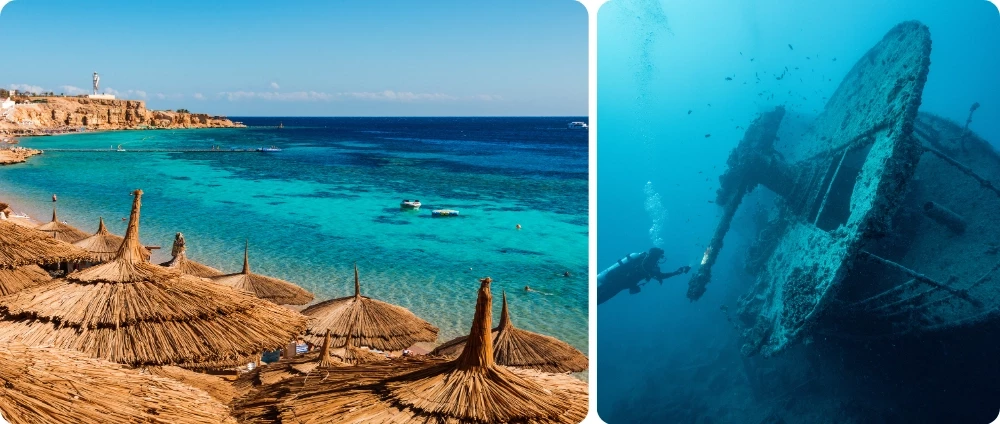
This is the queen of destinations, offering the best value for money and accessible in a few hours' flight. To the north, the Ras Mohammed park, the Strait of Tiran and the legendary wreck of the Thistlegorm; to the south, the coral gardens of Marsa Alam, Daedalus, the Brothers and the preserved marine parks towards the Sudanese border. Grey, hammerhead and oceanic whitetip sharks, turtles, rays and tightly packed schools are all there. Departures are from Hurghada, Safaga, Port Ghalib or Marsa Alam. Filovent also offers boat rental in Egypt to explore the coast at your own pace.
The Maldives
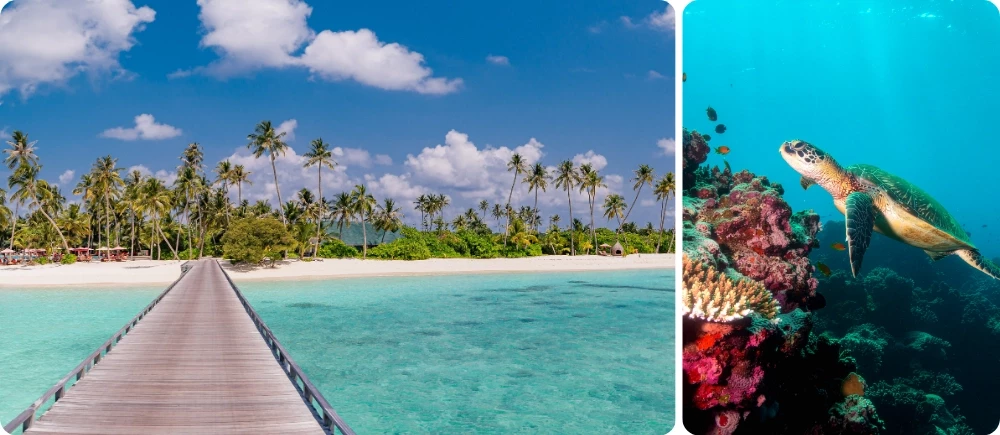
In the Maldives, diving takes place in the passes and channels between atolls, swept by currents that attract the giants: manta rays, whale sharks, grey reef sharks and turtles. The archipelago has 26 atolls and the best areas vary greatly depending on the season, which is exactly the appeal of a cruise in the Maldives: following the currents to reach the right spots. Allow 14 to 16 dives over a week.
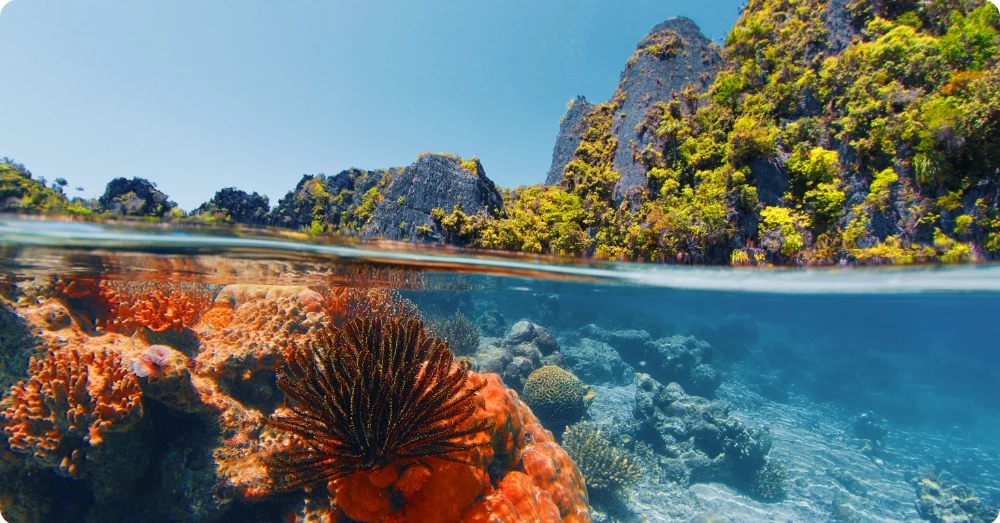
Indonesia: Raja Ampat
Off the coast of western Papua, Raja Ampat is regarded as the world epicentre of coral biodiversity: this maze of karst islands concentrates the highest known density of marine species, on reefs that have remained intact.
The sites string together multicoloured coral gardens, dizzying drop-offs and current spots where manta rays, reef sharks and tightly packed schools of trevally gather. As the most beautiful spots are scattered and largely inaccessible from the coast, a cruise to Raja Ampat remains the best way to link them. The seasonality is marked (from October to April) and places go quickly: it is better to book early.
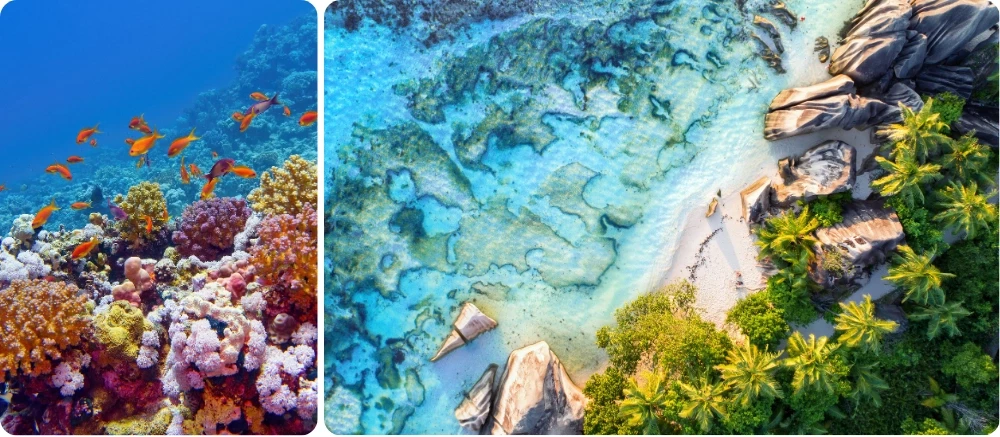
The Seychelles
In the Seychelles, diving takes place in a setting unique in the world: immense granite blocks sculpt the seabed into arches, canyons and drop-offs through which a generous fauna weaves. You will encounter eagle rays, reef sharks, hawksbill turtles and, in the warmest water from August to November, the majestic whale sharks that skirt the coasts of Mahé. The sites are spread around the three main islands, Mahé, Praslin and La Digue, with gentle depths ideal for divers of all levels as well as for snorkelling. More confidential than the Red Sea or the Maldives, a cruise in the Seychelles has the advantage of combining the dives with the discovery of a paradise archipelago, between pink-sand beaches and tropical forests.
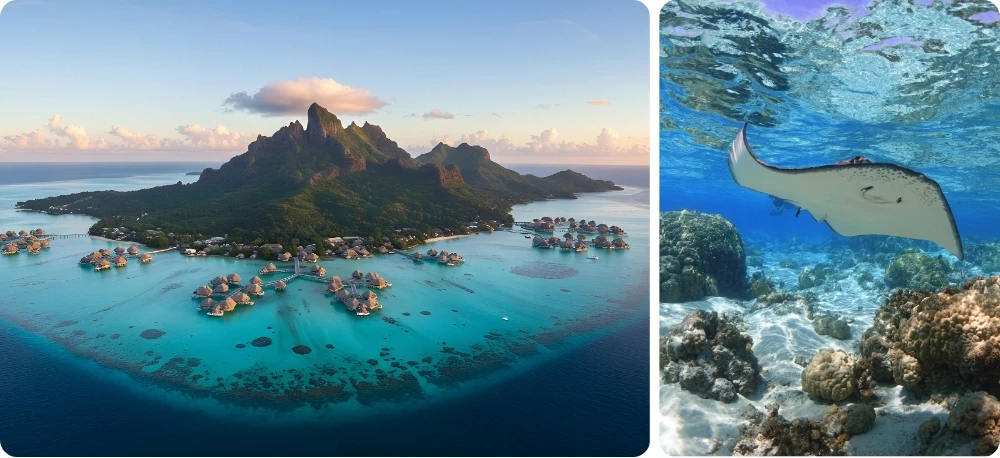
French Polynesia
Head to the Pacific for one of the most spectacular dives in the world. In Polynesia, two universes coexist: the Leeward Islands (Bora Bora, Taha'a, Raiatea, Huahine), where you move alongside manta rays in turquoise lagoons, and the atolls of the Tuamotu (Fakarava, Rangiroa), renowned for their passes where hundreds of grey sharks parade in the current. The fauna is exceptional: manta and leopard rays, reef sharks, dolphins, turtles and, in season, humpback whales. It is a dream destination for combining diving and sailing: a cruise in Polynesia makes it possible to link these scattered islands and to descend at the stopovers through the local centres. The best period runs from May to October, during the dry season.
Other flagship destinations around the world
For divers in search of legendary sites, other areas feature in the world pantheon of the liveaboard: the Galápagos and Socorro island for big pelagics, the Philippines (Tubbataha) and Palau in Micronesia for their preserved reefs. These are exceptional trips, generally reserved for experienced divers.
When to go and at what price?
The ideal period, the expected level and the budget vary depending on the destination. This summary table helps you situate each option at a glance.
| Destination | Best season | Recommended level | Indicative budget / week (flights not incl.) |
| Red Sea (Egypt) | April to November (all year round) | L1 to L2 depending on the route | €2,500 to €7,000 |
| Maldives | December to April | L2 recommended (passes) | €4,000 to €9,000 |
| Raja Ampat | October to April | L2 experienced | €5,000 to €18,000 |
| Seychelles | March-May and October-November | L1 to L2 | approx. €3,500 |
| Polynesia | May to October | L1 to L2 (passes: L2) | €5,000 to €6,500 |
| Galápagos | June to November | L2 + 50 dives (current) | from €8,500 |
Budgets are indicative and vary depending on the boat, the season and the itinerary. On a diving cruise, the dives are sold as an integrated package in the price of the stay: it is an all-inclusive formula where you still need to clearly distinguish what is included from what is added. Your Filovent advisor gives you the exact rate at the time of the quote.
Need advice to choose your destination? Between the Red Sea to start, the Maldives for pelagics or Raja Ampat for biodiversity, the right choice depends on your level, your budget and the fauna you hope to encounter. Our specialist advisors guide you towards the most suitable itinerary and draw up a free quote. |
What is generally included
Inclusions vary from one cruise to another, but most often you will find:
- Accommodation in a cabin and the meals scheduled in the programme
- Water, tea and coffee on board
- The dive package supervised by a certified guide (from 14 to over 20 depending on the itinerary)
- The tanks and weights (most often 12 L aluminium, sometimes 15 L steel in the Red Sea)
- The transfers airport / boat return, subject to compatible flights
- The activities scheduled in the programme
Depending on the cruise, the full equipment rental, the Nitrox, certain taxes or the flight may also be included, all of which need to be checked on a case-by-case basis.
What remains as a supplement
Conversely, the following frequently remain at your expense:
- International flights (except cruises with flight included)
- The rental of diving equipment, when it is not included
- The Nitrox on boats where it is optional
- Alcoholic drinks and personal expenses
- Taxes, visas and service fees to be paid on site (for example national park fees, environmental tax, port fees)
- Travel, cancellation and diving insurance (such as DAN Europe or equivalent)
- Tips for the guides and the crew
- Meals taken ashore, outside the programme
News update, Red Sea: from 13 June 2026, the Egyptian environmental tax on diving cruises is rising significantly, alongside an expansion of the marine reserves [1]. It applies to cruise stays, depending on the diving sites included in your route.
To factor into your budget if you travel to Egypt after this date. Your Filovent advisor confirms the amount applicable to your route. |
On board: the boat and daily life
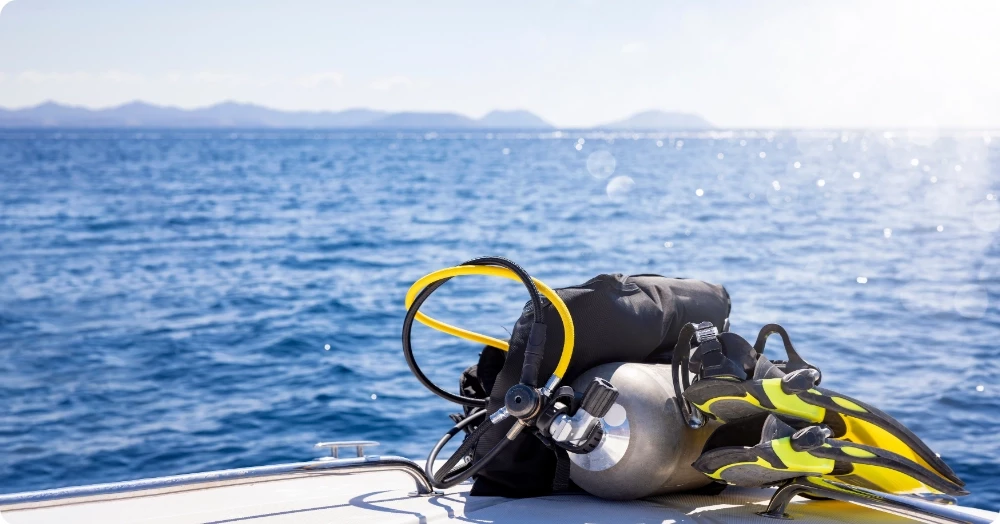
The boat equipped for diving
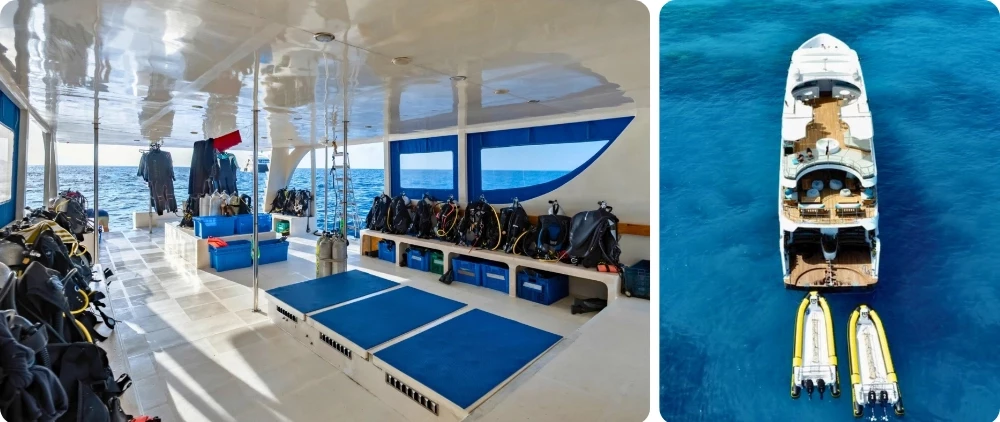
A diving cruise boat is a true floating dive centre. You will find one or more compressors, a vast “dive deck” where each diver has their own spot, a rear platform and semi-rigid tenders to reach the sites as closely as possible. The boat provides the tanks (most often 12 L aluminium, sometimes 15 L steel in the Red Sea, DIN/yoke fitting) and the weights. Nitrox is very widespread, sometimes free for certified divers. You, on the other hand, bring your computer, your surface marker buoy and your torch.
Safety: insurance, medical certificate, plane-to-dive interval
Cruise diving requires heightened vigilance over safety. Equip yourself with a recent medical certificate of fitness and take out diving insurance covering the hyperbaric chamber and repatriation (for a French audience, DAN Europe is the reference). Strictly respect the interval between the last dive and the plane: at least 18 to 24 hours, even more depending on the profile of your dives. On a cruise, where you string together several dives a day over several days, keep the 24-hour benchmark in mind. Also remember to recover from the outbound flight before the first dive: after a long journey, fatigue and dehydration call for waiting a few hours before descending. Finally, check the entry formalities (visa, passport validity). Note that a cruise's multi-risk insurance does not always cover diving: this is a point to check precisely.
What to pack in your suitcase?
For documents and personal equipment, refer to the checklist given above (card, logbook, medical certificate, computer, surface marker buoy, torch). Beyond that, think about comfort and eco-responsibility: reef-safe sunscreen, thermal protection suited to the season, sunglasses, and something to keep you occupied during the surface intervals. On distant destinations, a local SIM card is often more economical than your home plan for staying reachable.
How to choose and book your diving cruise well
A few reflexes for a successful trip:
- Plan ahead: the best dates often go a year in advance, particularly for Raja Ampat
- Check the required level of the itinerary before booking, as well as the minimum number of dives sometimes required
- Choose the right boat according to the comfort sought and the capacity (a small group offers a more intimate experience)
- Set the season to the fauna you hope to encounter
If in doubt, a specialist advisor guides you towards the itinerary suited to your level and your wishes.
The alternative: rent your boat and dive at the stopovers
Not every way to dive at sea goes through a liveaboard. If you prefer to compose your own itinerary, renting a sailing yacht or a catamaran lets you sail at your own pace and dive during the stopovers, through local diving centres. A sailing yacht rental in Croatia is, for example, ideal for combining sailing with exploring wrecks at anchor, just like a boat rental in Greece between the Cyclades. The rented boat is not equipped for scuba diving: you snorkel from the deck and book your outings at anchor, generally from €45 to €90 per dive, to which access fees for protected areas are sometimes added.
A regulatory point to know: in most areas, autonomous diving directly from the rented boat is prohibited. For reasons of safety and local regulations, scuba dives must go through an approved dive centre, with its own boat and equipment. In practice, you book a dive pass with a local centre, and the skipper drops the divers off at the planned sites.
Who it is for: groups of diving friends who want their freedom, mixed families combining divers and non-divers, and autonomous divers attached to their own pace.
The most suitable areas: Croatia and its wrecks, Greece, the Caribbean and its best diving spots in Martinique, French Polynesia and its Leeward Islands, or the Egyptian coast, which combine pleasure sailing and dive centres at the stopovers.
The limits to know: this formula depends on the local centres available along your route, does not offer the volume of dives of a liveaboard, and is not suited to technical diving. For a 100% intensive diving programme, the dedicated cruise remains the right choice.
Fancy talking it over? Our advisors help you weigh up a diving cruise against a rental according to your profile, and draw up a free quote tailored to your group.
Frequently asked questions about diving cruises
Do you need a certification to go on a diving cruise?
To scuba dive, an Open Water (PADI/SSI) or Level 1 (CMAS) level is the minimum. Sites with current often require an Advanced / Level 2 level. Without certification, you can do a supervised try dive or go snorkelling.
What is the difference between a day cruise and a diving cruise?
Day diving departs from a club on shore and brings you back to the hotel every evening; the diving cruise keeps you on board for several days, sails from one site to another and gives access to isolated reefs, with a far higher volume of dives.
How many dives do you do per day?
Generally three to four dives per day, often including a night dive, that is 14 to 20 dives over a week depending on the itinerary.
Is the diving equipment provided on board?
The tanks and weights are provided; the computer, the surface marker buoy and the torch are to be brought. The wetsuit or the regulator can generally be rented on board, preferably to be reserved in advance.
What is the best destination to start?
The Red Sea is ideal for a beginner diving cruise: warm, clear waters, varied sites, the possibility of taking your first level on site and a budget kept down compared with the Indian Ocean or the Pacific.
Is Nitrox useful on a cruise?
Yes, strongly recommended on intensive cruises: enriched air reduces fatigue and extends dive times. A Nitrox certification is required, often available on board.
How much does a diving cruise cost?
Allow on average, flights not included, from €2,500 to €18,000 a week for a standard itinerary, with a package of 14 to 16 dives. Exceptional destinations such as Raja Ampat or the Galápagos sit at the top of this range, or even beyond.
Can you dive directly from a rental sailing yacht?
Rarely autonomously: in most areas, scuba diving from the rented boat is prohibited for reasons of safety and regulations. The solution is to book a dive pass with an approved local centre, which provides the boat and equipment, the skipper dropping you off at the sites. A few units can carry a compressor and tanks, but this remains the exception.
Does my insurance cover diving during the cruise?
Not systematically: the practice of diving may be regulated, limited or excluded depending on the contracts. Check the precise conditions with your advisor and arrange, if necessary, dedicated diving insurance covering the chamber and repatriation.
Source used for this article :