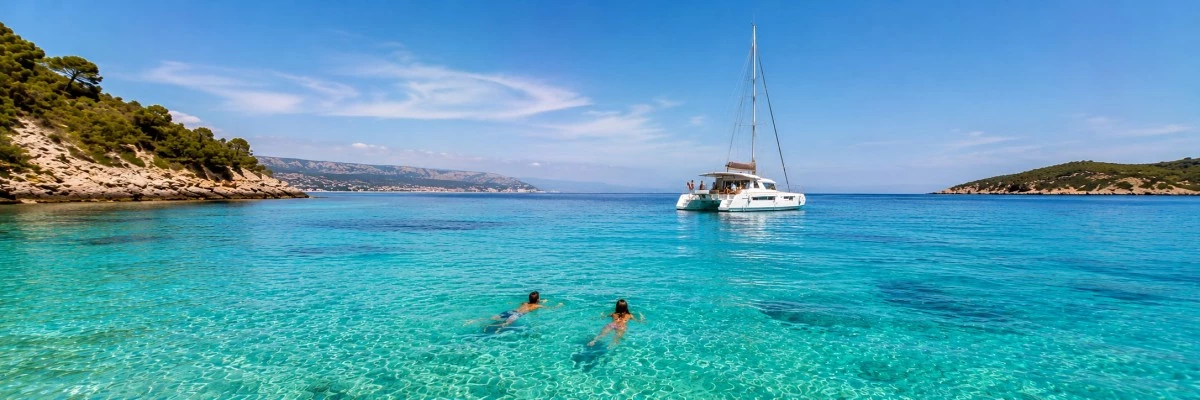
A family sailing holiday with teenagers (ages 12-17) gives children who are growing up a rare taste of independence: taking the helm, jumping off the deck into a hidden cove, sharing real moments away from screens. As Christine told us after a week setting off from Majorca: "It was a wonderful discovery, one to do again!" The essentials in five questions:
- From what age? From 12 with no difficulty; adolescence is actually the ideal age to take an active part in sailing.
- Which option? Skipper, full crew, cabin charter or bareboat, depending on your experience and your budget.
- Which destination? The Ionian Islands and Croatia for a first time, the Cyclades, the Balearics or the Caribbean to mix things up.
- What budget? From around £1,900 per week for a monohull in low season, up to more than £11,200 for a large catamaran in high season.
- How to avoid boredom? Snorkelling, paddleboarding, wakeboarding, the helm handed over to your teenager, lively ports of call and a friend on board: there is no shortage of options.
Offer9fdb2d92-3981-458c-813e-e856f1c305e0
Summary
- 1. Why a sailing holiday really does suit teenagers
- Independence and responsibilities on board: the teenager becomes a crew member
- Switching off vs staying connected: managing screens and Wi-Fi wisely
- Activities that appeal to teenagers (snorkelling, paddleboarding, wakeboarding, diving, the helm)
- What if my teenager doesn't want to come? How to win them over
- 2. What age to go with a teenager?
- 3. Which option to choose?
- Charter with a skipper: freedom with guidance
- Full crew: no hassle for the parents
- Cabin charter: for sociable teenagers
- Bareboat: if one parent has sailing experience
- Inviting your teenager's friend on board: what you need to know
- Which length to choose (1 week, 10 days, 2 weeks)?
- 4. Yacht or catamaran: what to choose with teenagers?
- 5. The best destinations for a sailing holiday with teenagers
- The Ionian Islands (Greece): calm waters, ideal for a first time
- The Cyclades (Greece): anchorages, snorkelling, lively ports of call
- Croatia: calm waters, coves, cities to explore
- The Balearics: a young vibe, beaches, short passages
- The Caribbean: turquoise waters and water sports
- The French Riviera and Corsica: closely spaced ports of call, reachable by train
- 6. When to go as a family with teenagers?
- 7. How much does a family sailing holiday cost?
- Indicative price ranges 2026
- A concrete worked example: a week in Croatia for 4 people
- What is included and what is not
- Tips for optimising your budget
- 8. Organising daily life on board with teenagers
- Cabins and privacy: the real question
- Meals and pitching in with the chores
- Seasickness: preventing and managing it
- Wi-Fi and connectivity at sea: what really works
- 9. Safety: sailing with peace of mind with teenagers
- 10. Sailing holiday vs teen club, camp, classic holiday: what to choose?
- 11. The Filovent checklist before setting sail
- 12. FAQ: your questions about family sailing holidays with teenagers
- From what age can a teenager go on a sailing holiday?
- What can I do if my teenager gets bored on board?
- Is there Wi-Fi on board?
- Yacht or catamaran for a family with teenagers?
- What budget for a week as a family?
- Do you need a licence to charter the boat?
- Can you go with teenagers who can't swim?
- Can you invite one of my teenager's friends on board?
- What can I do if my teenager gets seasick?
- What is the ideal length for a first sailing holiday with teenagers?
- 13. Why choose Filovent for your family sailing holiday?
Why a sailing holiday really does suit teenagers
The teenager is often imagined as reluctant to go on holiday "with the parents". Sailing turns that cliché on its head. On board, the young person is not a spectator: they become an active participant. They are given real independence and water sports accessible straight from the boat. Switching off, meanwhile, becomes a choice rather than something imposed. A yacht or a catamaran offers exactly what this age group is looking for: freedom, thrills and a reassuring setting.
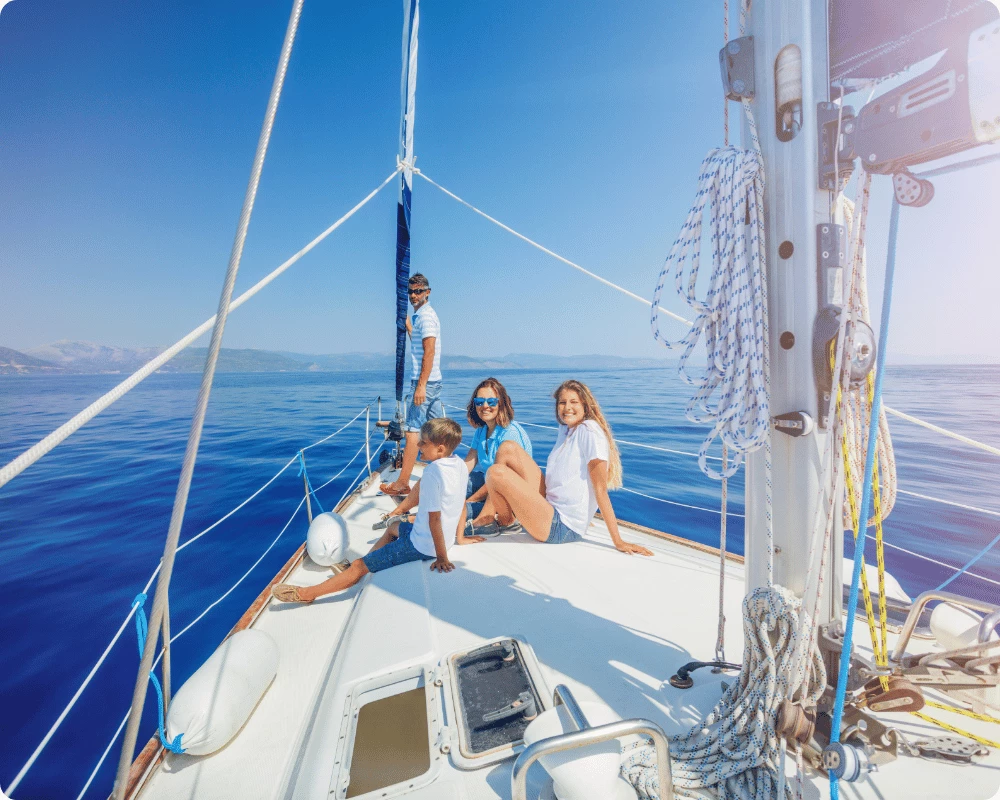
Independence and responsibilities on board: the teenager becomes a crew member
On board, a teenager aged 12 to 17 is not a passenger: they are a crew member. Taking the helm under the skipper's watchful eye, hoisting a sail, coiling a line, keeping an eye on the course, handling the anchoring: these are all concrete responsibilities that make the young person feel valued and take them out of their comfort zone. This growth in independence is one of the benefits most often mentioned by families on their return. Many teenagers come home keen to take a boating qualification or to join a sailing club.
Switching off vs staying connected: managing screens and Wi-Fi wisely
The number one worry for parents: "my teenager will spend the whole week on their phone". The reality on board works in your favour. Under way, the mobile signal becomes intermittent and activities naturally take over. The idea is not to ban screens, but to set boundaries: there is no signal mid-crossing anyway, Wi-Fi is available in port, and you agree the time slots together at the start of the holiday. We set out the connection solutions (coastal 4G, Starlink, router, blackspots) further on, in the life on board section.
Activities that appeal to teenagers (snorkelling, paddleboarding, wakeboarding, diving, the helm)
For a teenager, this is often where the success of the holiday is decided. Most boats carry a paddleboard and snorkelling gear (fins, mask and snorkel), and many bases offer an optional wakeboard, a tow tube or a water-ski kit. At a port of call, young people over 12 can try diving: the pool taster session (the Bubblemaker programme) is open from age 8, the Junior Open Water Diver certification from age 10, and the Open Water certification with no age restriction from age 15[1] (PADI, the world's leading scuba diving training and certification organisation). Add swimming in coves reachable only from the sea, and boredom becomes rare.
What if my teenager doesn't want to come? How to win them over
This is the real question many parents ask themselves, and it deserves an honest answer. A teenager who is reluctant often fears three things: boredom, a lack of privacy and the absence of friends. All three can be addressed. Involve them from the planning stage: let them choose a port of call, an activity, a snorkelling spot. Offer them real time at the helm. And above all, suggest they invite a friend (see below): this is often the argument that turns an "I don't want to" into a "when are we leaving?". A catamaran, being more spacious, also reassures young people who are attached to their own space.
What age to go with a teenager?
There is no statutory minimum age for taking a teenager on board: from 12, every type of boat is an option. But the experience on board is not the same across age groups, and tailoring the programme to your child's maturity changes everything.
Between 12 and 14, the young person is still in a playful frame of mind: they love water sports (paddleboarding, snorkelling, swimming), taking the helm under supervision and joining in the smaller manoeuvres. At this age, it is best to favour short passages and closely spaced ports of call so the hours at sea never become a burden. The safe environment of a crew or a skipper is ideal, and having a brother, a sister or a friend of the same age makes all the difference.
Between 15 and 17, a teenager can become a genuine crew member: the helm with relative independence, chart reading, real involvement in manoeuvres, outings on the paddleboard or in the dinghy under supervision. This is also the age when the need for social independence is strongest: a cabin charter (meeting other travellers) or a friend on board makes complete sense here. The keenest can even aim for a diving taster or a first taste of a boating qualification.
Which option to choose?
The choice of option shapes your budget, your level of involvement and everyone's comfort all at once. Here are the four ways to set sail.
Charter with a skipper: freedom with guidance
You choose the boat and plan the itinerary together with your Filovent adviser, then a professional skipper takes the helm and handles the sailing, the weather and safety. This is the ideal option for a family with no experience, who want to make the most of the ports of call while still letting the teenagers join in the manoeuvres in complete safety. Allow £175 to £245 per day for the skipper depending on the area, on top of the charter price.
Full crew: no hassle for the parents
Skipper plus host-cook: full board, cleaning and housekeeping included. This is the most comfortable option, perfect for parents who want a holiday with no logistics whatsoever. The crew is used to working around family rhythms and frees up time to enjoy the teenagers. Allow an extra £350 to £525 per day for a full crew.
Cabin charter: for sociable teenagers
You board a boat shared with other passengers, booking one or two cabins. This is the most affordable option and the most sociable, ideal for an outgoing teenager who will meet other travellers and sometimes other young people on board. A sensible family tip: allow one cabin per couple and one cabin for two young people at most, and go for a boat with at least two heads (bathrooms). Discover our cabin charter offers.
Bareboat: if one parent has sailing experience
Bareboat means chartering without a skipper, reserved for parents who can show genuine sailing experience. In the UK there is no legal requirement to hold a licence to charter; charter companies, however, ask for a documented sailing CV, the ICC (International Certificate of Competence) in most Mediterranean countries (Greece, Croatia, Italy and so on), and often the restricted radio operator's certificate (VHF/SRC). It is the most economical and the freest option, and a wonderful school for young people who get involved in the manoeuvres. To book if you have already sailed in conditions comparable to your future cruising area.
Inviting your teenager's friend on board: what you need to know
This is one of the most common questions, and the answer is yes: bringing along your teenager's friend changes everything. The young person has a playmate of their own age, the parents get some time back for themselves, and the atmosphere on board is transformed. A few points to plan for: your teenager's friend travelling abroad without their own parents should carry, in addition to the required identity document, a letter of consent signed by a person with parental responsibility, together with a copy of the signatory's identity document[2] (GOV.UK, official UK government guidance on children travelling abroad). Also plan for their own travel insurance, valid identity documents and an extra berth in the cabin count. Finally, check the boat's maximum capacity.
Which length to choose (1 week, 10 days, 2 weeks)?
The week remains the benchmark format, plenty for a first family sailing holiday: time to find your feet, string together ports of call and vary the activities without the teenagers growing tired. Ten days to two weeks open the door to more ambitious itineraries and a true cruising rhythm, where sailing becomes second nature for the whole family. Below five days, the transfers eat up too large a share of the trip.
Yacht or catamaran: what to choose with teenagers?
This decision matters just as much as the choice of charter type. The table below sums up the differences that really matter when travelling with teenagers.
| Criterion | Monohull yacht | Catamaran |
| Living space | Compact, sociable | Very spacious (saloon, cockpit, trampoline) |
| Cabin privacy | Cabins close together | Cabins set apart in the hulls |
| Stability (seasickness) | Heels under sail | Almost flat, reassuring |
| Sailing feel | More sporty, authentic | Gentle and comfortable |
| Budget | More economical | Higher |
| Ideal for | Sailing families, sporty teenagers | Families after comfort and space |
In practice, the catamaran stands out as the number one choice for families with teenagers: its separate hulls give each teenager a real space of their own, the forward trampoline becomes a sun deck and a play area, and its stability spares the most sensitive from seasickness. The yacht nonetheless keeps its appeal: more economical and more sporty, it will appeal to young people who love a thrill and to families who want to pass on a love of sailing. Compare our catamaran charter and yacht charter offers to find the ideal boat.
The best destinations for a sailing holiday with teenagers
Not all destinations are equal when teenagers are on board. You want short passages, waters good for swimming, ports of call with character and things to do ashore. Here are our six favourite areas, from the most accessible to the most exotic.
The Ionian Islands (Greece): calm waters, ideal for a first time
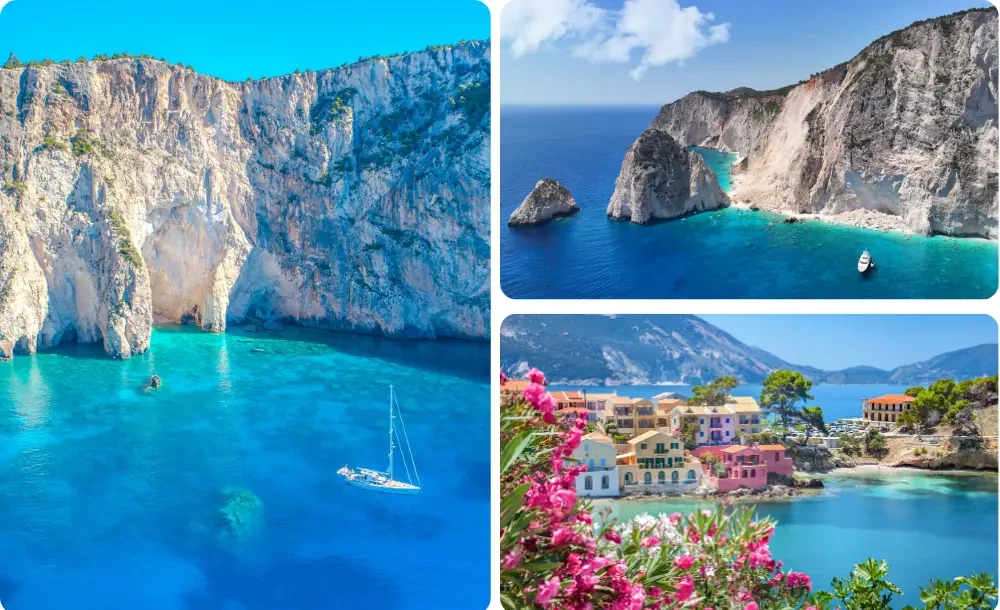
Off the west coast of Greece, the Ionian Islands (Corfu, Lefkada, Paxos, Kefalonia, Ithaca, Zakynthos) are the ideal ground for a first family sailing holiday. The distances are short, the winds moderate and steady, the anchorages numerous and sheltered: perfect for reassuring parents and easing teenagers in gently. Turquoise waters, spectacular beaches and welcoming tavernas complete the picture. For an even quieter first time, consider boat hire in Kythira.
The Cyclades (Greece): anchorages, snorkelling, lively ports of call
Windier (the meltemi blows in summer, often force 5 to 7, even 8 in July and August), the Cyclades appeal to teenagers with their lively ports of call: Mykonos the party island, Paros, Naxos, Santorini. Between snorkelling in crystal-clear coves and evenings in white-and-blue villages, this is a destination that particularly appeals to young people in search of life and discovery. As Mathieu recounted on his return from a family sailing holiday in the Cyclades, Greece proved to be "a perfect destination for a fairly family-friendly cruise".

Croatia: calm waters, coves, cities to explore
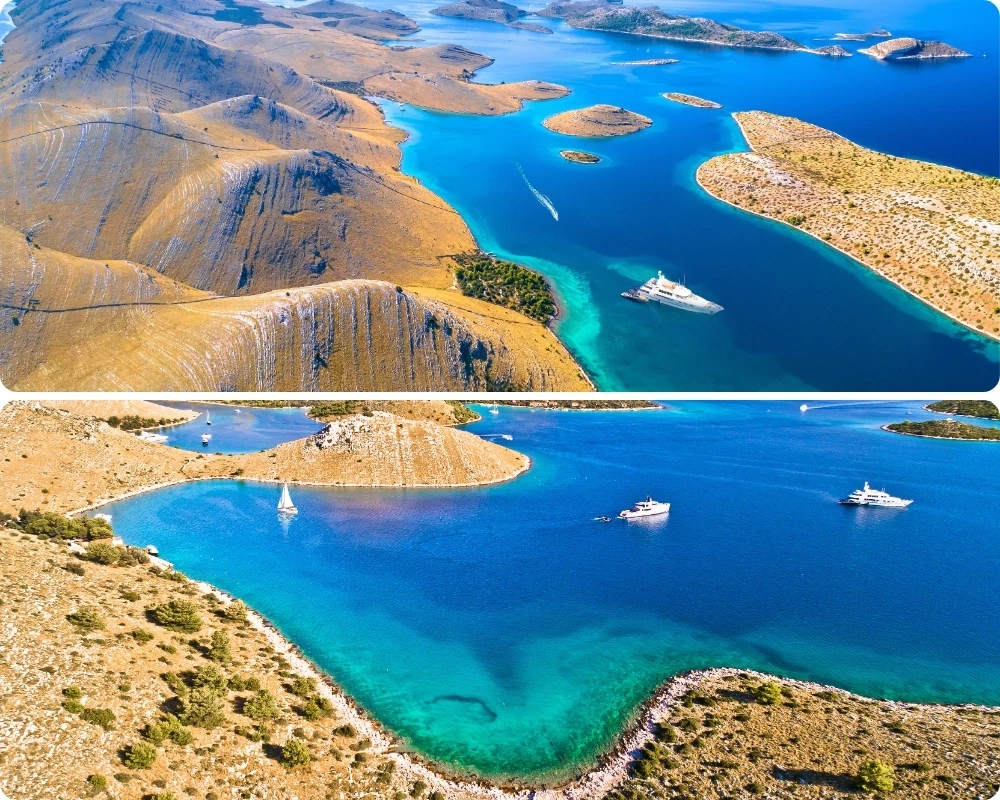
Croatia and its string of more than 1,000 islands offer a calm, sheltered sea, ideal for swimming and short passages. Teenagers love alternating between wild anchorages, swims in waters of rare clarity and visits to vibrant cities such as Split, Dubrovnik or Hvar. A safe bet for combining nature and culture without ever growing tired. To go further, browse our offers for boat hire in Croatia.
The Balearics: a young vibe, beaches, short passages
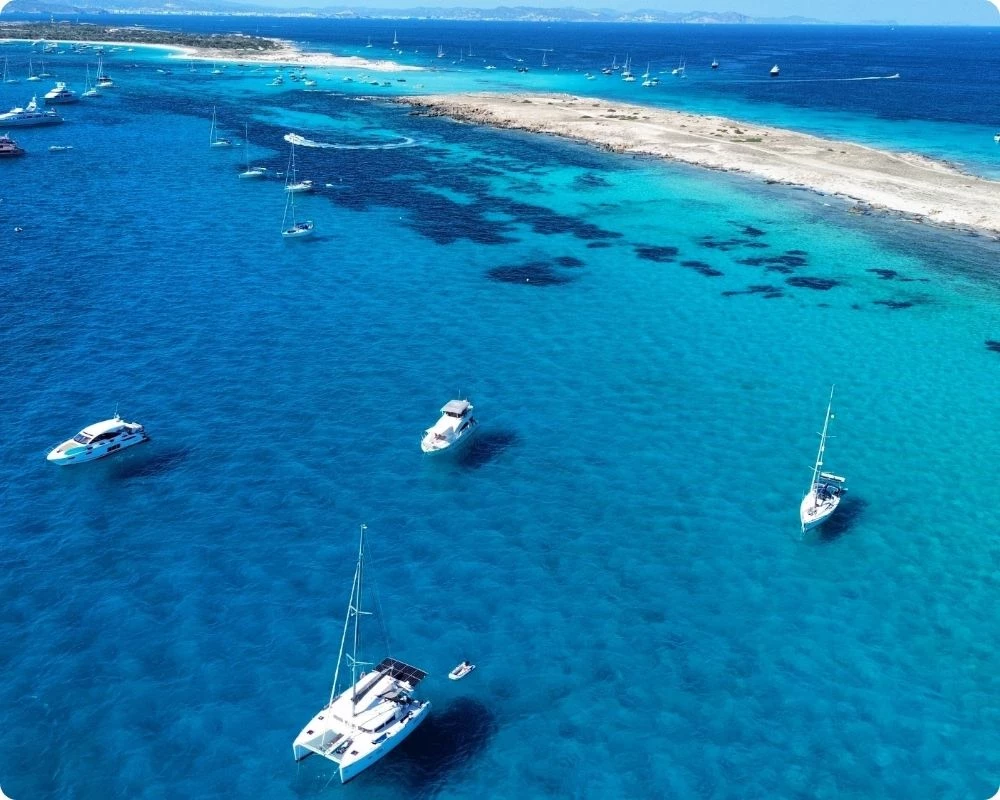
Majorca, Menorca, Ibiza and Formentera bring together everything teenagers love: dream beaches, a young and lively vibe, turquoise coves and short distances between the islands (15 to 30 nautical miles). Here you can easily combine swimming, water sports and outings ashore.
The Caribbean: turquoise waters and water sports
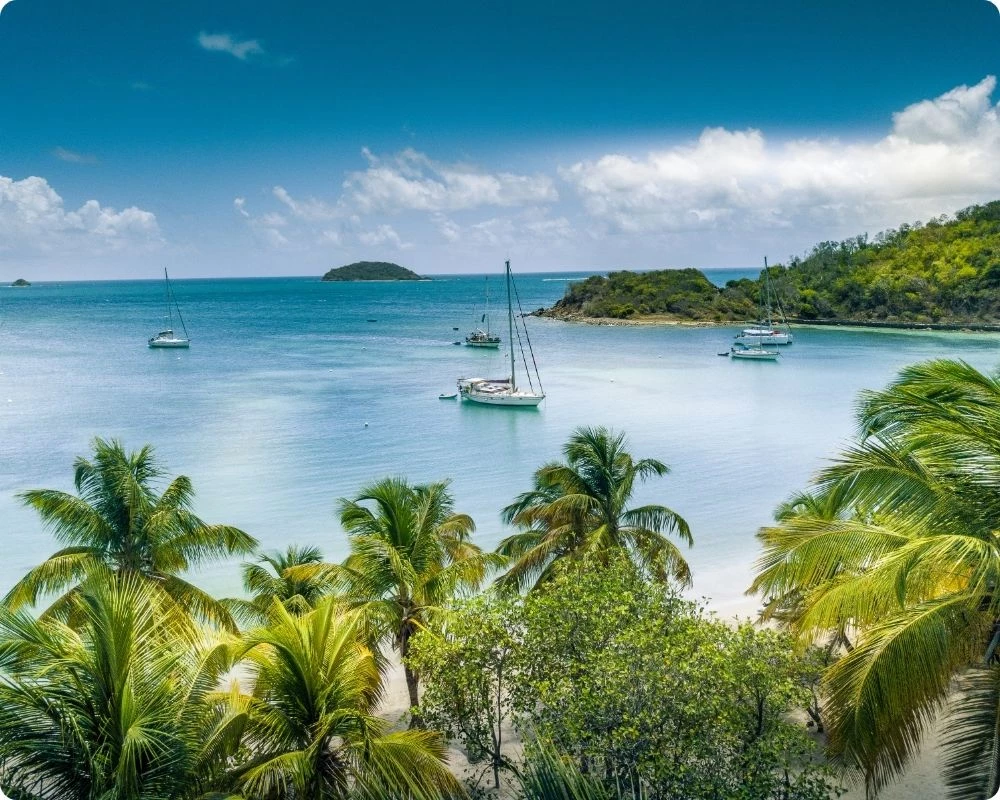
For a long-haul sailing holiday during the Christmas school holidays, the Caribbean (the Grenadines, the Virgin Islands, Guadeloupe, Martinique) unfolds turquoise waters, exceptional seabeds and a wealth of water sports. The catamaran reigns supreme here: stable, spacious, perfect for teenagers who will spend their days in the water.
The French Riviera and Corsica: closely spaced ports of call, reachable by train
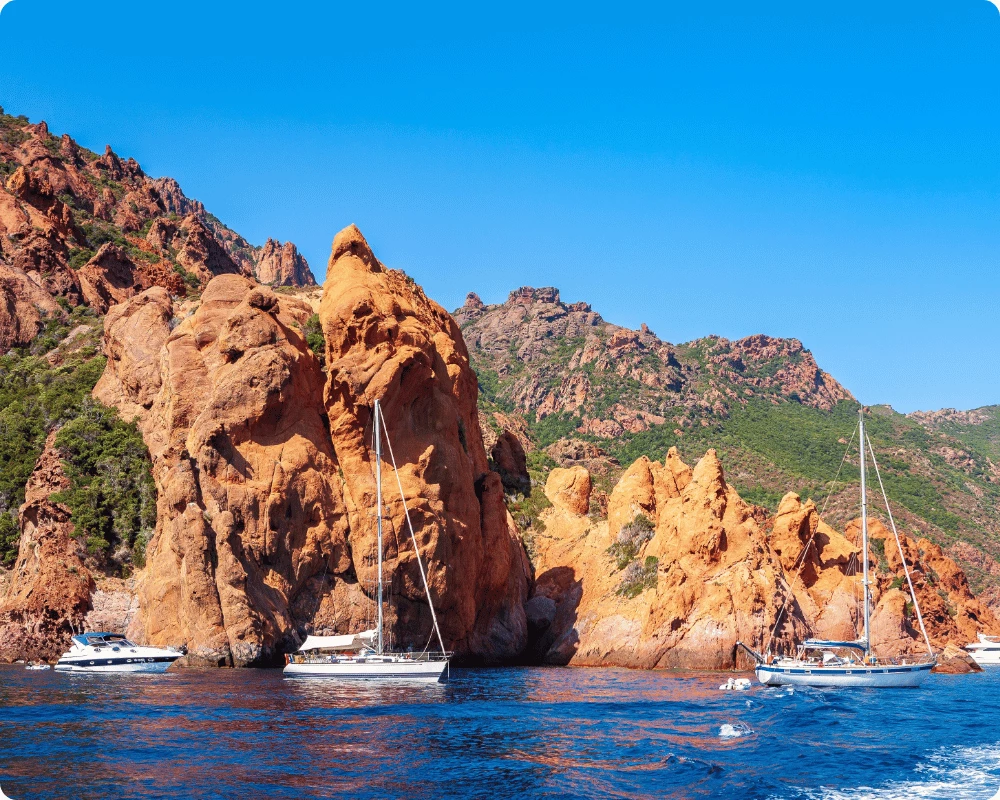
Not keen on flying? The French Riviera and Corsica are reachable by train or by car and offer closely spaced ports of call between wild coves and lively harbours. Corsica, in particular, combines crystal-clear waters, hiking and hilltop villages: an excellent compromise for a first sailing holiday close to home.
When to go as a family with teenagers?
With teenagers in school, the calendar is largely constrained by the school holidays: the Easter holidays, the summer holidays (July to early September), the autumn half-term (late October) and Christmas (late December). The good news is that the Mediterranean lends itself to sailing from May to October, and the best windows are not necessarily the most expensive.
To help you choose, here are the average temperatures in the Mediterranean (air and sea) across the sailing season, based on readings in the Balearics, which are representative of the western basin:
| April | May | June | July | August | Sept. | Oct. | |
| Min air temp | 12 °C | 14 °C | 18 °C | 21 °C | 21 °C | 20 °C | 16 °C |
| Max air temp | 21 °C | 24 °C | 28 °C | 31 °C | 32 °C | 28 °C | 24 °C |
| Sea temp | 16 °C | 18 °C | 22 °C | 25 °C | 26 °C | 25 °C | 22 °C |
Tip by profile: families who can only go in July and August enjoy guaranteed swimming and long days, but they must book from the previous autumn (the best boats go first) and accept the crowds and peak prices. Those who can shift to the Easter holidays, the autumn half-term, or a departure just before or after the summer (late June, early September) win on every front: water still at 24-25 °C in September, calmer coves, and charter rates 15 to 30% lower. For a winter sailing holiday in the warmth, head for the Caribbean over the Christmas or February half-term.
How much does a family sailing holiday cost?
Indicative price ranges 2026
Here are the average price ranges at Filovent for a one-week boat charter in the Mediterranean, excluding extras (flights or transfers, fuel, mooring fees, provisioning, insurance):
| Type of boat | Low season (April, October) | Mid season (May, June, September) | High season (July, August) |
| Monohull (3 cabins) e.g. Sun Odyssey 410 | £1,900 | £2,500 | £3,600 |
| Monohull (4 cabins) e.g. Bavaria 46 | £2,700 | £3,350 | £4,850 |
| Catamaran (3-4 cabins) e.g. Lagoon 42 | £4,200 | £6,250 | £9,200 |
| Catamaran (4-5 cabins) e.g. Lagoon 46 | £5,850 | £7,900 | £11,250 |
| Cabin charter per person | £1,000 | £1,250 | £1,600 |
These amounts are to be confirmed via the quote tool or with your adviser at the time of booking.
A worked example: a week in Croatia for 4 people
Take a family of four (two parents, two teenagers), setting off in the second week of July in Croatia on a Lagoon 42 catamaran with a skipper. Catamaran charter: around £9,200. Skipper: around £1,350 for the week. Provisioning and on-board kitty (shared food fund): around £675. Fuel and mooring fees: around £600. That comes to a total of around £11,825 for the family, around £2,955 per person, flights not included. By shifting to late June or early September, the same sailing holiday drops well below the £9,200 mark overall.
What is included and what is not
Generally included in the charter price:
- The boat charter
- The bed linen
- The statutory safety equipment
- Often a paddleboard and snorkelling gear
To budget for separately:
- Skipper or crew depending on the option chosen
- Fuel: £175 to £600 depending on the distance and how much you motor
- Mooring fees and taxes: variable depending on the area and the ports of call
- Provisioning and on-board kitty (meals, drinks)
- Leisure options: wakeboard, tow tube, diving at a port of call
- Flights or transfers to the departure base
- Travel insurance (Travel Pack, Filovent's travel insurance, or equivalent)
Tips for optimising your budget
Fill the boat to capacity: with several families or by inviting one of your teenager's friends, the cost per person drops sharply. A 4-cabin catamaran shared between two families works out far cheaper per head than a single cabin.
Favour the shoulder seasons as soon as the school holidays allow (spring, autumn half-term, late June, early September): up to 30% savings compared with July and August, for conditions that are often excellent.
Book early: early-booking deals (discounts of 5 to 10%) and the availability of the best boats reward families who get organised six to nine months ahead.
Organising daily life on board with teenagers
The success of a sailing holiday with teenagers owes as much to the organisation of daily life as to the choice of boat. A few points are worth planning ahead.
Cabins and privacy: the real question
A teenager needs their own space. The golden rule: one cabin per couple and one cabin for two young people at most, and ideally two heads (bathrooms) to avoid the morning queues. On this point, the catamaran comes out on top: its cabins, housed in separate hulls, offer a privacy that the monohull struggles to match.
Meals and pitching in with the chores
Involving teenagers in life on board means heading off boredom and giving them responsibility. Entrust them with tasks: preparing a meal, doing the washing-up, handling the provisioning at a port of call (our provisioning checklist can serve as their mission), keeping an eye on the dinghy. On a crewed holiday, the host handles the meals; on a bareboat or skippered charter, cooking becomes a collective project that gives the days a pleasant rhythm.
Seasickness: preventing and managing it
Seasickness mainly affects those prone to it, and remains rare in the summer Mediterranean and almost non-existent on a catamaran. To prevent it: fix your eyes on the horizon, stay out in the fresh air in the cockpit, avoid reading or staring at a screen while under way, sleep well and stay hydrated. If sensitivity is known, solutions exist (wristbands, suitable medication): ask your doctor or pharmacist for advice before departure.
Wi-Fi and connectivity at sea: what really works
A sensitive subject with teenagers, so let's be practical. Near the coast, 4G works very well in the Mediterranean: a simple mobile plan is enough for most ports of call and coastal anchorages. More and more recent boats and charters are now fitted with Starlink, satellite internet, which provides a stable connection even offshore: in 2026 it has become common equipment well worth checking when you book. Failing that, some crews offer a 4G router with an aerial. By contrast, without Starlink and far from the coast, you have to accept the blackspots: that is precisely where switching off becomes an asset. The tip: set the ground rules on day one rather than promising a permanent connection.
Safety: sailing with peace of mind with teenagers
Safety is the condition for a successful family sailing holiday, and it rests on simple but non-negotiable rules. Every crew member has a life jacket in their size, suited to their build and weight, as required for pleasure craft: in the UK, the Maritime and Coastguard Agency sets out the safety guidance for recreational boating[3] (Maritime and Coastguard Agency, the reference for pleasure-craft safety); the skipper gives a full briefing at departure (equipment, procedures, anchoring points). A few common-sense rules to set from day one: no swimming without an adult present and the engine off, always moving about on board with "one hand for yourself, one hand for the boat", and wearing a life jacket in bad weather or at night.
One question often comes up: can you let a teenager use the dinghy (tender) or the paddleboard on their own? The answer calls for clear rules. For the paddleboard, independence is feasible within a defined anchorage area, with a life jacket and under visual supervision from the boat. For the motorised dinghy, caution is essential: use supervised by an adult, never alone for the youngest, and always with a life jacket and the kill cord on the wrist. It is up to the skipper or the responsible adult to set the limits according to the teenager's maturity and the conditions.
Sailing holiday vs teen club, camp, classic holiday: what to choose?
To place a sailing holiday alongside the other holiday options with teenagers, here is a quick comparison. No option is perfect: a sailing holiday shines on shared time and adventure, but it also has its limits (entry budget, an itinerary constrained by the weather).
| Criterion | Family sailing holiday | Summer camp / teen camp | Classic holiday (hotel, rental) |
| Time as a family | Maximum, shared | None (teenager alone) | Variable |
| Teenager's independence | Strong (crew member) | Strong (among peers) | Low to moderate |
| Adventure and novelty | Very high | High | Moderate |
| Switching off from screens | Natural | Supervised | Low |
| Friends of the same age | If a friend is invited or cabin | Guaranteed | Depends on context |
| Entry budget | High | Moderate | Variable, often lower |
| Freedom of itinerary | Subject to the weather | Fixed programme | Total (ashore) |
| Suitable for very young teenagers alone | Supervision required | Yes (with supervisors) | Yes |
The verdict: where a camp takes the teenager away from their family and a classic holiday struggles to get them to switch off, a sailing holiday pulls off the rare feat of combining shared time, independence and adventure. In return, it calls for a higher entry budget and a degree of flexibility on the itinerary, which depends on the weather. And by inviting a friend, you even recover the "friends of the same age" argument from the camp.
The Filovent checklist before setting sail
To set off with peace of mind with teenagers, here are the essentials to prepare.
- Soft bags (no hard suitcases, hard to stow in a cabin)
- Clothing: swimwear, a windproof jacket, a light jumper for the evenings, shoes with white non-slip soles
- Sun protection: high-factor cream, sunglasses, a cap or hat
- Personal kit: a correctly sized mask and snorkel, a dry bag for the teenagers' things
- First-aid kit with seasickness medication if sensitivity is known
- Valid identity documents for each member, teenagers included
- For an invited minor friend: a letter of consent, identity documents and insurance
- Travel insurance certificate (Travel Pack or equivalent)
FAQ: your questions about family sailing holidays with teenagers
From what age can a teenager go on a sailing holiday?
From 12, with no statutory minimum age. Adolescence is actually the ideal age to take an active part in sailing, adapting the programme depending on whether your child is 12-14 or 15-17.
What can I do if my teenager gets bored on board?
Hand them the helm, bring a paddleboard and snorkelling gear, plan lively ports of call and let them invite a friend. Inviting a friend of the same age is often the most effective remedy against boredom.
Is there Wi-Fi on board?
Yes, most of the time: 4G near the coast, and more and more boats fitted with Starlink in 2026. Mid-crossing, however, expect blackspots.
Yacht or catamaran for a family with teenagers?
The catamaran generally comes out on top (space, privacy, stability); the yacht remains more economical and sporty. The choice depends above all on your teenagers' profile and on your priority between comfort and thrills.
What budget for a week as a family?
From £1,900 (monohull, low season) to £11,250 (large catamaran, high season), excluding extras (skipper if any, fuel, provisioning, mooring fees and insurance).
Do you need a licence to charter the boat?
With the skippered, crewed or cabin charter options, no licence is required. On a bareboat (without a skipper), there is no legal licence requirement in the UK, but charter companies ask for a sailing CV and the ICC for trips abroad. All the details in our FAQ is a boat licence required to charter a boat.
Can you go with teenagers who can't swim?
Yes, with systematic life jacket wear during water activities and swimming, adult supervision and sheltered anchorages. A sailing holiday can even be the chance to rebuild confidence in the water.
Can you invite one of my teenager's friends on board?
Yes. Remember the letter of consent if the minor friend is travelling without their parents, their identity documents and insurance, and the extra berth (checking the boat's maximum capacity).
What can I do if my teenager gets seasick?
Favour the catamaran (almost flat), fix your eyes on the horizon, stay out in the fresh air and avoid screens while under way. If sensitivity is known, see your doctor or pharmacist before departure.
What is the ideal length for a first sailing holiday with teenagers?
A week, ideal for finding your feet without growing tired. Ten days to two weeks then suit families who have caught the sailing bug.
Why choose Filovent for your family sailing holiday?
Planning a sailing holiday with teenagers means juggling the choice of boat, option, destination and timing. Our specialist advisers know the boats suited to families, the bases that offer the leisure equipment that makes the difference, and the itineraries that never bore teenagers. Once your boat is booked, our concierge team takes over: transfers, provisioning ready on arrival, and all the good addresses gathered over the years. Ready to set sail? Start your sailing project with our advisers.
Filovent, a French sailing agency founded in 1995, gives access to more than 18,000 boats across 800 departure bases in 60 countries, with a team of advisers on hand 7 days a week and a customer rating of 4.3/5. We support your project from the first question to the return to port.
Sources used in writing this article: