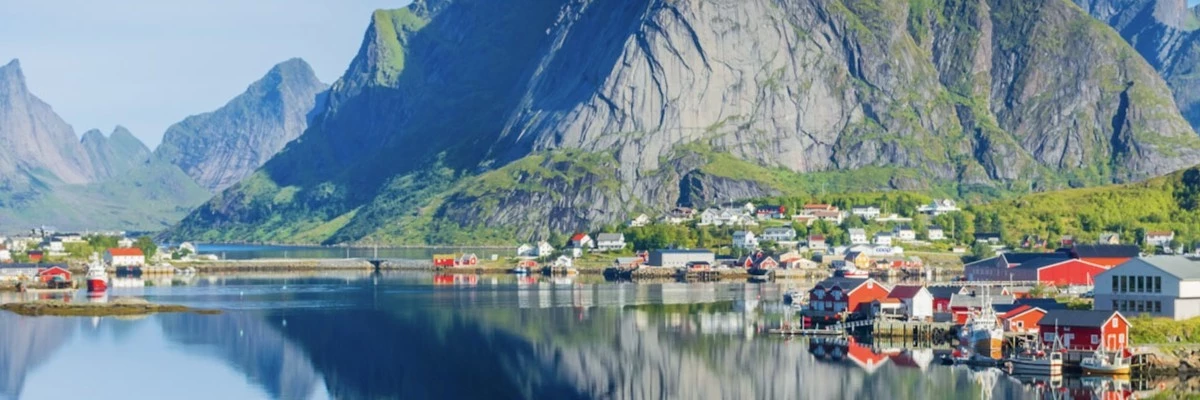
Sailing through the Norwegian fjords on a small boat means reaching arms of water that are off-limits to large ships and anchoring in wild coves. As Nicolas D., a Filovent customer, sums it up: "An exceptional cruise because of its size – neither too big nor too small". The essentials in five points:
- Definition: a sailing yacht, catamaran or expedition yacht carrying 4 to 25 passengers, as opposed to the large international cruise ships (1,500 to 3,500 passengers).
- Key benefit: access to narrow fjords such as the Nærøyfjord (UNESCO) or the Trollfjord, anchorages in deserted coves, itineraries built at your own pace, and a carbon footprint up to 10 to 15 times lower than a cruise ship according to available studies.
- Best season: July–August for the midnight sun, September for the best value for money, winter for the Northern Lights.
- Starting budget: from £2,250 per week for a 3-cabin monohull in low season, up to £19,000 for a 5-cabin catamaran with skipper in high season.
- Who it's for: seasoned skippers go bareboat, families and groups choose a boat with skipper or full crew, solo travellers and couples come aboard by the cabin.
Summary
- 1. What is a small boat fjord cruise ?
- 2. Small boat vs cruise ship vs coastal express : 3 ways to explore the fjords
- 3. The 7 must-see destinations to discover on a small boat
- The Sognefjord and the Nærøyfjord, kings of the fjords (UNESCO)
- The Geirangerfjord, the Seven Sisters and the abandoned farms (UNESCO)
- The Hardangerfjord, the orchard fjord
- The Lysefjord and Preikestolen rock
- The Trollfjord and the Hjørundfjord, the secret fjords
- The Lofoten Islands, the Arctic archipelago
- Svalbard and Spitsbergen, the ultimate Arctic expedition
- 4. 3 concrete small boat itineraries through the fjords
- 1 week : Sognefjord loop from Bergen
- 10 days : Lofoten archipelago from Bodø
- 2 weeks : Bergen to Tromsø, the great fjord crossing
- 5. When to go ? The season-by-season calendar
- May and June, the season that opens strong
- July and August, the peak of the midnight sun
- September, the golden window
- Winter, Northern Lights and Arctic sailing
- 6. Which option to choose ? Comparing the 4 charter types
- Charter with skipper, the guided freedom option
- Charter with full crew, skipper and hostess-cook
- Cabin cruise with shared crew
- Bareboat charter, no skipper
- 7. How much does a small boat fjord cruise cost ?
- 8. Regulations, licences and sailing conditions
- Required licences and qualifications
- Weather and tides in the fjords
- Entry documents and formalities
- 9. On-board and on-shore activities
- Iconic hikes during stops
- Kayaking from the boat
- Fishing, wildlife and observation
- Northern Lights and midnight sun
- 10. Preparing for embarkation : the Filovent checklist
- 11. FAQ : your questions about small boat fjord cruises
- When is the best time for a fjord cruise ?
- What budget should I plan for a week on a small boat ?
- Do you need a sailing licence to navigate the Norwegian fjords ?
- What's the difference between Filovent and a coastal express line such as Hurtigruten ?
- Can you sail with children as a family ?
- What's the minimum recommended duration for a fjord cruise ?
- Sailing yacht or catamaran for the fjords ?
- 12. Why choose the small boat in Norway ?
What is a small boat fjord cruise?
A small boat fjord cruise refers to any voyage on board a sailing yacht, a catamaran or an expedition yacht carrying between 4 and 25 passengers maximum, as opposed to large international cruise ships (1,500 to 3,500 passengers). Three things really change the game on board a small boat. First, the itinerary is yours: you (or your skipper) decide each morning where to head. Second, you anchor where no cruise ship can enter, in coves where you won't meet a soul. And third, the human-scale crew turns the cruise into a genuine shared adventure rather than an anonymous hotel service.
In practice, you have four ways to come aboard:
- Charter with skipper: you plan the itinerary and a professional takes the helm.
- Full crew: skipper plus hostess-cook, with hotel comfort included.
- Cabin cruise: you share the boat with other passengers, ideal for travelling solo or as a couple.
- Bareboat charter: no skipper, for those who already have the experience and the matching licence.
These four options cover every profile, from couples to family groups.
Small boat vs cruise ship vs coastal express: 3 ways to explore the fjords
There are three main ways to discover maritime Norway: the private small boat (sailing yacht, catamaran, yacht), the coastal express (Hurtigruten, Havila) which serves Norwegian ports daily, and the large international cruise ship. Here's how they compare on the criteria that really matter:
| Criterion | Small boat (sailing yacht, catamaran, yacht) | Coastal express (Hurtigruten, Havila) | Large cruise ship international |
| Number of passengers | 4 to 25 | 500 to 1,000 | 1,500 to 3,500 |
| Access to Nærøyfjord (UNESCO) | Yes, anchorages possible | Transit only | No |
| Wild anchorage in coves | Yes | No | No |
| Customisable itinerary | Fully tailor-made | Fixed itinerary (34 ports) | Fixed itinerary |
| Contact with the crew | Daily and direct | Limited | Very limited |
| Carbon footprint per passenger | Low (sailing possible) | Moderate (LNG, hybrid) | High |
| Zero-emission compliance 2026 | Yes | In transition | No |
| Budget per person / week | £300 to £5,200 | £1,300 to £3,450 | £870 to £6,900 |
The decisive argument boils down to a figure: the Nærøyfjord, listed as a UNESCO World Heritage Site[1] (United Nations Educational, Scientific and Cultural Organisation, which inscribes and protects natural and cultural sites of global importance) since 2005, is only 250 metres wide at certain points, with walls rising to over 1,700 metres in altitude. No classic cruise ship ventures in there. It is precisely this physical access to the most spectacular areas that fundamentally sets the small boat apart.

Beyond the access, the small boat offers a major ecological advantage: a sailing yacht can emit up to 10 to 15 times less CO₂ per passenger-kilometre than a cruise ship according to available studies. This argument takes on particular importance in 2026 with the entry into force of the zero-emission obligation in the UNESCO fjords of Geirangerfjord and Nærøyfjord, which progressively excludes the most polluting large ships.
The 7 must-see destinations to discover on a small boat
The Sognefjord and the Nærøyfjord, kings of the fjords (UNESCO)
The Sognefjord stretches 204 kilometres inland and reaches 1,308 metres in depth, which makes it the longest and deepest of the Norwegian fjords, and the second longest fjord in the world. Its secondary arm, the Nærøyfjord, has been a UNESCO World Heritage Site since 2005. It's the ideal destination for a first small boat voyage from Bergen (Norway's second city, around 290,000 inhabitants), with possible stops at Flåm, Aurland, Balestrand or Lærdal. Jostedalsbreen glaciers visible year-round, lush valleys, sheer cliffs: everything is packed into a single fjord.

The Geirangerfjord, the Seven Sisters and the abandoned farms (UNESCO)
The Geirangerfjord is arguably the most photographed fjord in the world, with around 800,000 visitors per year. Fifteen kilometres long and a UNESCO World Heritage Site since 2005, it offers iconic waterfalls such as the "Seven Sisters" (250 metres high) and the "Bridal Veil", as well as abandoned farms clinging to the cliffs at 250 to 400 metres altitude (Skageflå, Knivsflå, Blomberg). On a small boat, you can anchor close to these farms and go ashore by tender for short but spectacular walks, impossible from a large cruise ship.

The Hardangerfjord, the orchard fjord
More accessible and gentler than its northern neighbours, the Hardangerfjord, the fourth longest fjord in the world and the second of Norway with 179 kilometres, is famous for its orchards in bloom in May. With more than 500,000 apple and cherry trees grown on its shores, the fjord turns into white and pink carpets in spring – a spectacular phenomenon. It's also the starting point of the Trolltunga hike, one of the most impressive in Norway: 27 kilometres round trip, 10 to 12 hours of walking, a tongue of rock standing 700 metres above Ringedalsvatnet lake. An excellent choice for a first small boat cruise in Norway, as a couple or with the family.

The Lysefjord and Preikestolen rock
The Lysefjord, 42 kilometres long in south-western Norway, is one of the country's most visited fjords thanks to two world-famous sites: Preikestolen (Pulpit Rock), a flat cliff 604 metres above the water, and Kjeragbolten, a boulder wedged in a crevice 984 metres high. On a small boat from Stavanger (Norway's fourth city, oil capital of the country), you reach the foot of these cliffs for views no hiker can admire. The Lysefjord can be sailed there and back in 1 to 2 days, perfect as a complement to a Hardangerfjord itinerary or as a short call.

The Trollfjord and the Hjørundfjord, the secret fjords
These two fjords are inaccessible to virtually all large cruise ships. The Trollfjord, in the Vesterålen archipelago, is only 100 metres wide at its entrance and 2 kilometres long, framed by sheer cliffs reaching up to 1,100 metres. The Hjørundfjord, in the Sunnmøre Alps region, is surrounded by Norway's highest coastal peaks (up to 1,700 metres) and offers a spectacular mineral setting still untouched by mass tourism. Visiting them means stepping into authentic Norway – landscapes that photos struggle to do justice to.

The Lofoten Islands, the Arctic archipelago
The Lofoten Islands, located between 67° and 68° north, combine vertical granite peaks plunging straight into the sea (Vågakallen rises to 942 metres) with colourful fishing villages (Reine, Hamnøy, Henningsvær, Nusfjord, Å). Thanks to the Gulf Stream, the sailing season runs from May to September. It's one of the best places on earth to watch the Northern Lights from September to March and the midnight sun from 28 May to 14 July.

Svalbard and Spitsbergen, the ultimate Arctic expedition
Further north still, the Svalbard archipelago (Spitsbergen, 74° to 81° north) represents the ultimate Norwegian adventure. Polar wildlife (around 3,000 polar bears recorded – more than there are inhabitants – walruses, bearded seals, beluga whales), calving glaciers covering 60% of the territory, Arctic tundra, total midnight sun from around 20 April to 22 August. Reserved for specially equipped sailing yachts (ice-strengthened hull, powerful heating) and crews certified for polar navigation. Embarkation in Longyearbyen, capital of Svalbard.

3 concrete small boat itineraries through the fjords
1 week: Sognefjord loop from Bergen
The ideal discovery itinerary for a first sailing voyage in Norway. Embark in Bergen, sail up the Sognefjord over 200 kilometres with stops at Flåm, Aurlandsfjord and Lærdal, explore the UNESCO-listed Nærøyfjord, then return through the southern part of the fjord, anchoring in sheltered coves. Plan for around 200 nautical miles over 7 days (i.e. an average of about 30 miles a day), accessible to experienced skippers in bareboat or under a charter with a professional skipper. Steady westerly winds, plenty of anchorages, spectacular scenery every day of sailing.
10 days: Lofoten archipelago from Bodø
For sailors who want to live above the Arctic Circle. Embark in Bodø (the gateway to the Lofoten), cross the Vestfjorden towards Svolvær, sail between the granite peaks with stops at Henningsvær, Reine and Hamnøy, explore the hidden Trollfjord in the Vesterålen, return via Stamsund. 10 days of sailing between fjords, archipelagos and fishing villages, in exceptional light (midnight sun from late May to mid-July, Northern Lights in September).
2 weeks: Bergen to Tromsø, the great fjord crossing
The ultimate itinerary for experienced sailors, a true maritime journey of around 1,100 nautical miles. On the programme: Sognefjord, Geirangerfjord, Ålesund, Møre coast, crossing of Cape Stadt (the most exposed in Norway), Trondheim, Helgeland and Vega archipelago (6,500 UNESCO-listed islands, islets and reefs), crossing the Arctic Circle at Bodø, Lofoten, Vesterålen, Senja, arrival in Tromsø. 14 days minimum, ideal with a full crew to make the most of every stop.
When to go? The season-by-season calendar
Before booking, choosing the season is probably the most structuring decision of your project. Weather, daylight hours, prices, crowds, natural phenomena: everything varies radically from one month to the next. Data sourced from Yr.no[2] (official Norwegian weather forecasting service, run by the Norwegian Meteorological Institute and NRK).
Here's an overview of the monthly average temperatures (minimum and maximum) in the three main sailing areas: Bergen in the south-west (60° N), the Lofoten Islands at the Arctic Circle (68° N) and Tromsø above the Arctic Circle (69° N).
| Month | Bergen (south-west) | Lofoten (Arctic Circle) | Tromsø (Arctic) |
| January | 1 °C / 5 °C | -2 °C / 2 °C | -5 °C / 0 °C |
| February | 0 °C / 5 °C | -2 °C / 3 °C | -6 °C / -1 °C |
| March | 1 °C / 7 °C | -1 °C / 3 °C | -4 °C / 1 °C |
| April | 4 °C / 10 °C | 1 °C / 6 °C | -1 °C / 4 °C |
| May | 7 °C / 15 °C | 4 °C / 9 °C | 2 °C / 8 °C |
| June | 10 °C / 17 °C | 8 °C / 13 °C | 7 °C / 13 °C |
| July | 12 °C / 19 °C | 10 °C / 14 °C | 9 °C / 15 °C |
| August | 12 °C / 19 °C | 10 °C / 14 °C | 8 °C / 15 °C |
| September | 9 °C / 16 °C | 7 °C / 10 °C | 5 °C / 10 °C |
| October | 6 °C / 11 °C | 3 °C / 7 °C | 1 °C / 5 °C |
| November | 3 °C / 7 °C | 0 °C / 4 °C | -3 °C / 2 °C |
| December | 1 °C / 5 °C | -1 °C / 3 °C | -4 °C / 1 °C |
Key takeaway: Bergen stays mild year-round thanks to the Gulf Stream (never below 0 °C on average), whereas Tromsø drops to -6 °C in February. The gap narrows sharply in summer when the Lofoten and Tromsø offer temperatures very close to Bergen (around 13 to 15 °C). That's what makes sailing at the same latitudes as Siberia possible.
May and June, the season that opens strong
This is the most underrated period for the fjords on a small boat. The 500,000 apple and cherry trees of the Hardangerfjord are in bloom, the days lengthen quickly (up to 24 hours of daylight in the Lofoten from 28 May), the fjords are still uncrowded, and charter prices stay 15 to 25% lower than the summer peak. Weather-wise, rain is still possible (an average of 15 rainy days in June in Bergen), but temperatures climb steadily and the light is exceptional.
July and August, the peak of the midnight sun
Above the Arctic Circle, the sun never sets from 28 May to 14 July in the Lofoten, and from around 20 April to 22 August in Spitsbergen. It's also the period with the mildest temperatures (15 to 18 °C during the day in Bergen, 12 to 16 °C in the Lofoten) and the best sailing conditions (steady winds, calmer seas). A field tip: if July or August is your target, get on it from the previous autumn. The best boats are often booked between November and December for the following summer, and after March, what's left tends to be only the less popular models.
September, the golden window
Our favourite recommendation for seasoned sailors. The autumn colours set the shores ablaze (golden-yellow birches, red maples), the first Northern Lights appear in the north from mid-September, prices drop by 20 to 30% compared to the summer peak, and the fjords empty out from the large cruise ships. Incredible light for photography, maximum tranquillity.
Winter, Northern Lights and Arctic sailing
From October to March, sailing yacht charter in bareboat or with skipper is heavily restricted (weather conditions too demanding, short days, ice in some coves). It is, on the other hand, the preferred period for cabin cruises with crews specialised in polar sailing, particularly from Tromsø (the "Gateway to the Arctic", 69° north), for Northern Lights watching. The average Kp index is higher at the equinoxes (March and September).
Which option to choose? Comparing the 4 charter types
Charter with skipper, the guided freedom option
You choose the boat and co-design the itinerary with your Filovent advisor. Once on board, the professional skipper handles navigation, weather and safety, while you enjoy the scenery and the stops. The ideal option for groups of 4 to 8 people who want to decide the programme day by day, without technical constraints. Average skipper cost in Norway: £155 to £190/day, on top of the boat charter price.
Charter with full crew, skipper and hostess-cook
Hotel service included on board: full board, housekeeping, provisioning. For families, groups of friends or couples who want the most comfortable experience possible, with no logistical worries. It's the equivalent of a floating 5-star stay, but in fjords inaccessible to cruise ships. Allow an extra £300 to £430 per day for the full crew.
Cabin cruise with shared crew
You come aboard solo, as a couple or as a small group on a boat shared with other passengers (typically 6 to 12 cabins). It's the most affordable way to discover the fjords without chartering a whole boat (from £3,300 per person for 7 nights in low season) and the most social, perfect for meeting other travellers who share the same passion. The good news is that departures aren't tied to full occupancy: a few cabins sold are enough to confirm the cruise. And depending on the boat, some crews run themed cruises – photography, hiking or Northern Lights for the autumn and winter departures.
Bareboat charter, no skipper
Bareboat is for seasoned skippers only. In the UK, charter companies typically require the RYA Coastal Skipper or Yachtmaster certificate, or the International Certificate of Competence (ICC). Norwegian charterers usually go further and want to see a sailing CV proving you've already handled a helm in cold waters – not just in the Mediterranean in summer. Norwegian weather conditions are demanding: large tidal ranges (up to 3 metres in some areas), strong currents (the Saltstraumen reaches 22 knots, among the most powerful tidal currents in the world), sailing sometimes in fog. Only to be considered if you've already sailed in similar conditions (Scottish west coast, English Channel, North Sea).
How much does a small boat fjord cruise cost?
Indicative 2026 price ranges
Here are the average Filovent price ranges for a boat charter or a cabin cruise in the Norwegian fjords for one week, excluding extras (flights, transfers, insurance, harbour fees, ship's kitty):
| Type of boat | Low season (April, October) | Mid season (May, June, September) | High season (July, August) |
| Monohull (3 cabins) Sun Odyssey 410 type | £2,250 | £2,750 | £3,360 |
| Monohull (4 cabins) Bavaria 46 type | £3,870 | £4,475 | £5,770 |
| Monohull (5 cabins) Oceanis 51.1 type | £5,940 | £6,800 | £7,920 |
| Catamaran (3 cabins) Lagoon 380 type | £6,450 | £7,575 | £9,040 |
| Catamaran (4 cabins) Lagoon 450 F type | £7,960 | £9,470 | £11,625 |
| Catamaran (5 cabins) Lagoon 50 type with skipper included | £15,400 | £16,790 | £18,940 |
| Cabin cruise full board, per person | £3,270 | £3,870 | £4,930 |
| Spitsbergen expedition yacht cabin, per person | £3,870 | £5,165 | £6,460 |
What's included and what isn't
Usually included in the charter price:
- The boat charter
- The crew (depending on the option chosen)
- Bedding
- Mandatory safety equipment
To budget for as extras:
- Fuel: £345 to £690 for 7 days, depending on the distance covered
- Harbour fees: around £25 to £50 per night
- Ship's kitty (meals for crew and passengers): £215 to £345 per person per week
- Polar gear if needed (survival suit, extreme cold clothing)
- Airport-to-port transfers
- Travel insurance (Travel Pack, Filovent's travel insurance, or equivalent): from £45 per person, the line item that comes up most often in our customer conversations
3 tips to optimise your budget
Favour the shoulder seasons (April, October, early May): prices can be 25 to 35% lower than July–August, and sailing conditions usually remain excellent. Anchorages are empty, the light is exceptional, and the best boats are guaranteed to be available.
Fill the boat to the max: a 4-cabin monohull at £4,475 in mid-season works out at £560 per person for 8 crew members, significantly cheaper than the same week in a shared cabin at £3,870/person. The more of you on board, the lower the per-person cost.
Book early and grab the early booking offers: our Norwegian partners regularly offer 5 to 10% discounts on bookings made 6 to 9 months in advance. It's also the only way to secure the most sought-after boats (Lagoon, Bavaria 50 and above) in high season.
Regulations, licences and sailing conditions
Required licences and qualifications
For a bareboat charter in Norway, charterers usually require the RYA Coastal Skipper or Yachtmaster certificate or its international equivalent (ICC, International Certificate of Competence), together with a documented sailing CV proving experience in the North Sea, English Channel or North Atlantic. Some bases also ask for a radio certificate (SRC or equivalent). With skipper, full crew or cabin cruise options, no licence is required.
Weather and tides in the fjords
Norway is not your average sailing ground. Tidal ranges of up to 3 metres, fierce currents – the Saltstraumen near Bodø reaches up to 22 knots (world record) – fog at the start of the season, katabatic winds tumbling down the mountains in minutes. An area that calls for real sailing experience. As for equipment, the fleet chartered in the fjords typically has a draught of 1.80 to 2.30 metres depending on the model (monohulls drawing more water than catamarans), allowing access to most Norwegian coves and anchorages without major restrictions. Daily checking of Yr.no and careful planning of legs against the tide are essential. Even seasoned sailors benefit from having a local skipper on board.
Entry documents and formalities
Norway is part of the Schengen area but not the European Union: for British nationals, a passport valid for at least 6 months beyond the planned date of return is required (a national ID card is not accepted post-Brexit). Travel insurance certificate strongly recommended (Travel Pack or equivalent). For Spitsbergen, specific formalities may apply (declaration to the Sysselmesteren, the local administrative authority). To find out more, see our FAQ documents and formalities to prepare your cruise.
On-board and on-shore activities
Iconic hikes during stops
Three hikes stand out depending on your itinerary: Preikestolen (Pulpit Rock, a 604-metre cliff above the Lysefjord, 8 km round trip, 4 hours of walking), Trolltunga from Tyssedal in the Hardangerfjord (27 km, 10 to 12 hours, strenuous), and the Reinebringen in the Lofoten (1,565 granite steps, 2 km round trip, 2 to 3 hours, a sheer view over Reine village). Levels range from moderate to very demanding. Official information on VisitNorway[3] (official website of the Norwegian tourist board, the country's public tourism promotion body).
Kayaking from the boat
Almost every boat chartered by Filovent comes with kayaks or paddleboards on board. It's the best way to reach inaccessible coves, glide along a sheer cliff up close, or paddle through the silence of a fjord at sunrise. The water temperature stays cold even in summer (10 to 14 °C in the southern fjords, 6 to 10 °C in the Lofoten); a wetsuit is a must for longer outings.

Fishing, wildlife and observation
The waters of the fjords are teeming with cod (including the migratory skrei), saithe and Atlantic salmon. Fishing from a boat is free for non-residents, within the limit of 18 kg of exported fish per person. As for wildlife, you'll come across grey seals, white-tailed eagles (wingspan up to 2.5 metres), Atlantic puffins in the Lofoten (main colonies on Røst and Værøy), and with a bit of luck whales (notably orcas in winter in the Tromsø fjords, and sperm whales year-round around Andenes).
Northern Lights and midnight sun
Two opposite phenomena, two different seasons: the midnight sun from 28 May to 14 July in the Lofoten and from 14 May to 29 July at the North Cape, and the Northern Lights from September to March, with a peak of activity around the equinoxes (March and September). Right in the heart of the auroral oval, the Lofoten (68° N) and Tromsø (69° N) offer the best viewing conditions.

Preparing for embarkation: the Filovent checklist
Luggage and gear
The 3-layer system remains the rule: technical breathable base layer (merino or synthetic), mid-weight fleece, waterproof and windproof jacket (Gore-Tex or equivalent). Add a sailing oilskin, non-slip shoes with white soles (white soles are mandatory on board), polarised sunglasses, a beanie and gloves even in summer, and a 20- to 30-litre dry bag for tenders and kayaks. Choose a soft holdall over hard cases, as they stow much better in cabins.
To make sure you don't forget anything, see our FAQ on which extras are really essential to book in advance?
On-board safety
Every Filovent boat is fitted with the mandatory safety equipment as per Norwegian regulations: lifejackets per crew member, certified life raft, distress beacon, VHF radio, fire extinguishers, distress flares, harnesses and tethers for heavy-weather sailing. Before departure, the base runs a full safety briefing (emergency procedures, VHF operation, refuge anchorages, Norwegian emergency numbers: 112 general, 120 maritime). For Arctic sailing, individual polar gear also becomes a safety matter (survival suit, hand warmers).
FAQ: your questions about small boat fjord cruises
When is the best time for a fjord cruise?
From late May to mid-September for sailing. The heart of summer (July and August) offers the best weather conditions and the midnight sun. May–June and September are our recommendations for those who want to avoid the crowds and benefit from better rates (up to 30% savings in September). For the Northern Lights, go for September to March on a cabin cruise from Tromsø.
What budget should I plan for a week on a small boat?
Expect from £2,250 per week for a 3-cabin monohull in low season (April, October), £3,870 for a 4-cabin monohull, and £7,960 for a 4-cabin catamaran in bareboat. For a cabin cruise on full board, plan between £3,270 (low season) and £4,930 (July–August) per person. These prices exclude fuel, harbour fees, ship's kitty and travel insurance.
Do you need a sailing licence to navigate the Norwegian fjords?
Yes – for bareboat charter (without a skipper), the RYA Coastal Skipper or Yachtmaster certificate or the international ICC is required by all charter companies, along with documented cold-water experience. With skipper, full crew or cabin cruise, no licence is required: a valid passport is enough.
What's the difference between Filovent and a coastal express line such as Hurtigruten?
Filovent charters small boats on a bespoke basis (4 to 25 passengers), but also coastal express vessels (Hurtigruten, Havila) which make up a significant share of our Norway departures. On small boats we build your itinerary to measure and give you access to the narrow UNESCO fjords such as Nærøyfjord and Trollfjord. The coastal express, on the other hand, runs regular liners of 500 to 1,000 passengers on a fixed route along the coast (34 ports in 12 days), ideal for a panoramic discovery, but with no wild anchorages and no sailing into the narrow fjord arms. Two philosophies, two experiences – our advisors steer you towards the one that fits your project best.
Can you sail with children as a family?
Yes, from 6 to 7 years old on most boats and options. For sailing with children, we tend to point our customers towards a cabin cruise with crew or a catamaran with full crew: the environment is safe and the crew is used to handling the rhythms of younger travellers. For itineraries, we favour the Hardangerfjord or the southern Sognefjord, where stops are close together and on-shore activities plentiful – perfect for keeping the sailing hours light on little ones.
What's the minimum recommended duration for a fjord cruise?
In the field, we advise at least 7 days for a Sognefjord loop from Bergen: it's the format that really gives you time to sail, anchor in isolated coves and go ashore for hikes. Anything under 5 days and the transfers from the UK eat up half the trip. The truly ideal duration is 10 to 14 days, which opens the door to the Lofoten or to the great crossing to Tromsø.
Sailing yacht or catamaran for the fjords?
The sailing yacht is more affordable (from £2,250 for 3 cabins), better-performing under sail, and offers a better sailing feel. The catamaran is more stable (zero heel), more spacious, better suited to families and groups (10 to 12 comfortable berths), and has a shallower draught – which allows access to shallower anchorages. In Norway, the catamaran fleet remains limited (mainly in Tromsø), which can mean booking very far in advance. For winter comfort in the Arctic, the modern catamaran with diesel heating clearly wins.
Why choose the small boat in Norway?
Three trends make the small boat especially relevant today for discovering the fjords. First, the entry into force of the zero-emission obligation in the UNESCO fjords of Geirangerfjord and Nærøyfjord, which progressively excludes the most polluting large ships. Then, the image of cruise ships piling up in the harbours of Bergen, Geiranger and Flåm. In high season, we've seen up to 5 ships docked at the same time and more than 12,000 passengers disembarking on the same day. The classic cruise experience takes a real hit. Finally, an ever-stronger customer expectation around authenticity, bespoke planning and eco-responsibility – precisely the hallmarks of the small boat.
Once your boat is booked, our concierge team takes over. Airport transfers (Bergen, Ålesund or Tromsø), provisioning on board ready on arrival according to your tastes, and all the good addresses we've gathered on the ground over the years: the panoramic flight over the Lofoten, the Flåm Railway, whale watching in Andenes, or the floating sauna in Bergen to round off the cruise. A service the big cruise ships simply can't deliver with the same level of personalisation.
Filovent, a French yachting agency founded in 1995, has been chartering boats in the Norwegian fjords for over 15 years, with a team of specialised advisors and a network of local partners in Bergen, Ålesund and Tromsø. With more than 18,000 boats listed across 800 home bases in 60 countries and a customer rating of 4.3/5, we support your project from your first enquiry to your safe return home.
Sources used in writing this article: