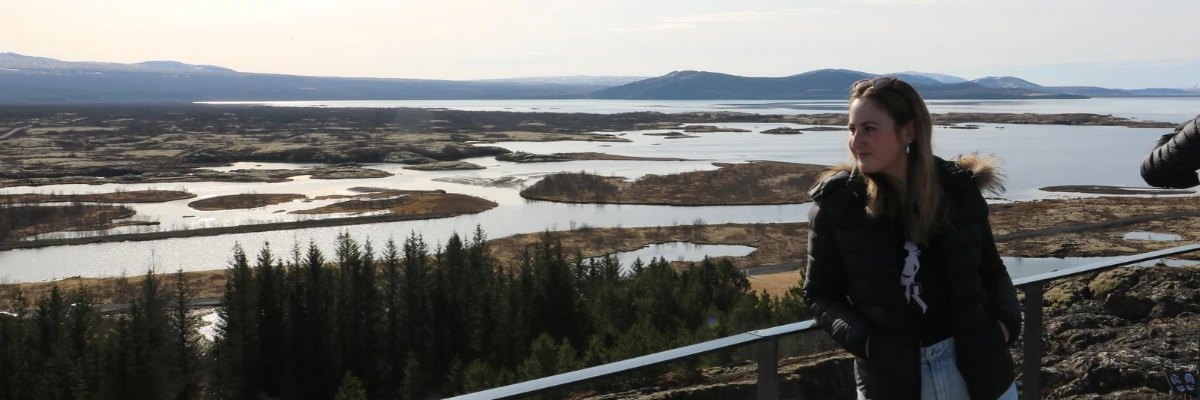
At Filovent, Chloé is the one who helps travellers plan their cruises in the polar lands and fjords. Northern lights, fjords, pack ice or the Drake Passage: she knows every season, every ship and every pitfall to avoid, and she tells her clients honestly what they will see, or not, so that they set off without any nasty surprises.
To let you benefit from her advice, I went to interview Chloé. I asked her a few questions about herself, about Lapland, our new destination, and about her recommendations for a successful polar cruise.
1. The portrait
Could you introduce yourself in a few words?
Chloé: Of course! My name is Chloé, I’m a travel consultant at Filovent, specialising in polar cruises. I joined in 2025 as the Norway specialist, then branched out into the other polar destinations. Today I also look after other cruises, such as cruises on the Nile.
What did you do before joining Filovent?
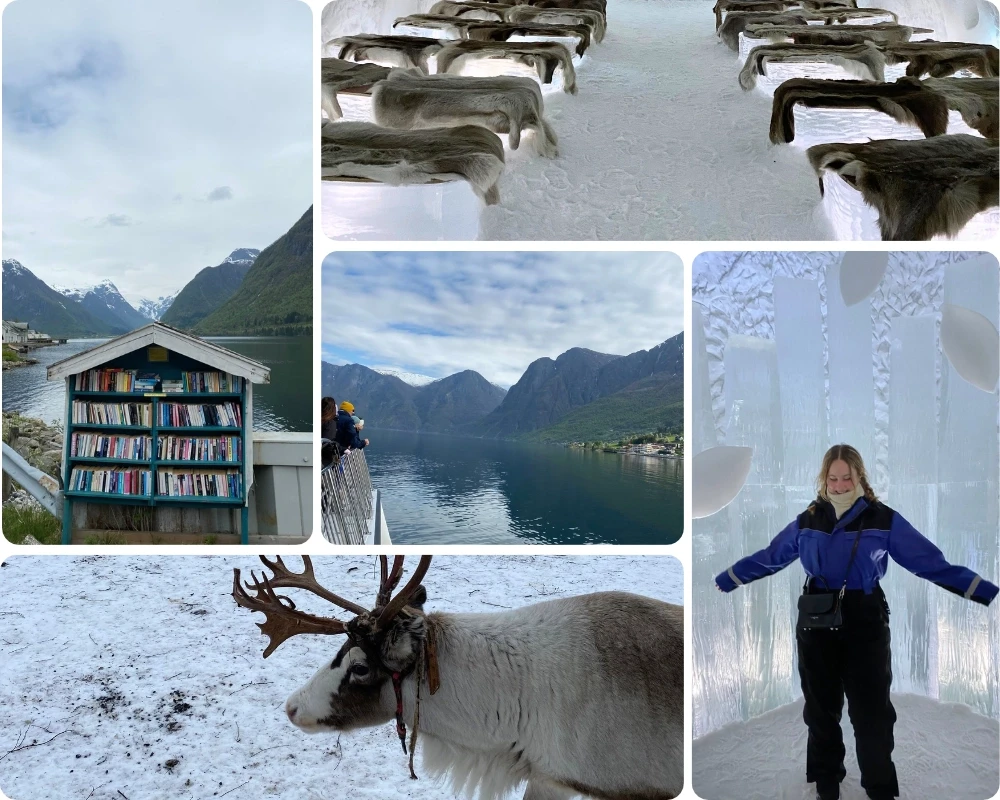
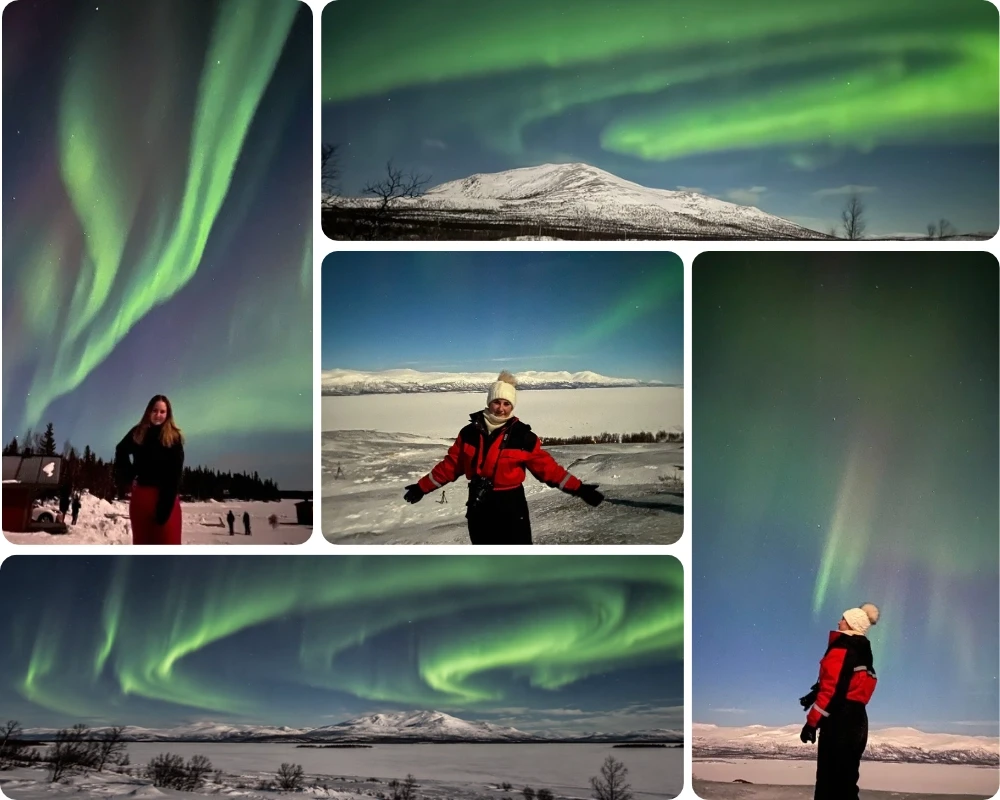
Chloé: From 2022 to 2024, I did a triple degree with my business school: on top of my French BBA, I spent six months in Sweden for a bachelor’s degree, then a year in the United States for a master’s. During my Erasmus in Sweden in 2023, I made the most of it to travel around the Far North: Norway, Iceland, Lapland… I was even lucky enough to see the northern lights in Lapland. That’s where I really fell in love with these destinations.
Where does your love of the polar regions come from?
Chloé: I’ve always lived in the mountains. Cold, snow, wide open spaces: that’s been my environment for as long as I can remember. The polar regions are a bit of a logical next step!
How do you become an expert in destinations you don’t visit every day?
Chloé: By learning all the time. I watch a lot of documentaries, I ask colleagues who have already been there, and I read our partners’ FAQs. I also follow Facebook groups set up by regular travellers on these cruises: they share loads of practical tips that I can then pass on to my clients.
What do you enjoy most about your job?
Chloé: Giving advice, quite simply. Many clients come to me with a still vague idea: they’ve seen photos of the northern lights in Iceland or heard about the Coastal Express, but don’t know where to start. My role is to understand what they really want to experience, their budget and their pace, then to put together the trip that suits them. I also like being able to be honest: I’d rather explain from the outset what you can realistically hope to see, without promising the impossible. A well-advised client sets off more relaxed and comes home with real memories rather than regrets.
Which polar destination do you dream of discovering?
Chloé: Antarctica, without a doubt. Seeing the penguin colonies, sailing among giant icebergs… And I admit I’d love to cross the Drake Passage myself, so I can talk about it to my clients from first-hand experience!
2. Lapland, Norway, Antarctica: Chloé’s polar destinations
Lapland: the new destination recommended by Chloé
What is there to see in Lapland?
Chloé: It’s a destination that is more and more popular, and one we now offer at Filovent. The first thing to know is that Lapland isn’t a country: it’s a region that stretches across four countries, Norway, Sweden, Finland and Russia, with the Kola Peninsula. Norwegian Lapland is slightly less well known. Finnish Lapland is the most famous, with Rovaniemi and Santa Claus Village, which is a bit like the North Pole for children. Swedish Lapland, on the other hand, is much quieter and more unspoilt.
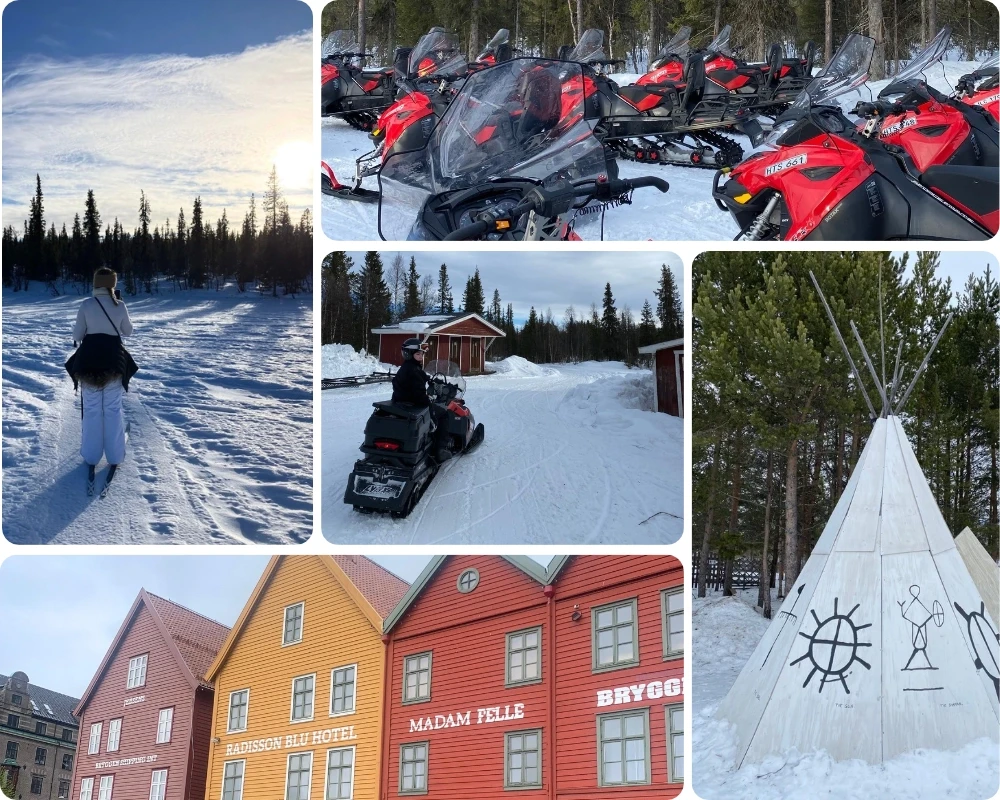
The point of a trip to Lapland is really to immerse yourself in the winter atmosphere: husky sledding, snowmobiling, Santa Claus Village… And above all, it’s the perfect place to try to see the northern lights.
Winter or autumn: when should you go to Lapland?
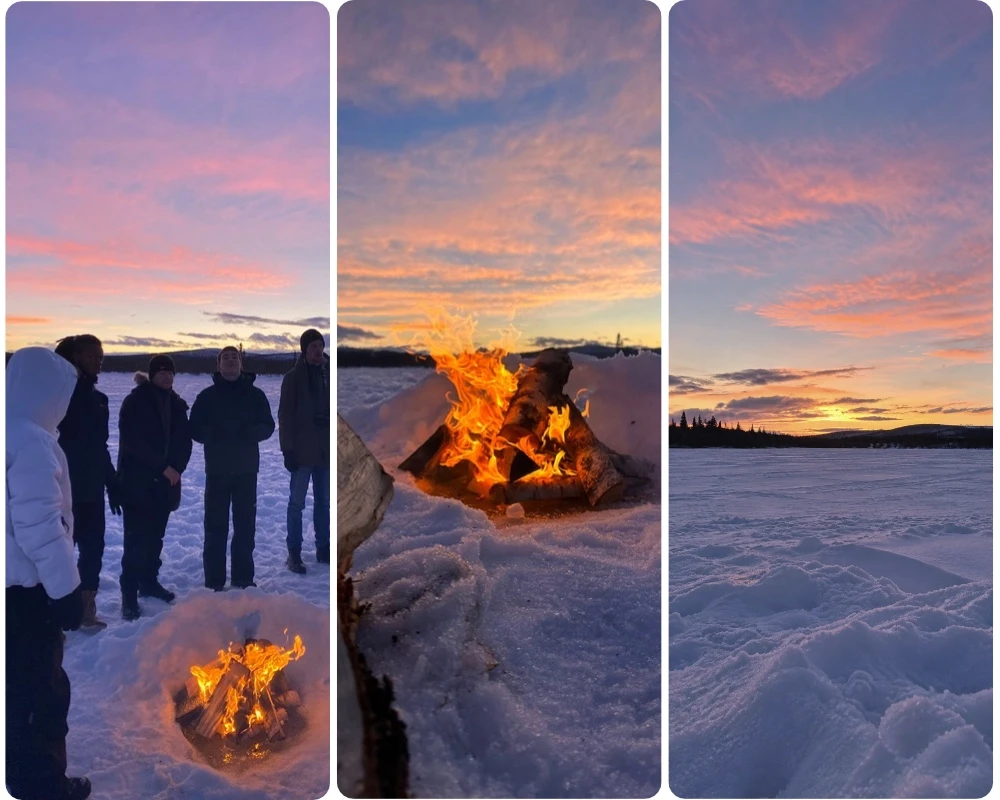
Chloé: It all depends on what you’re looking for. From December to March, it’s picture-postcard Lapland: snow, frozen lakes, sledding, snowmobiling and the best chances of seeing the northern lights. In autumn, it’s the ruska: for a few weeks, the boreal forests turn gold, orange and copper just before winter arrives. Temperatures are milder, it’s quieter, and you can already see the first auroras. Few travellers know about this season, yet it’s a magnificent sight.
Which tour should you choose, and how long should you allow?
Chloé: Our tours last between five and eight days, all departing from Rovaniemi. If you’re short on time, the five-day tour lets you experience the essentials of the Lapland winter. If you’d rather take your time, go for eight days instead: either in winter around Rovaniemi, with more activities, or in autumn by hire car, from Inari to Urho Kekkonen National Park, with nights in a glass chalet so you can watch for the northern lights from your bed.
| Tour | Season | Price from (per person) |
| Northern lights, 5 days | Winter | €1,710 |
| Ruska self-drive, 8 days | Autumn | €2,740 |
| Rovaniemi, 8 days | Winter | €2,830 |
Source: Filovent - Official data, starting prices excluding flights, October 2026.
What activities are on the programme?
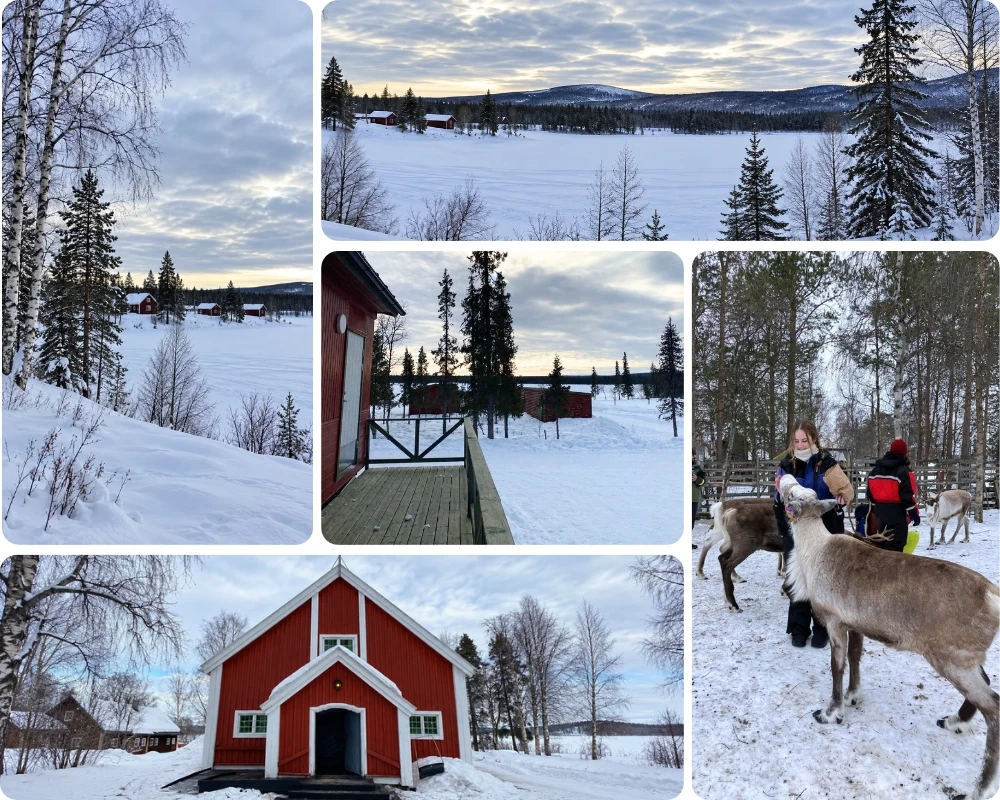
Chloé: In winter, you’ll find all the great classics: a husky sled ride, a snowmobile safari, a visit to a reindeer farm, Ranua Zoo to see Arctic wildlife, with its polar bears and Arctic foxes, and of course Santa Claus Village, on the Arctic Circle. Depending on the tour, you can add an icebreaker cruise, a snowshoe outing or an evening hunting for the northern lights. And the Finnish sauna is always part of it: over there, it’s an institution. Good news for your suitcase: on our winter tours, extreme cold-weather gear is provided for outdoor activities, including overalls, boots and gloves.
Who would you recommend Lapland to?
Chloé: Families, of course: between Father Christmas, the reindeer and the huskies, children are in their element. Couples, for evenings watching for the northern lights, especially in autumn. It’s also an excellent first taste of the Far North for those still hesitating to go on a cruise to the polar regions: you discover the cold, the landscapes and the Arctic atmosphere in a short format. It often makes people want to go further, for example on one of our cruises to Spitsbergen.
Polar region cruises: choosing the right destination and ship
How do you help clients choose their polar destination?
Chloé: Many clients already know the Coastal Express route in Norway: it’s our best seller. When someone hasn’t made up their mind yet, I suggest several routes. To keep the budget reasonable, we stay in Norway, where the cost of a cruise in the Norwegian fjords remains affordable. If the client has a bit more to spend and wants to see icebergs, we take them as far as Spitsbergen. As soon as you head for Greenland or Antarctica, the budget rises very quickly, and even more so if you choose a superior cabin.
| Destination | Price from (for 2 people) |
| Norway | €1,820 |
| Spitsbergen | €6,386 |
| Antarctica | €12,580 |
Source: Filovent - Official data, starting prices, October 2026.
What kind of ships do you sail on?
Chloé: For a Norwegian fjord cruise, you board traditional ships, a bit like upgraded ferries, with cabins, carrying several hundred passengers. For Antarctica or Greenland, they’re expedition ships, built differently so they can sail through ice. And in Norway there are also small expedition ships with only around twenty passengers.
When do you recommend a small expedition ship?
Chloé: Usually, it’s the clients who ask me. I tell them the number of cabins on the ships we sell most, and some reply straight away: ‘I want something much smaller.’ In that case, I point them towards a small ship fjord cruise.
Which cruise do you recommend for a first polar experience?
Chloé: The Coastal Express is a safe bet, but for a first time I also like to suggest one of our signature cruises, a 16-day cruise along the Norwegian coast to Spitsbergen. Departing from Bergen, you stop at a port almost every day, sail up to the North Cape and get a first taste of Spitsbergen. It’s a trip with a fairly reasonable budget, which lets you discover Norway and a slice of the Arctic.
Northern lights, fjords and midnight sun: when to go?
What is the best time to see the northern lights?
Chloé: When people ask me when to visit Norway for the northern lights, I say from mid-October to the end of March. But nature does what it wants: some years, auroras are seen from late September, and sometimes until the end of April. On long winter cruises, it’s very rare not to see the northern lights in Norway.
And for the fjords, the midnight sun or the polar night?
Chloé: The fjord season runs from April to October. The midnight sun is from May to July, above the Arctic Circle. The polar night works on the same principle in reverse: allow about a month before and a month after the winter solstice.
| Phenomenon | Period |
| Northern lights | Mid-October to end of March |
| Fjords | April to October |
| Midnight sun | May to July |
| Polar night | Late November to mid-January |
Can you combine fjords and the northern lights on the same cruise?
Chloé: In principle, no, since the two seasons hardly overlap. But for clients who really want to try their luck, I recommend a Norwegian fjords cruise at the end of October: that’s when the two seasons overlap. Early April is more hit and miss, although auroras are sometimes still seen until the end of April.
3. Wildlife, fitness and budget: Chloé’s advice
What wildlife can you hope to see?
Chloé: Some clients expect to see polar bears in Norway. I explain straight away that, for this kind of wildlife, you need to choose more ambitious itineraries, such as a cruise to Spitsbergen, which are therefore more expensive. In Norway, you might be lucky enough to see orcas around Tromsø, but it’s rare, only at certain times of year, and not necessarily like the pictures online. I prefer to be clear from the very first call. At worst, the client changes their plans, but they won’t come back disappointed saying nobody warned them.
The Drake Passage scares a lot of travellers. What do you tell them?
Chloé: In most cases, an Antarctica cruise crosses it: it’s the most direct route from the tip of South America. It’s impressive, I won’t lie. But our partners cross it every season, and the ships are specifically designed for these conditions.
Do you need to be physically fit?
Chloé: It depends on the cruise. A cruise to Antarctica or Spitsbergen is an expedition cruise: you go out on Zodiac trips, sometimes kayaking among the glaciers, and you have to cope with the cold. So a fairly good level of fitness is needed, more than age as such. In Norway, on the other hand, it’s very relaxed: you spend most of your time on board.
What extra budget should you plan on top of the cruise?
Chloé: On top of the price of an Antarctica cruise, you need to add international flights: allow €1,000 to €1,500 per person. Then there’s the gear. Depending on the ship, some equipment is lent for excursions, but to go out on deck you need your own warm clothing. If you’re starting from scratch, budget around €300 per person: leggings, thermal base layers, jumpers and above all a proper extreme-cold coat, which can cost that much on its own.
Kayaking among icebergs: is it worth it?
Chloé: Absolutely! I’ve just put together a proposal for a client interested in cruises in Greenland who wanted to do it. In thirty years’ time, you’ll be able to say ‘I went kayaking among icebergs’. That’s quite an incredible memory.
How can you travel responsibly in these fragile regions?
Chloé: The first piece of advice is to choose the smallest ships possible. Some ships are also changing their propulsion systems and fuel. And there are times when certain areas aren’t sailed, to give nature time to recover. If ships went there all year round, these landscapes would deteriorate much faster.
Your number one tip for a first cruise to the polar regions?
Chloé: Set off without fixed expectations. In the Far North, nature decides: the weather, the ice, the wildlife, the northern lights. Itineraries can change, and that’s exactly what makes these trips so magical. Dress in layers, keep your camera charged and let yourself be surprised!
Thanks
A big thank you to Chloé for the time she gave us, for her honesty and for her valuable advice.