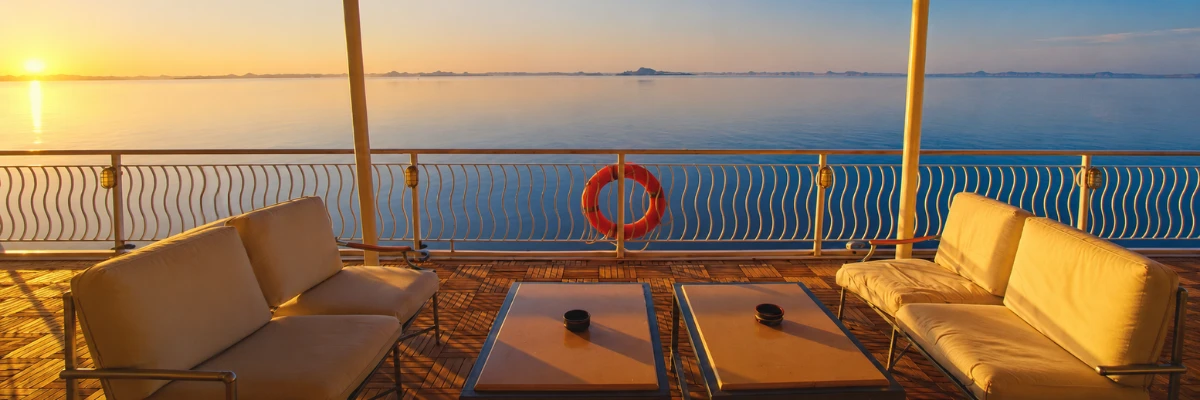
“The calm on board, the silence as we sailed, the large, sociable deck where meals are served and where passengers gather”: that is how Michel, who spent seven days on the Nile in March 2026, remembers his cruise boat. A Nile cruise is often described as the trip of a lifetime. So the boat that takes you on this journey matters a great deal. For several days, it becomes your home on the river, and its atmosphere counts as much as the temples you will visit. Cabin size, facilities, upper deck, lounge, crew: here is a tour of the inside of a Nile cruise boat.
In this article, we focus on the dahabiya, the traditional Egyptian sailing boat. For a trip that many people only take once, we believe it is the best way to discover the river: few passengers, silent sailing, stops away from the crowds and a setting that makes every day on board special.
A tip before we get into the details: on the Nile, you actually spend very little time in your cabin. Between temple visits, stops in villages and hours on deck watching the riverbanks go by, the cabin is mainly for sleeping and resting. The deck is where the experience happens.
The dahabiya, a sailing boat on a human scale
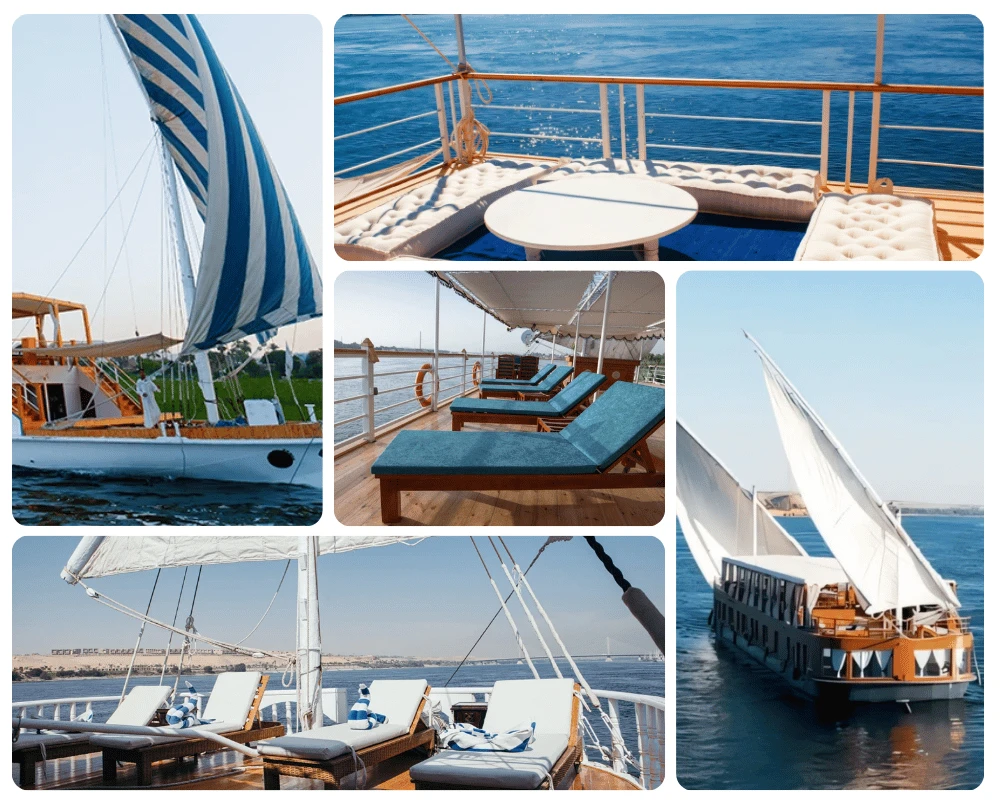
The dahabiya is a traditional Egyptian wooden sailing boat, designed after the vessels that carried wealthy travellers along the Nile in the 19th century. Most dahabiyas sail with two large lateen sails (triangular sails typical of the Nile and the Mediterranean) and no engine. When the wind drops, or on certain stretches of the river, they are towed by a small tugboat kept around thirty metres away. The result: no engine noise and no smell of fuel on board, just the lapping of the water.
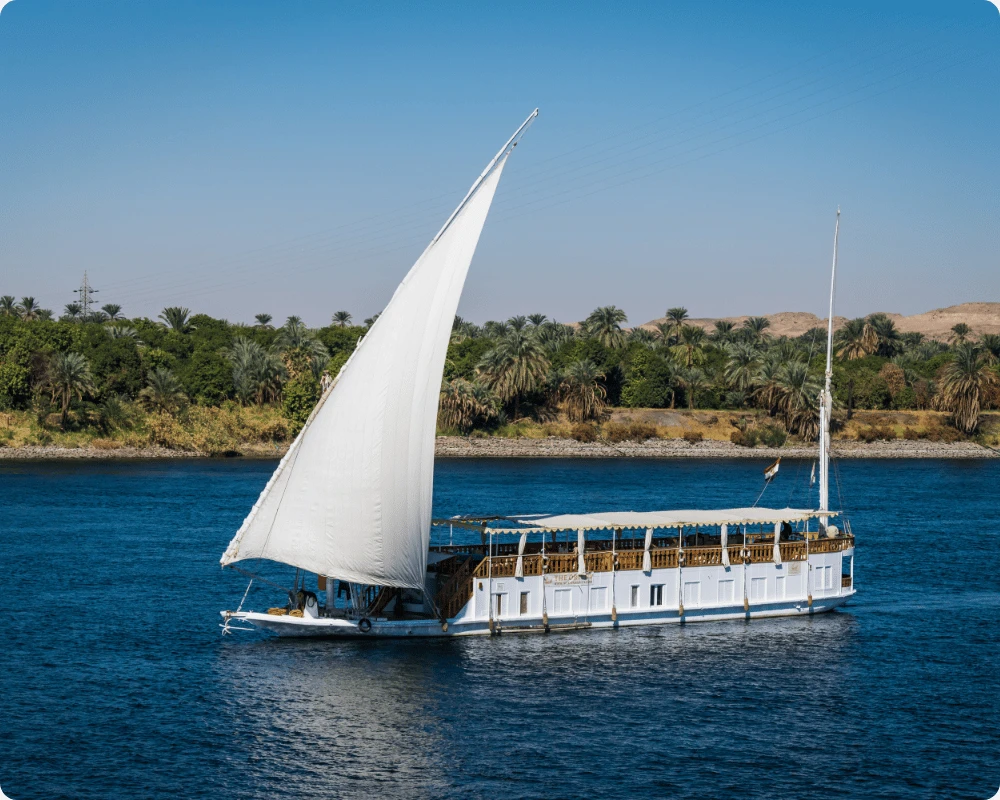
At around 40 to 55 metres long, a dahabiya usually has between 5 and 18 cabins, for 12 to 36 passengers. Its small size also allows it to moor along the riverbanks, near islands and villages, where large boats cannot stop. If you are wondering what to do in Egypt beyond the great temples, these riverside stops reveal another side of the country.
Dahabiya or conventional cruise ship?
As with any river cruise, the choice of boat makes a big difference to the experience. On the Nile, there are two main types of cruise boat. Conventional cruise ships, essentially floating hotels, often carry around a hundred passengers over several decks. The dahabiya works on a completely different scale.
| Criterion | Dahabiya | Conventional cruise ship |
| Propulsion | Sails, usually no engine | Engine |
| Number of cabins | 5 to 18 | 50 or more |
| Passengers | 12 to 36 | Around a hundred |
| Cabin size | Smaller | Usually more spacious |
| Atmosphere | Calm and intimate | Lively |
| Stops | Riverbanks, islands, villages | Ports |
In practice: slightly smaller cabins, but no engine noise, no crowds and stops on riverbanks where large boats do not moor.
The cabins: a cosy retreat between stops
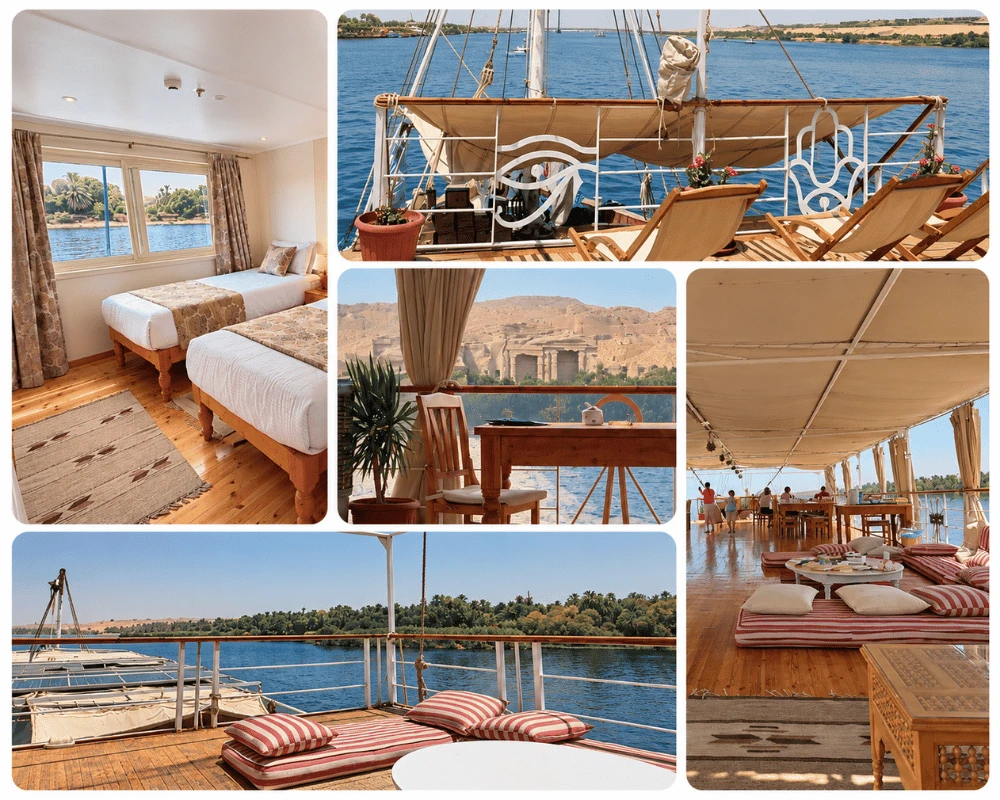
On board a dahabiya, cabins sleep two and all face outwards, with a window onto the Nile. The décor often combines wood panelling, parquet floors, woven rugs and oriental-style lamps. On some boats, the furniture is even made, painted and decorated by hand. Depending on their size, dahabiyas have their cabins on a single deck or spread over two levels, the lower deck and the upper deck.
The double cabin
This is the most common type of cabin. It can be booked with a double bed or two twin beds, depending on whether you are travelling as a couple or with friends. Its size varies from boat to boat, from around 12 m² on the most traditional vessels to over 20 m² on newer dahabiyas. The bathroom is private, with a shower, toilet and washbasin.
The suite
More spacious, the suite offers extra privacy. It is often located at the stern of the boat and comes with a balcony or private terrace overlooking the Nile, sometimes with a seating area or desk. On the dahabiyas in our selection, it measures 20 to 25 m². From its terrace, you can watch the riverbanks go by or the sun set over the desert without leaving your room.
Facilities at a glance
| Facility | Double cabin | Suite |
| Size | 12 to 22 m² | 20 to 25 m² |
| Beds | Double or twin beds | Double bed |
| Nile view | Window | Terrace or panoramic view from the stern |
| Bathroom | Private, with shower | Private, with shower |
| Capacity | 2 people | 2 people |
Source: Filovent, based on the features of the dahabiyas in our selection. Sizes vary from boat to boat.
Depending on the boat, cabins may also include Egyptian cotton bedding, a hairdryer, a wardrobe, a safe, towels or Wi-Fi. Facilities vary from one dahabiya to another: each cruise listing details what the boat offers.
The upper deck, the heart of life on board
If your cabin is your retreat, the upper deck is the cruise’s real living room. Built of wood and very open, it is divided into a shaded area and a sunny area. You will find sun loungers, cushioned benches, armchairs and large tables. This is where you read, watch the feluccas (small traditional Nile sailing boats) and palm groves, see the sun set over the desert and, in the evening, gaze at the stars.
On a dahabiya, meals are usually served on this deck, in the open air facing the river, weather permitting. How much you can enjoy the deck also depends on the season: something to bear in mind when choosing the best time for a cruise in Egypt. Depending on the boat, the upper deck may also have a bar, a hot tub or a small plunge pool, or even a glass-walled dining room to enjoy the view whatever the weather.
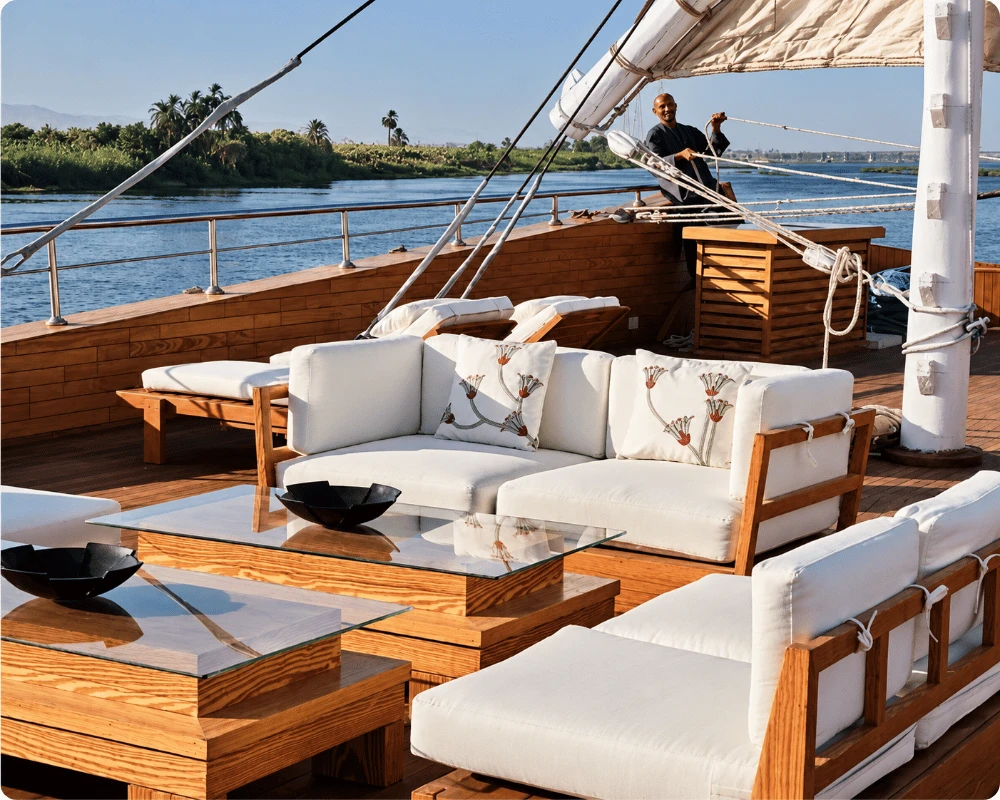
The deck is also where passengers meet and get to know each other. Several of our travellers describe it as the most memorable part of the boat, both comfortable and very sociable.
The lounge and indoor spaces
Most dahabiyas also have an indoor lounge, often on the main deck. With wood panelling, kilim rugs, sofas and views of the Nile on both sides, it is a cosy spot to linger after dinner, read or shelter from the sun during the hottest hours. Some boats also have a library or a bar area.
The crew on board
The inside of a boat is also about the people who bring it to life. Depending on its size, a dahabiya has a crew of 6 to 13: sailors, cooks and service staff. That is roughly one crew member for every three passengers: at this scale, the crew quickly learns everyone’s names and habits. The food, cooked on board, showcases Egyptian flavours. Served on a full-board basis, meals are an integral part of the experience, one of the advantages of an all-inclusive Nile cruise.
The kindness of the staff is mentioned again and again in our customers’ reviews, as is the beauty of the boat.
What our travellers remember
Amélie, who spent nine days on board, remembers above all the setting and comfort of her boat: “Beauty of the boat, wooden furniture, stability of the boat, overall comfort.”
Four points come up regularly in feedback:
- the comfort of the spacious, sociable upper deck;
- the beauty of the boat and its wooden décor;
- the kindness of the crew;
- the small size of the boat, which means calm and privacy.
On the Nile, luxury isn’t measured in square metres but in life on deck: lunch in the open air, quiet hours under sail between Esna and Aswan, and a crew who know your habits by day two. That is what’s worth looking for when planning your Egypt cruise.
Frequently asked questions
Do the cabins have a private bathroom?
Yes. On dahabiyas, every cabin and suite has its own bathroom, with a shower, toilet and washbasin.
Can you choose between a double bed and two twin beds?
Yes, the double cabin can be booked with a double bed or two twin beds, as you prefer. Suites usually have a double bed.
What communal areas are there on board?
On a dahabiya, life on board revolves around three spaces:
- the upper deck, with its sun loungers, benches and shaded area;
- the dining room or the large table on deck, where meals are served;
- the indoor lounge, for reading or relaxing in the evening.
Depending on the boat, there may also be a bar, a hot tub or a small plunge pool.
Where are meals served on board?
Usually on the upper deck, in the open air facing the Nile, weather permitting; otherwise in the dining room, which is sometimes glass-walled to keep the view. Cruises are generally full board: the chef prepares all three meals on board, using fresh produce bought at the stops along the way. Water, tea and coffee are often included, while soft drinks, juices and alcoholic drinks are usually extra.
Is the boat noisy or unstable?
No. Without an engine, the dahabiya sails in silence, and with no swell on the Nile, there is no risk of seasickness. On windless days, the only sound is the tugboat, which stays at a distance from the boat.
Is the inside of the boat suitable for older people or those with reduced mobility?
The relaxed pace and small number of passengers make dahabiyas very popular with older travellers. However, the layout of a traditional boat does require some attention:
- there is no lift between decks;
- moving around on board involves stairs and steps;
- boarding is sometimes via a gangway resting on the riverbank.
It is best to let us know about any mobility issues when you request a quote, so that we can choose the most suitable boat and cabin together.