







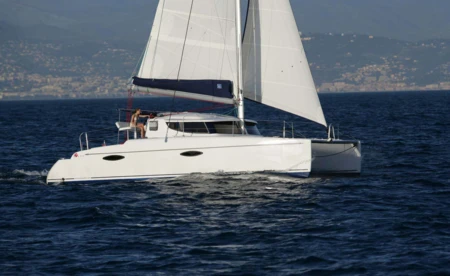
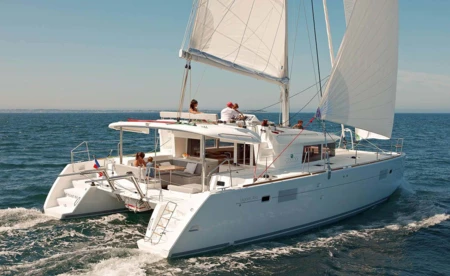
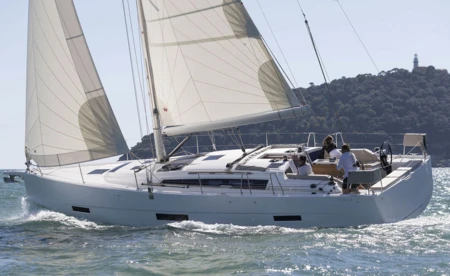
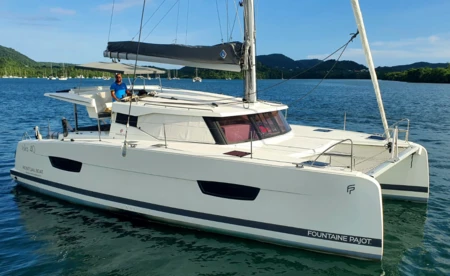

Chartering a sailboat in the Caribbean means island-hopping under a steady trade wind, with water temperatures around 79 °F (26 °C) even in January. From the Virgin Islands to the Grenadines, by way of Guadeloupe and Martinique, the Caribbean arc offers short legs, sheltered anchorages, and sailing that stays manageable while still giving you something to work with under sail. Whether you are looking for a straightforward boat rental or a fully crewed yacht, it is one of the few places where a winter sailing vacation delivers reliable wind and warm water at the same time.
Boat rental options for your Caribbean yacht charter
Four options are available, depending on your experience and the makeup of your crew:
- Bareboat: you are in sole charge on board and build your itinerary day by day. Before departure, the charter company checks that the skipper holds the qualifications required in the base country and has recent sailing practice.
- Skippered: a professional joins you for the week. In the Caribbean their contribution goes well beyond safety alone: they know how well the anchorages hold in the prevailing swell, the entry requirements for each country, and which bays fill up before 4 p.m.
- Fully crewed: captain, cook, and hostess look after the sailing, the meals, and the service. This is standard on boats over 20 meters (65 ft) and offered as an option on some 45 to 60 foot catamarans.
- Cabin charter: book one double cabin aboard a crewed yacht, sharing the boat with other guests. It is the most affordable way to discover the region. Find our departure dates on the Caribbean cruise page.
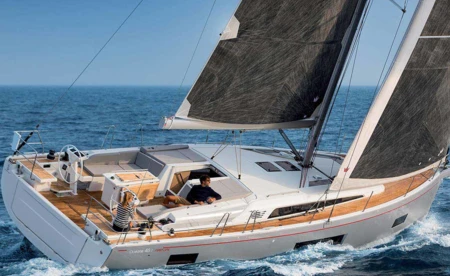
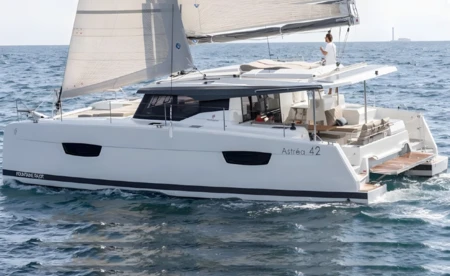
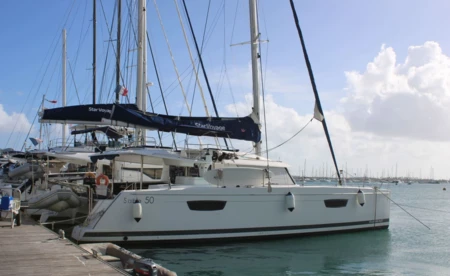
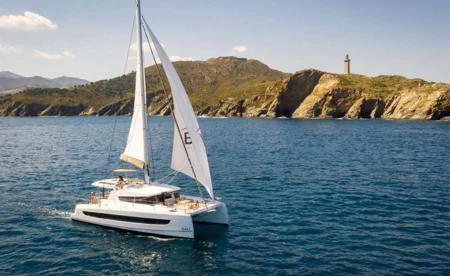
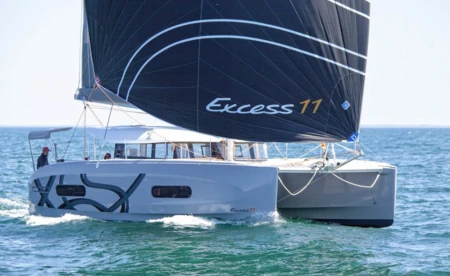
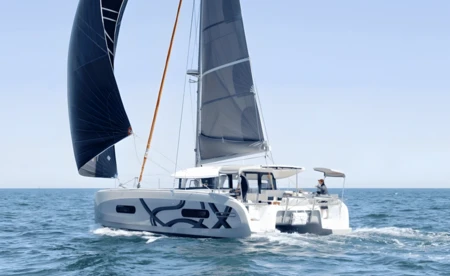
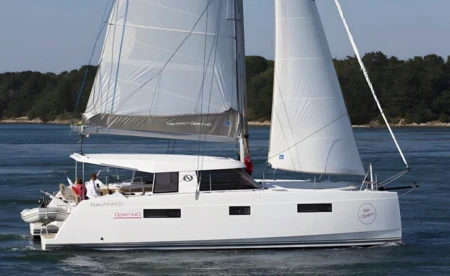
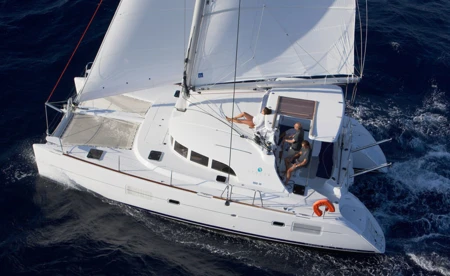
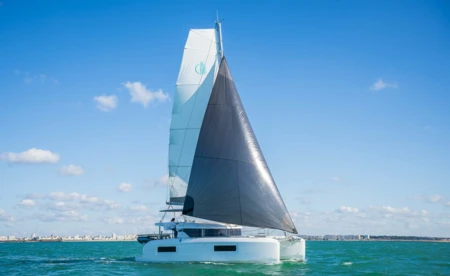
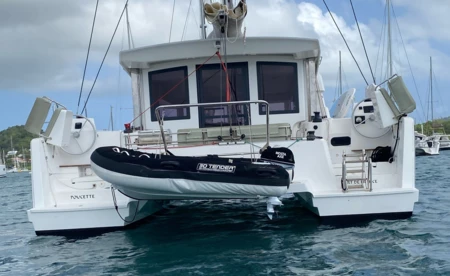
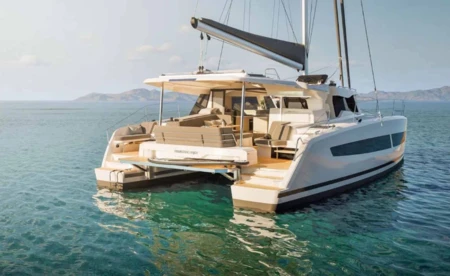
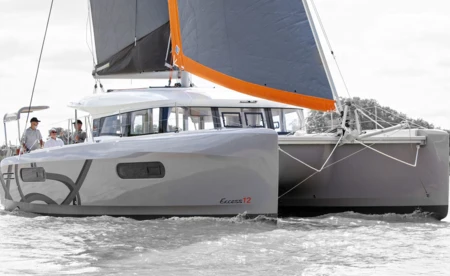
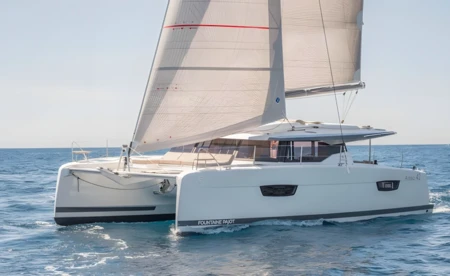
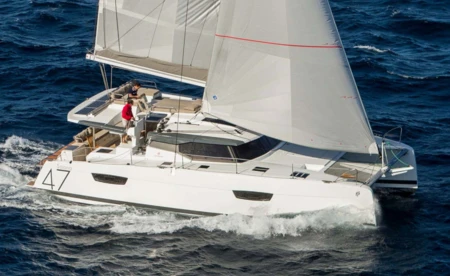
You can also charter a catamaran in the Caribbean, an alternative that offers more space on board and a different sailing experience.
How much does a Caribbean yacht charter cost?
The rates below are for one week bareboat, boat only. They vary with the shipyard, the year of build, the number of heads, and the exact departure date. The two weeks on either side of Christmas and New Year are always negotiated above the top of the range.
| Boat type | High season December to April | Mid season May and November | Low season June to August |
|---|---|---|---|
| Monohull (2 cabins) | $2,600 | $2,400 | $1,950 |
| Monohull (3 cabins) | $4,750 | $3,450 | $2,400 |
| Monohull (4 cabins) | $5,400 | $4,650 | $4,200 |
The price includes: the boat and its cruising inventory (sail wardrobe, dinghy and outboard, bed linen, dishes, navigation electronics, and bimini).
The price does not include:
- the mandatory end-of-charter pack (cleaning, gas, fuel top-up)
- tourist and marine park taxes
- entry fees for each country visited
- marina slips along the way
- provisioning
- water toys (paddleboard, snorkeling gear, kayak)
- the skipper's or hostess's fee, between $195 and $270 per day per crew member, meals at your expense.
Budget for fuel too. Unlike the Mediterranean, you'll spend the vast majority of a Caribbean cruise under sail: consumption stays moderate, except on upwind legs.
We recommend taking out cancellation insurance when you book. A transatlantic ticket plus a charter deposit is a heavy financial commitment, and credit card policies only cover the cardholder, never the whole crew.
Damage waiver insurance also deserves your attention in this area. Security deposits are higher here than elsewhere, between $3,250 and $6,500 on a recent catamaran, and the most frequent damage involves the anchor, the dinghy, and the propellers. This coverage limits your exposure in the event of sailing-related damage.
For crewed boats, the price range is too wide to publish. Lina, our specialist for the crewed and luxury segment, puts together a customized selection after talking your project through with you.
Where to sail in the Caribbean?
The Caribbean arc divides into four cruising grounds, from north to south:
- The British Virgin Islands. The most sheltered stretch of water in the Caribbean: a central channel protected by a double line of islands, legs of 5 to 10 nautical miles and mooring buoys everywhere. From Tortola you string together Norman Island, Virgin Gorda and its Baths, the coral atoll of Anegada, and then Jost Van Dyke. This is the area we recommend for a first bareboat vacation.
- Saint Martin, Saint Barthélemy and Antigua to the northeast. A triangle combining wild anchorages and lively ports of call: the islet of Tintamarre, the cove of Colombier, the harbor of Gustavia, then English Harbour and the 365 beaches of Antigua. The passages are longer, between 15 and 40 nautical miles.
- Guadeloupe and its archipelago in the middle. From the Bas-du-Fort marina you reach Les Saintes and the Pain de Sucre anchorage, Marie-Galante, the Petite-Terre reserve, then Dominica and its Indian River. Varied ground alternating Creole culture and volcanic nature.
- Martinique and the run down to the Grenadines in the south. This is the most requested itinerary in the area. From Le Marin, head for Saint Lucia and its Pitons, Bequia, the Tobago Cays and their coral reef, Union, and Carriacou. Ten days or so is generally considered necessary to sail this archipelago in good conditions.
When to sail in the Caribbean?
The area is sailed from November to June, with a dry season from December to April (known locally as the carême): clear skies, a well-established trade wind, very little rain. The temperature gap between January and July is no more than three degrees Celsius, which makes the Caribbean one of the few destinations where the water stays above 79 °F (26 °C) all year round.
| Temperatures | Jan | Feb | Mar | Apr | May | Jun | Jul | Aug | Sep | Oct | Nov | Dec |
|---|---|---|---|---|---|---|---|---|---|---|---|---|
| Min air (°F / °C) | 70° / 21° | 70° / 21° | 70° / 21° | 72° / 22° | 73° / 23° | 75° / 24° | 75° / 24° | 75° / 24° | 75° / 24° | 73° / 23° | 73° / 23° | 72° / 22° |
| Max air (°F / °C) | 82° / 28° | 82° / 28° | 84° / 29° | 86° / 30° | 86° / 30° | 86° / 30° | 86° / 30° | 88° / 31° | 88° / 31° | 86° / 30° | 84° / 29° | 82° / 28° |
| Sea water (°F / °C) | 79° / 26° | 79° / 26° | 79° / 26° | 81° / 27° | 82° / 28° | 82° / 28° | 82° / 28° | 84° / 29° | 84° / 29° | 84° / 29° | 82° / 28° | 81° / 27° |
The hurricane season officially runs from June 1 to November 30, with a statistical peak between mid-August and mid-October. During this period part of the fleet leaves the area or goes into maintenance, and charter companies apply special conditions in the event of an alert. May and November remain excellent compromises: still-stable conditions, empty anchorages, and rates 30 to 40% below those of February.
Sailing conditions in the Caribbean
The trade wind blows from the east or northeast, between 15 and 20 knots for most of the year, with peaks of 25 knots in January and February. It is a steady following wind: you really do sail here, which sets the area apart from most Mediterranean destinations.
What makes the Caribbean unique is the contrast between two kinds of water:
- Along the leeward coasts the sea is flat, and the wind sometimes drops away entirely in the wind shadow of the high ground.
- In the channels between two islands the trade wind accelerates and the Atlantic swell funnels in. The Saint Lucia channel and the Dominica channel are crossed with a 2-meter (6 ft) cross swell and 25 knots established. These passages last three to five hours and call for a well-reefed boat and a well-briefed crew.
The rest is comfortable: constant visual navigation, a tidal range under 16 inches (40 cm), no haze, and tropical squalls that pass in a quarter of an hour. You anchor in 16 to 33 feet (5 to 10 meters) over pale sand, except in protected areas where buoys are mandatory and chargeable: Tobago Cays, the British Virgin Islands national park, the Petite-Terre reserve, and the islets off Saint Lucia.
The documents needed to charter a bareboat yacht in the Caribbean
Requirements vary with the flag of the departure base:
- French Antilles (Martinique, Guadeloupe, Saint Martin, Saint Barthélemy): French law applies. The skipper must produce a permis côtier (French coastal license) and the CRR (Certificat Restreint de Radiotéléphoniste, restricted radio operator's certificate), mandatory as soon as a VHF is fitted on board.
- British Virgin Islands, Antigua, Saint Lucia, Saint Vincent and the Grenadines, Grenada: no qualification is legally required, but every charter company asks for a detailed sailing resume and rarely accepts a skipper without recent experience on a boat of comparable size. A license, even where it is not required, makes the file easier to accept.
- In every case: a valid passport for the whole crew, including for a move between French and English-speaking islands.
Useful information for your Caribbean sailing vacation
What language is spoken in the Caribbean?
French in Martinique, Guadeloupe, Saint Barthélemy, and the French side of Saint Martin, with Creole as the everyday language. English dominates in the Virgin Islands, Antigua, Saint Lucia, Saint Vincent, and Grenada. A few words of English are enough for formalities and stores.
What currency is used in the Caribbean?
The euro in the French territories. The East Caribbean dollar (XCD) in Saint Lucia, Saint Vincent, Grenada, and Antigua, pegged at 2.70 XCD to 1 US dollar. The US dollar is the official currency of the British Virgin Islands and is accepted almost everywhere across the Caribbean arc, often at an unfavorable rate. Carry cash for park fees, entry taxes, and beach bars.
How do you get to the Caribbean?
Direct flights link Paris with Fort-de-France (FDF) and Pointe-à-Pitre (PTP) all year round, in about 8 hours 30 minutes. Saint Martin is reached via Juliana airport (SXM), on the Dutch side. For the British Virgin Islands, the simplest route runs through SXM or Saint Thomas, then a regional flight or a ferry to Tortola. For a departure in the Grenadines, aim for Saint Lucia (UVF), Saint Vincent (SVD), Grenada (GND), or Barbados (BGI), with a connection from Paris.
How do I finalize my Caribbean yacht charter booking?
Once we have received your inquiry, an advisor calls you to scope out your trip: dates, crew makeup, the skipper's level, the area you have in mind. They then send you a selection of boats by email. Once your choice is made, paying a deposit from your customer account holds the boat. For February and holiday season departures, allow eight to twelve months' notice for recent catamarans.
Are customs formalities required between islands?
Yes, as soon as you change country. Every arrival requires clearance with customs and immigration at the port of entry, with the crew list and the charter contract. Fees range from a few tens to around a hundred dollars depending on the destination and the length of stay. The British Virgin Islands also apply a cruising permit charged per person per day, and the Tobago Cays a daily marine park entry fee. Your charter company hands over the boat's papers at departure: keep them on board at all times.
Can you start from one island and return the boat to another?
It is possible on a few routes operated by the large fleets, mainly between Martinique, Saint Lucia, and Grenada, for a one-way supplement. The option is booked in advance and remains subject to the availability of return deliveries.
Good to know
| Number of boats available | 1 125 |
|---|---|
| Types of service | Skipper, Hostess, Chef (meals not included), Sailor |
| Average price per week | $14,912 |
| Minimum weekly price | $1,414 |
| Maximum price per week | $129,830 |