





The types of sailboats to rent in Turkey
Depending on your budget and your sailing plans, several types of sailboats are available for sailing in Turkey along the coasts of the Aegean Sea and the Mediterranean:
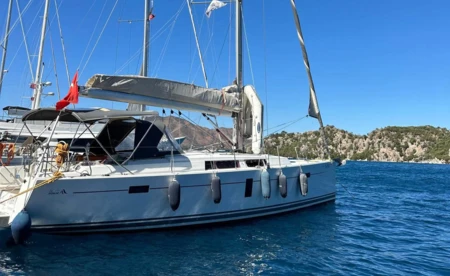
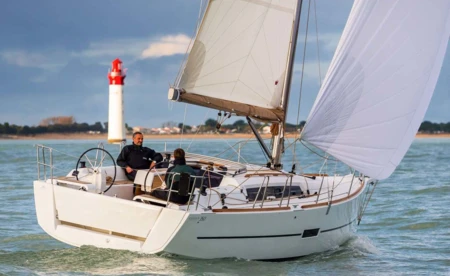
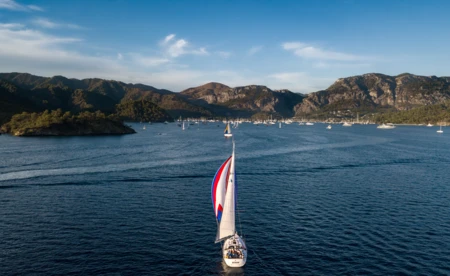
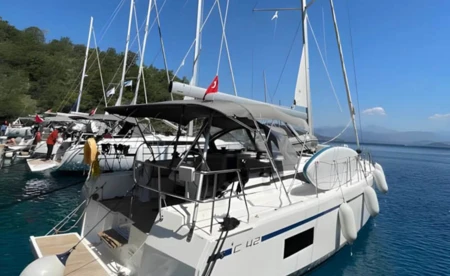
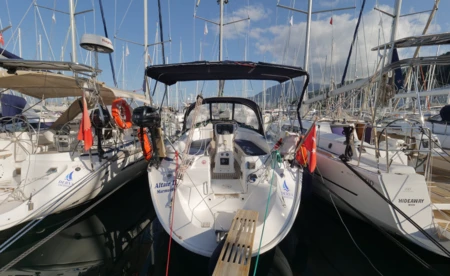
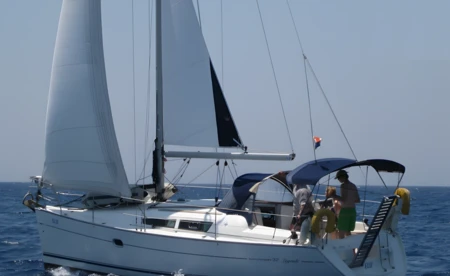
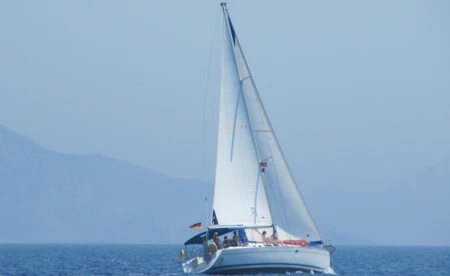
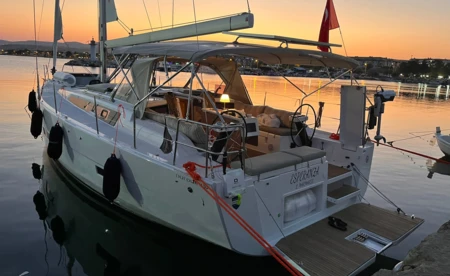
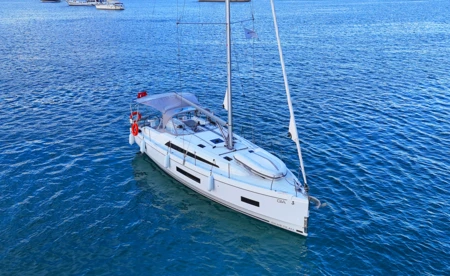
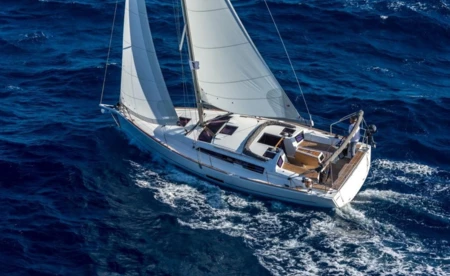
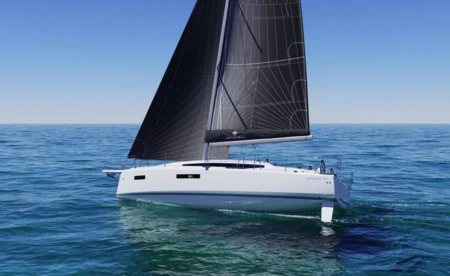
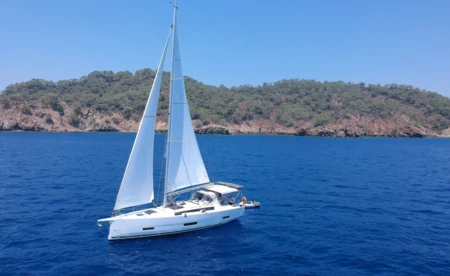
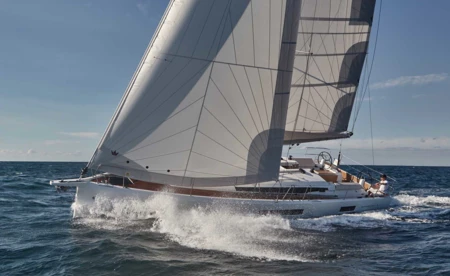
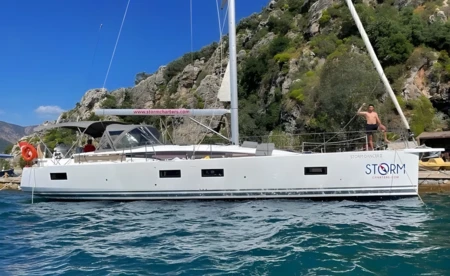
Monohull sailboat rental: this is the most common option in Turkey and the one best suited to sailors looking for a real sailing feel. The monohull makes it easy to access the unspoiled coves and low-key anchorages of the Gulf of Fethiye, the Gulf of Hisarönü or Gökova Bay thanks to its size. The heel and the sensations typical of this type of sailboat are particularly enjoyable in the regular thermal winds of the Turkish coast, especially in the Meltemi which blows from April to October.
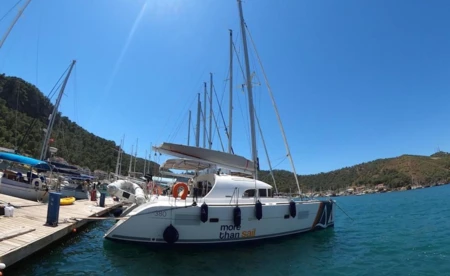
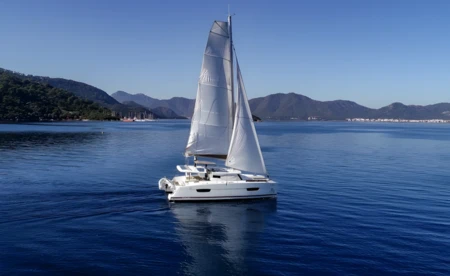
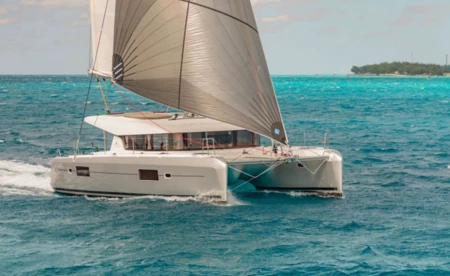
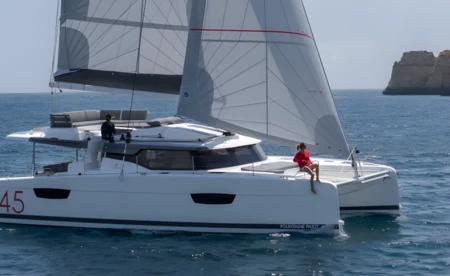
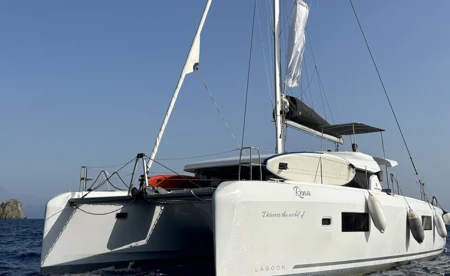
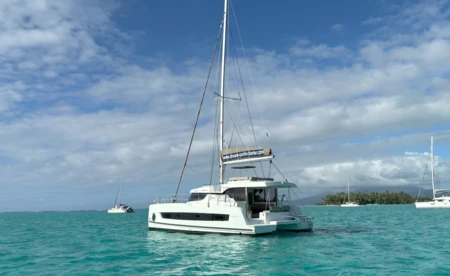
Sailing catamaran rental: for those looking for comfort, stability, and space. Catamaran rental in Turkey offers particularly generous living areas on board and a shallow draft that allows you to anchor as close as possible to the beaches. It is the ideal option for a relaxing cruise with family or friends, particularly in shallow anchorage areas such as Sedir Island, the Blue Lagoon of Ölüdeniz, or the bays of the Gulf of Gökova.
Gulet charter (traditional caïque): a Turkish specificity, the gulet is a traditional wooden sailboat of 50 to 115 feet, generally rented with crew. It is the iconic boat of the Blue Cruises that have made Turkey famous. The gulet offers high comfort, a large capacity, and a unique character to discover the Turkish coasts in the purest local tradition.
The services offered for your sailboat rental in Turkey:
Bareboat sailboat rental: if one of the members of your crew has the required experience and licenses, you can sail entirely on your own. The sailboat is fully private and you explore Turkey at your own pace, depending on the weather and your wishes, from the coves of Bodrum to the islands of the Gulf of Fethiye.
Sailboat rental with skipper: this is a very popular option in Turkey, particularly for those discovering the destination. The professional skipper handles the navigation and guides you to the finest anchorages, which are often hard to spot without local knowledge. They also adjust the itinerary based on the Meltemi, particularly useful in exposed areas such as the east coast of Bodrum or the passage between Datça and Symi.
Crewed sailboat rental: offered on luxury sailboats and gulets over 65 feet, this option generally includes a skipper, a hostess, and sometimes a chef. Particularly developed in Turkey with the gulet tradition, it lets you fully enjoy the cruise without any hassle, with a level of service close to that of a luxury hotel.
If you prefer to board without privately chartering a whole boat, you can also check out our cabin cruise offer in Turkey, ideal to discover the destination in cabin formula on a traditional gulet.
How much does a sailboat rental in Turkey cost?
The table below gives a rough estimate of the average prices for a one-week rental in Turkey. These prices may vary based on the season, availability, model, and the age of the sailboat… Turkey remains one of the most affordable destinations in the eastern Mediterranean.
| Type of sailboat | Low season | Mid-season | High season |
| Monohull (2 cabins) | $1,840 | $2,430 | $3,020 |
| Monohull (3 cabins) | $2,270 | $3,460 | $4,750 |
| Monohull (4 cabins) | $2,920 | $4,430 | $5,400 |
| Monohull (5 cabins and more) | $4,320 | $5,180 | $5,940 |
| Catamaran (3 cabins) | $3,780 | $5,180 | $6,370 |
| Catamaran (4 cabins) | $5,620 | $7,020 | $7,880 |
| Catamaran (5 cabins and more) | $6,800 | $8,320 | $9,290 |
The price includes: the sailboat rental and the main onboard equipment (sails, dishware, dinghy, bed linens, and outboard engine).
The price does not include: insurance, port and mooring fees, skipper, hostess, cleaning which is often included in a mandatory pack, extras (kayak, paddle SUP…), provisioning, and the transit log fee (mandatory in Turkey).
For the rental of a premium sailboat, a yacht, or a gulet in Turkey, please contact us directly to get a personalized quote.
We strongly recommend that you take out our cancellation insurance, which covers the entire crew, as well as security deposit insurance, which is particularly useful in case of damage.
Where to sail in Turkey?
Turkey offers varied cruising grounds between unspoiled coves, ancient archaeological sites, and authentic fishing villages, along more than 5,000 miles of coastline bathed by the Aegean Sea and the Mediterranean:
- Bodrum and the Bodrum peninsula: an iconic starting point in Turkey, Bodrum (the ancient Halicarnassus) offers one of the finest marinas in the eastern Mediterranean, dominated by its Castle of the Knights of St John. From Bodrum, it is easy to reach the bays of Yalıkavak, Türkbükü, and the nearby island of Kos in Greece.
- The Gulf of Gökova and Sedir Island: between Bodrum and Marmaris, the Gulf of Gökova is one of the finest sailing areas in Turkey. Sedir Island (Cleopatra Island) is home to a legendary beach with white sand imported from Egypt, according to legend, by Mark Antony for Cleopatra. Spectacular anchorages at Söğüt, English Harbour, or Kargı.
- Marmaris and the Gulf of Hisarönü: a yacht charter in Marmaris is one of the most popular options in Turkey, ideally located to explore the Gulf of Hisarönü and its dozens of unspoiled bays (Bozburun, Selimiye, Datça). It is also the most practical starting point to reach Symi and Rhodes in Greece.
- Datça and the Reşadiye peninsula: a preserved gem of the Turkish coast, the Datça peninsula separates the Gulf of Gökova from that of Hisarönü. A small authentic fishing port, Datça is surrounded by olive groves, almond trees, and coves accessible only from the sea. Nearby, the ancient site of Knidos, at the tip of the peninsula.
- Göcek and the Bay of 12 Islands: a small port with modern marinas, Göcek is the gateway to an archipelago of 12 islands in a closed bay, ideal for quiet family sailing. Turquoise anchorages guaranteed at Tersane, Yassıca Adası, or Wall Bay. It is one of the areas most prized by luxury yachts.
- The Gulf of Fethiye and the Blue Lagoon of Ölüdeniz: ranked among the most beautiful landscapes in the world, the Blue Lagoon of Ölüdeniz is a closed lagoon with turquoise waters. The Gulf of Fethiye also offers many unspoiled anchorages (Cold Water Bay, Boynuzbükü, Sarsala) and access to the ancient Lycian city of Telmessos.
- Kaş, Kekova, and the Lycian coast: sailing eastwards from Fethiye, you discover the Lycian coast and its exceptional archaeological sites. Kekova is home to a sunken ancient city that you sail over, with ruins visible in the crystal-clear water. Kaş is a charming white village on the mountainside, an ideal base for land excursions to the ruins of Myra and Patara.
- The Dalyan delta and Iztuzu beach: a protected natural area at the mouth of the Dalyan river, famous for its Caretta Caretta turtles which come to lay their eggs there, and its Lycian rock tombs carved into the cliffs. Iztuzu beach, 2.8 miles long, is one of the last nesting beaches of this protected species.
- Sailing to the Greek Dodecanese islands: from Bodrum, Marmaris, or Fethiye, it is easy to reach the neighboring Greek islands: Kos, Symi, Rhodes, Kastellorizo. Distances are short and make a combined Turkey-Greece cruise perfectly feasible, provided the customs formalities are anticipated (non-Schengen area for Turkey).
When to sail in Turkey?
The sailing season runs from April to October in Turkey, with a particularly long season thanks to the eastern Mediterranean climate.
Spring (May-June) and early fall (September-October) offer the best conditions: pleasant weather, water still warm, smaller crowds, and more accessible anchorages. It is also the period when the Meltemi is most moderate.
In July and August, temperatures can reach 95°F and visitor numbers are very high, particularly in Bodrum, Göcek, and around the Ölüdeniz lagoon. The Meltemi then blows more strongly (15-25 knots), which can complicate sailing for beginner crews. The most prized anchorages can be crowded in high season.
Here is an average of the temperatures recorded in recent years in Turkey (south-west coast):
| Jan | Feb | Mar | Apr | May | Jun | Jul | Aug | Sep | Oct | Nov | Dec | |
| Air min (°F) | 43° | 45° | 48° | 54° | 61° | 68° | 73° | 73° | 68° | 61° | 52° | 46° |
| Air max (°F) | 59° | 61° | 64° | 70° | 79° | 88° | 93° | 93° | 86° | 77° | 68° | 61° |
| Sea water (°F) | 63° | 61° | 61° | 63° | 66° | 72° | 77° | 81° | 77° | 73° | 68° | 64° |
Sailing conditions in Turkey
Turkey enjoys overall favorable sailing conditions, with a great variety of landscapes and anchorages along a particularly extensive coastline well equipped with modern marinas.
The dominant wind in Turkey is the Meltemi (north to northwest), which blows from June to September with variable intensity (10-25 knots). It is generally more moderate on the south coast (Gulf of Fethiye, Lycian coast) than on the northern Aegean Sea. In winter and spring, the Lodos (southwest wind) is also encountered, warmer and sometimes violent. In summer, regular thermal breezes set in mid-day, ideal for pleasant sailing.
The Aegean coast (Bodrum, Gulf of Gökova) is more exposed to the Meltemi, while the Mediterranean coast (Fethiye, Göcek, Kaş) is better protected. Distances between stopovers are short, which makes Turkey particularly suitable for all sailing experiences.
The documents required to rent a bareboat sailboat in Turkey
To rent a bareboat sailboat in Turkey, you must hold:
- A coastal boating license (or international equivalent, ICC),
- Sufficient sailing experience.
- A sailing résumé is generally requested by the Turkish charter company.
- For larger units, an offshore skipper's license or equivalent may be required.
- A passport in current validity (Turkey is not in the Schengen area).
Useful information for your sailboat rental in Turkey
What language is spoken in Turkey?
The official language is Turkish. In tourist and sailing areas such as Bodrum, Marmaris, Göcek, Fethiye, and Kaş, English is widely spoken in marinas, restaurants, and shops. German and Russian are also spoken in some areas heavily frequented by these clienteles. Knowing a few words of Turkish (merhaba, teşekkür ederim, lütfen) is always appreciated by locals and facilitates exchanges in more authentic villages.
What currency is used in Turkey?
The official currency is the Turkish lira (TRY, ₺). The euro is widely accepted in marinas, some tourist restaurants, and hotels, but the rate applied may be unfavorable. Credit cards are accepted in the majority of marinas, restaurants, and shops in major seaside resorts, but it is recommended to have cash (in Turkish lira or in euros) for small ports, local markets, and traditional villages. ATMs are numerous in all coastal towns.
How to get to Turkey?
Turkey is easily accessible from Europe and the US by plane, with several international airports serving the main sailing bases. From the US, flights generally operate with a connection via Istanbul, Frankfurt, or Paris:
- By plane: airlines offer many direct flights from Europe to the airports of the south coast:
- Bodrum-Milas (BJV): ideal for the bases of Bodrum, Yalıkavak, and the Gulf of Gökova
- Dalaman (DLM): main airport for Marmaris, Göcek, Fethiye, and the western Lycian coast
- Antalya (AYT): for the eastern Lycian coast (Kaş, Kekova) and the southeast coast
- Izmir (ADB): alternative for the northern Aegean coast and Kuşadası
- Istanbul (IST): main hub with connections to all regional airports
- Transfers from the airport: the Dalaman and Bodrum-Milas airports are 30 minutes to 1h30 from the main marinas. Private or shuttle transfers are easy to organize. Filovent can assist you with these logistical aspects.
How to finalize the booking of your sailboat in Turkey?
Once we receive your inquiry, a Filovent advisor will contact you to understand exactly what you have in mind: dates, budget, crew composition, experience level, and expectations (comfort, itinerary, skipper, gulet…).
You will then receive several sailboat proposals tailored to your plans, with personalized recommendations on cruising areas and options (skipper, hostess, equipment…).
Once the boat has been chosen, payment of a deposit secures the booking.
Are there any cruising taxes in Turkey?
In Turkey, several taxes and fees should be planned for, some of which are specific to the destination:
- Transit log: a mandatory document for any foreign boat sailing in Turkey. The transit log is generally issued by the charter company at the boat handover and costs around $55 to $160 depending on the size of the boat and the duration of the cruise.
- Port fees: variable depending on the marina (higher in Göcek, Yalıkavak, or Marmaris in high season). The modern Turkish marinas (D-Marin, Setur) are among the best equipped in the Mediterranean.
- Mooring taxes: some regulated bays (protected areas of the Gulf of Gökova, Kekova national park) apply buoy or overnight mooring fees.
- Crossing to Greece: customs formalities to be planned for, as Turkey is not a member of the EU or the Schengen area. Allow for a passport in current validity and declare stopovers to the Turkish and Greek port authorities (transit log on the Turkish side, entry formalities on the Greek side).
Good to know
| Number of boats available | 524 |
|---|---|
| Types of service | Skipper, Hostess, Chef (meals not included), Sailor, Engineer |
| Average price per week | $6,333 |
| Minimum weekly price | $1,043 |
| Maximum price per week | $214,452 |