








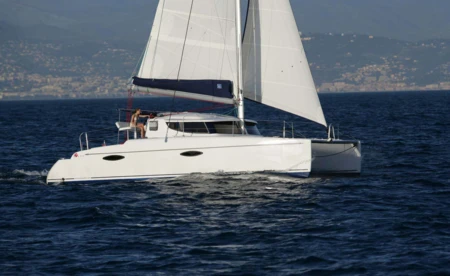
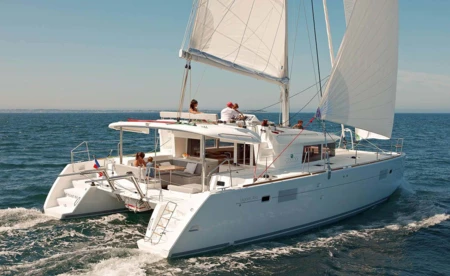
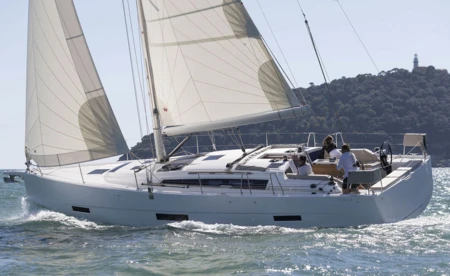
The types of sailboats to rent in the Grenadines
Depending on your budget and your sailing plans, several types of sailboats are available to you:
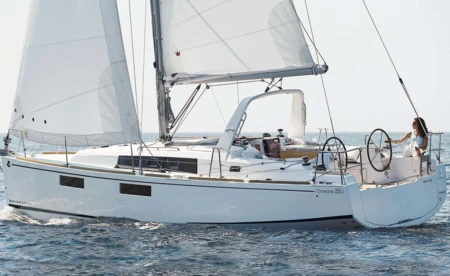
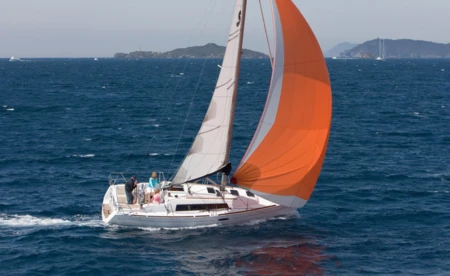
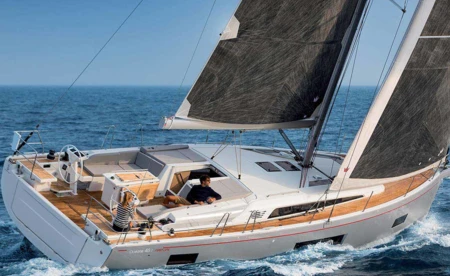
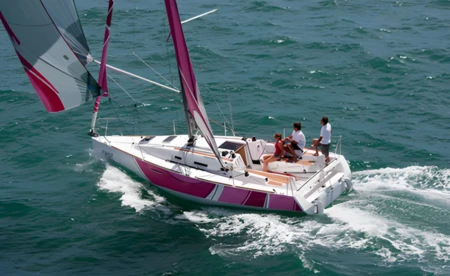
Monohull sailboat rental: this is the most affordable option and the one best suited to experienced sailors! The size of this type of sailboat will make it easier for you to access the coves and anchorages of the small islands of the Grenadines. The sailing feel is also specific to the monohull with its heel, particularly enjoyable in the Caribbean trade winds.
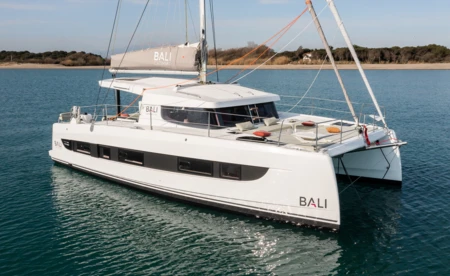
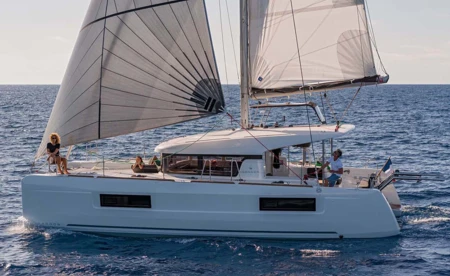
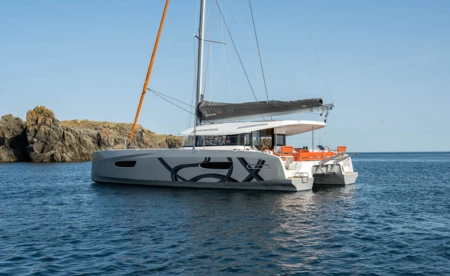
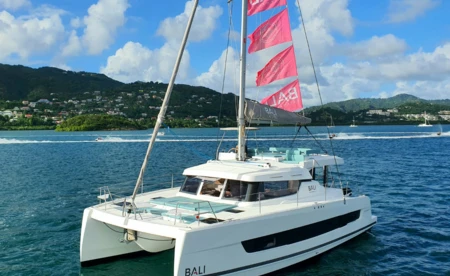
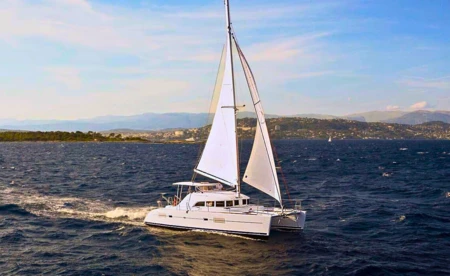
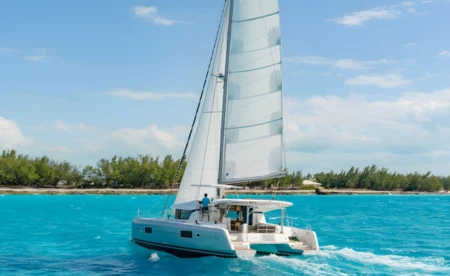
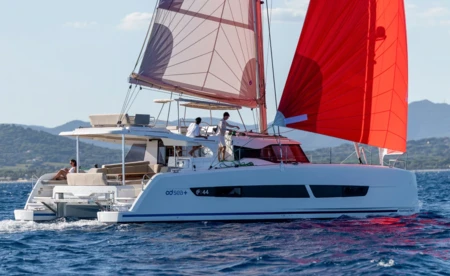
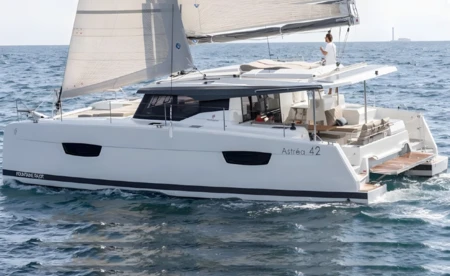
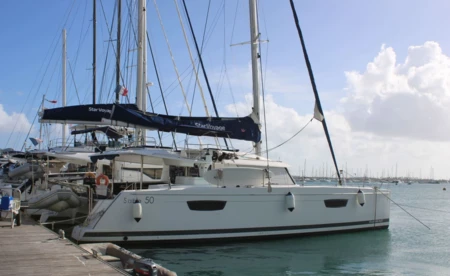
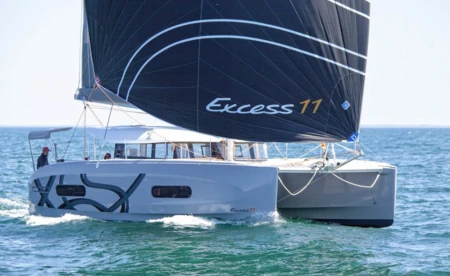
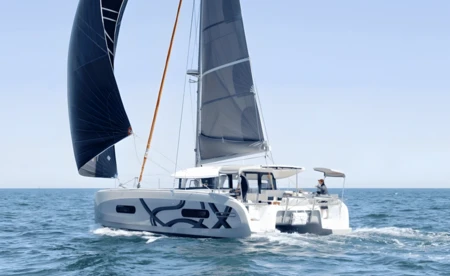
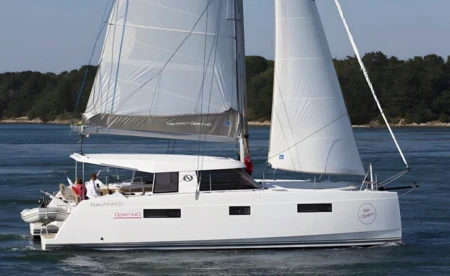
Catamaran rental: for those looking for comfort and space. The catamaran offers greater stability as well as more living space on board. It is the ideal option if your budget allows and if you wish to spend relaxing vacations with family or friends, with the possibility of anchoring as close as possible to the beaches thanks to its shallow draft.
The services offered for your sailboat rental in the Grenadines:
Bareboat sailboat rental: if a member of your crew has sailing experience, they will be able to handle the sailboat. The boat will be entirely private and you will be able to enjoy your cruise in the Grenadines with family or friends.
Sailboat rental with skipper: this is the ideal option if no one can skipper the sailboat or if you wish to enjoy a relaxing vacation. The professional skipper will take care of handling the sailboat and you will benefit from their knowledge of the area to take you to the best anchorages, particularly in the Tobago Cays, and to introduce you to the diving spots and the best local addresses.
Crewed sailboat rental: this type of service is included on luxury sailboats over 65 feet. It is optional for catamaran rental in the Grenadines between 33 and 65 feet. A crew is generally made up of a captain, a cook, and a hostess. The crew will look after your every need and make sure you enjoy an unforgettable cruise!
If you prefer to board without privately chartering a whole boat, you can also check out our cabin cruise offer in the Grenadines.
How much does a sailboat rental in the Grenadines cost?
The table below gives a rough estimate of the average prices for a one-week rental in the Grenadines. These prices may vary based on the season, availability, model, and the age of the sailboat…
| Type of sailboat | High season | Mid-season | Low season |
| Monohull (2 cabins) | $3,240 | $2,050 | $1,730 |
| Monohull (3 cabins) | $3,780 | $3,350 | $2,480 |
| Monohull (4 cabins) | $4,320 | $4,100 | $3,020 |
| Monohull (5 cabins and more) | $6,160 | $4,750 | $3,460 |
| Catamaran (3 cabins) | $4,430 | $2,920 | $4,320 |
| Catamaran (4 cabins) | $5,400 | $5,080 | $4,860 |
| Catamaran (5 cabins and more) | $6,050 | $4,430 | $5,400 |
The price includes: the sailboat rental and the main onboard equipment (sails, dishware, wifi, dinghy, bed linens, and outboard engine).
The price does not include: insurance, port and mooring fees, skipper, hostess, cleaning which is often included in a mandatory pack, extras (kayak, paddle SUP…), provisioning, as well as taxes and entry fees for the different countries crossed (Saint Vincent and the Grenadines, Grenada).
We recommend taking out our cancellation insurance for your sailboat rental in the Grenadines. It will cover all members of the crew, whereas individual cancellation insurance or that included with your credit card will only cover the cardholder.
We also encourage our customers to take out security deposit insurance. When sailing, damage can happen even to the best sailors. This insurance will allow you to recover a significant part of your deposit in the event of damage linked to the sailing.
Where to sail in the Grenadines?
The Grenadines archipelago is made up of around thirty islands and islets, shared between Saint Vincent and the Grenadines to the north and Grenada to the south.
Most cruises start from Martinique, and more specifically from Le Marin, the main nautical base in the Caribbean, where you will most likely start your Grenadines sailing itinerary. It takes about two days of sailing from there to reach Bequia and enter the archipelago. The main areas and stops accessible by sailboat are:
- Bequia: gateway to the Grenadines from Saint Vincent, this island retains an authentic atmosphere with its Admiralty Bay village, its boat model workshops, and its unspoiled beaches. It is an essential stop for a first night at anchor. It is a popular starting point for a Saint Vincent yacht charter and an essential stop for a first night at anchor.
Mustique: a private island known for its celebrity villas, Mustique offers a quiet anchorage at Britannia Bay, white sandy beaches, and a very exclusive atmosphere. The stop is brief but memorable. - Canouan and Mayreau: Canouan appeals for its long deserted beaches and its turquoise lagoon, while Mayreau, the smallest inhabited island of the Grenadines, offers an idyllic anchorage at Salt Whistle Bay, between coconut palms and transparent waters.
- The Tobago Cays: a true jewel of the archipelago, this marine park made up of five uninhabited islets protected by a coral reef is the iconic spot of the Grenadines. Anchoring among turtles, exceptional snorkeling, and lobster barbecues on the beach: the must-do stop of any cruise in the area.
- Union Island and Palm Island: Union Island, with its airport and its port of Clifton, is often used as a transit and supply point. Palm Island, right next to it, offers a peaceful anchorage and crystal-clear waters.
- Petite Martinique and Carriacou: on the southern border, these two islands belong to Grenada. They make it possible to extend the cruise southward in a preserved Creole atmosphere, with authentic anchorages at Tyrrel Bay or Sandy Island.
- Grenada: starting or arrival point to the south of the archipelago, Grenada offers beautiful anchorages at Saint George's, Prickly Bay, or Calvigny Island, as well as a lush mountainous island fragrant with nutmeg and cinnamon.
When to sail in the Grenadines?
Unlike the Mediterranean, the tropical climate of the Caribbean allows you to sail in the Grenadines Islands year-round, with temperatures between 77°F and 86°F. The high season runs from December to April, during the dry season, when the trade winds blow regularly and the sky is clear.
The rainy season runs from June to November, with a peak of cyclone risk between August and October. Many charter companies even suspend their rentals during this period or adjust their prices downward. May and November offer a good compromise between pleasant weather and reduced crowds.
Here is an average of the temperatures recorded in recent years in the Grenadines:
| Temperatures | Jan | Feb | Mar | Apr | May | Jun | Jul | Aug | Sep | Oct | Nov | Dec |
| Air min (°F) | 75° | 75° | 77° | 77° | 79° | 79° | 79° | 79° | 79° | 79° | 77° | 77° |
| Air max (°F) | 84° | 84° | 86° | 86° | 88° | 88° | 88° | 90° | 90° | 88° | 86° | 84° |
| Sea water (°F) | 81° | 81° | 81° | 82° | 82° | 82° | 84° | 84° | 84° | 84° | 82° | 82° |
Sailing conditions in the Grenadines
Sailing in the Grenadines is renowned as one of the finest in the world. The trade winds blow regularly from east to northeast between 15 and 25 knots, offering ideal conditions for sailing mainly downwind or on a broad reach between the islands.
The distances between stops are short (generally between 5 and 25 nautical miles), which allows you to sail in the morning and enjoy the anchorages in the afternoon. The swell can be more marked in the inter-island channels, particularly between Bequia and Canouan, where the trade-wind sea forms freely.
Sailing is mainly done by sight, as the islands are visible from one to the other. The clarity of the waters and the accuracy of modern charts greatly facilitate the approach to anchorages and coral reefs. The Tobago Cays, in particular, require careful reading of the seabed.
The documents required to rent a bareboat sailboat in the Grenadines
To rent a bareboat sailboat in the Grenadines, you will need a coastal boating license (or international equivalent) as well as significant sailing experience, particularly on the open sea. Charter companies usually ask for a sailing résumé detailing your most recent trips. A VHF certificate may also be required. For larger units (catamarans over 45 feet or monohulls over 62 feet), an offshore skipper's license or equivalent is required.
Useful information for your sailboat rental in the Grenadines
What language is spoken in the Grenadines?
The official language is English, both in Saint Vincent and the Grenadines and in Grenada. A local English-based Creole is also spoken by the inhabitants. In marinas, restaurants, and tourist shops, English is the usual language of exchange. French can sometimes be understood, particularly with French-speaking crews, but it is recommended to have some basic English.
What currency is used in the Grenadines?
The official currency is the Eastern Caribbean dollar (XCD or EC$), used both in Saint Vincent and the Grenadines and in Grenada. The US dollar (USD) is also widely accepted in marinas, restaurants, and tourist shops. Credit cards are accepted in most establishments, but it is recommended to have some cash for small anchorages, boat boys, and local markets.
How to get to the Grenadines?
Several airports allow you to reach the sailing area. Argyle International Airport in Saint Vincent (SVD) is the most direct entry point for the northern Grenadines. Maurice Bishop Airport in Grenada (GND) serves the south of the archipelago. From the US, flights are generally operated with a connection via Miami, New York, or San Juan (Puerto Rico), or via Fort-de-France (Martinique) and Pointe-à-Pitre (Guadeloupe), followed by an inter-island flight or a charter departure from Martinique. Union Island has a small airport that is useful for regional connections.
How to finalize the booking of my boat in the Grenadines?
Once we receive your rental inquiry, an advisor will contact you by phone to understand your sailing plans. They will then send you sailboat proposals by email. Once the sailboat has been found, you can pay a deposit in your customer area to validate the rental and secure the sailboat.
What about the formalities between countries?
The Grenadines are shared between two independent States: Saint Vincent and the Grenadines to the north and Grenada to the south. Any cruise that crosses this border (for example between Union Island and Carriacou) requires exit and entry formalities with the customs and immigration authorities, as well as payment of entry fees and cruising taxes. These formalities are generally handled at Union Island, Carriacou, or Clifton. Your skipper or your starting base will assist you with these procedures.
Good to know
| Number of boats available | 455 |
|---|---|
| Types of service | Skipper, Hostess, Chef (meals not included), Sailor |
| Average price per week | $14,912 |
| Minimum weekly price | $1,414 |
| Maximum price per week | $129,830 |