











Why rent a boat in Tuscany?
Stretching between Liguria and Lazio, the Tuscan coast offers remarkably varied sailing, from the beaches of Versilia to the granite coves of Elba, the protected islets of the archipelago, and the pine forests of the Maremma. A Tuscany boat rental lets you combine swim stops, evenings in charming harbors, and day trips to Pisa, Lucca, Florence, or Siena. Distances between the Tuscan islands are short, so the region works just as well for a first sailing vacation as for more experienced crews.
Which boat is right for sailing in Tuscany?
Your choice mostly comes down to the size of your group, your budget, and the pace you want to sail at:
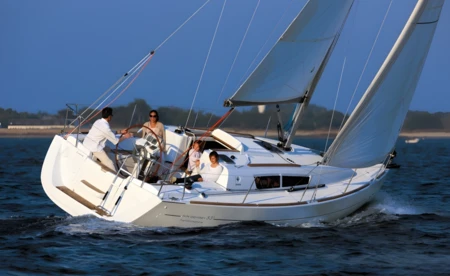
- Sailboat charter in Tuscany: a monohull is still the most budget-friendly option. It sails nicely in the steady Tyrrhenian breezes and suits crews who love to take the helm and trim the sails.
- Catamaran charter in Tuscany: more stable and roomy, a catamaran is a favorite with families and groups of friends. Its shallow draft lets you anchor close to the beaches of Elba or Giglio.
Boat rental options in Tuscany
Filovent offers several ways to set sail from Tuscany's ports:
- Bareboat charter: a member of your group with the required certifications takes charge of the boat. You set your own itinerary and have the entire yacht to yourselves.
- Captained charter: a professional captain handles navigation and docking. They know which anchorages are sheltered in the day's wind and can recommend the best places to go ashore.
- Crewed charter: usually offered on high-end yachts, this option includes a captain and, depending on the boat, a chef and a host. For this kind of trip, check out our yacht charter in Italy.
- Cabin charter: you book a cabin on a boat shared with other travelers, and the crew takes care of sailing, meals, and service. It's a great option for couples or solo travelers.
How much does a boat rental in Tuscany cost?
The table below shows an estimated budget for a one-week bareboat charter. Rates vary depending on the season, the age and model of the boat, and how far in advance you book.
| Boat type | Peak season (July and August) | Shoulder season (May, June, and September) | Low season (April and October) |
|---|---|---|---|
| 2-cabin monohull | $2,900 | $2,100 | $1,400 |
| 3-cabin monohull | $4,400 | $3,100 | $2,100 |
| 4-cabin monohull | $5,500 | $3,900 | $2,600 |
| 38 to 40 ft catamaran | $9,200 | $5,700 | $3,400 |
| 40 to 50 ft catamaran | $13,800 | $8,000 | $4,600 |
What's included: the boat and its rigging, the dinghy with outboard motor, dishes, bed linens, and all required safety equipment.
What's not included: insurance, marina fees and paid mooring balls, fuel, a captain or host if you want one, the end-of-charter fee (often mandatory), optional extras like a paddleboard, and provisioning.
For a crewed yacht, pricing is customized. Lina, our luxury yacht specialist, will send you availability and the best current deals.
We recommend purchasing our trip cancellation insurance, which covers everyone on the crew list, unlike credit card coverage that only protects the cardholder. A damage deposit waiver is also a smart choice: it greatly reduces the amount held from your security deposit if the boat is damaged during your trip.
Where to sail in Tuscany
The Tuscan coastline breaks down into three sailing areas, each with its own vibe:
- The northern coast and Versilia: between Viareggio and Livorno, the shoreline is lined with long sandy beaches and beach clubs. It's the ideal starting point if you want to pair your cruise with a visit to Pisa or Lucca, or sail out to Capraia or Gorgona. Farther south, between Livorno and Piombino, the Etruscan Coast mixes pine forests, small coves, and the Gulf of Baratti, dotted with ancient ruins.
- The Tuscan Archipelago and Elba: the heart of sailing in the region. Elba, the largest island in the archipelago, has plenty of ports of call, including Portoferraio, Porto Azzurro, and Marciana Marina. With a boat rental on Elba, you can circle the island in a few days, hopping from one anchorage to the next. Volcanic Capraia stands out for its crystal-clear water. The entire archipelago is part of the Tuscan Archipelago National Park, where access to some islands, such as Montecristo and Pianosa, is tightly controlled.
- The Maremma and Monte Argentario: to the south, the marinas of Punta Ala, Scarlino, and Cala Galera make great bases for exploring Giglio and Giannutri. The Argentario peninsula, home to Porto Santo Stefano and Porto Ercole, offers countless anchorages at the foot of its cliffs. It's also the closest starting point for a boat rental to Giglio Island, about ten nautical miles away.
The whole area is part of the Pelagos Sanctuary, a marine protected area for whales and dolphins, so you have a good chance of seeing dolphins while under sail.
Sample 7-day sailing itinerary in Tuscany
Starting from Punta Ala or Scarlino, this itinerary covers the must-sees of the archipelago with sailing legs of just a few hours:
- Days 1 and 2: sail across to Elba, then stop in Portoferraio to explore the historic center and Napoleon's residence.
- Day 3: head to Capraia, perfect for swimming and snorkeling in crystal-clear water.
- Day 4: return to Elba's west coast and spend the night in Marciana Marina or at anchor in a sheltered bay. It's a great stop for hiking on Elba to the top of Monte Capanne.
- Days 5 and 6: head south to Giglio, where the hilltop village of Giglio Castello is worth the climb, with a side trip to Giannutri if the weather cooperates.
- Day 7: cruise back along the Maremma coast to the marina.
When is the best time to sail in Tuscany?
The sailing season runs from April through October. Spring and early fall mean less crowded harbors and lower rates, while summer brings warm water and very stable weather.
| Period | Air | Water | Good to know |
|---|---|---|---|
| April and May | 48 to 72 °F | 59 to 64 °F | Quiet anchorages, low rates |
| June | 63 to 79 °F | 72 °F | Summer weather, moderate crowds |
| July and August | 68 to 86 °F | 77 to 79 °F | Reserve marina slips early |
| September | 63 to 79 °F | 75 °F | Best time for the islands |
| October | 55 to 70 °F | 70 °F | Strong winds more common |
Sailing conditions in Tuscany
In summer, a thermal sea breeze sets the pace: it builds in the early afternoon and typically blows 10 to 15 knots. The Mistral (maestrale), from the northwest, can pick up for several days and create short, choppy seas between Elba and Capraia. The Libeccio, a southwesterly wind, is the one local sailors dread most, since it makes some exposed shorelines uncomfortable. The Sirocco brings warm, humid air up from the southeast.
Passages between the mainland and the islands rarely take more than a few hours. In the national park's protected zones, anchoring may be restricted to protect the Posidonia seagrass beds, so check the rules before you drop anchor and use mooring balls whenever they're available.
Certifications required for a bareboat charter in Tuscany
For a bareboat charter, the skipper must hold a recognized sailing certification, such as ASA 104 Bareboat Cruising, its US Sailing equivalent, or an ICC. Most charter companies also require a VHF radio certificate, such as the SRC. If you plan to sail farther offshore, especially to cross over to Corsica, a more advanced certification like ASA 106 Advanced Coastal Cruising may be required. Your travel advisor will confirm with you which documents the charter company needs for the boat you choose.
Travel tips for your Tuscany boat rental
What language is spoken in Tuscany?
The official language is Italian. English is widely understood in marinas and tourist areas.
What currency is used in Italy?
Italy uses the euro (€), so plan to exchange some dollars or withdraw cash on arrival. Credit cards are widely accepted in marinas and towns.
How do I get to Tuscany?
Rome Fiumicino (FCO) has nonstop flights from several major US cities and is often the closest airport for departures from the Argentario. For bases in the north and center of the coast, Pisa (PSA) and Florence (FLR) are easy to reach with a connection through a European hub, or by train from Rome. Elba is about an hour by ferry from Piombino.
How do I book my boat in Tuscany?
Once we receive your request, a Filovent advisor will call you to go over your plans: dates, group size, sailing experience, and budget. They'll then email you a selection of boats. Once you've made your choice, a deposit paid through your customer account confirms your booking.
Can you sail from Tuscany to Corsica?
Yes. Corsica is about 30 nautical miles from Elba and even closer to Capraia. Italy and France are both in the Schengen Area, so there are no border checks on the crossing, but be sure to keep your passport on board. Just confirm that the charter company allows the trip and that the skipper's certifications cover it. If you'd like a sailing vacation focused on the "Isle of Beauty," check out our sailboat charter in Corsica.
What rules apply in the Tuscan Archipelago National Park?
The park is divided into zones with different levels of protection. Access to some islands is strictly limited: Montecristo can only be visited with a permit, while Pianosa and Gorgona have significant restrictions. Fishing and anchoring may be prohibited in certain areas, so check the current regulations before each outing.
Good to know
| Number of boats available | 735 |
|---|---|
| Types of service | Skipper, Hostess, Sailor, Chef (meals not included), Engineer |
| Average price per week | $95,954 |
| Minimum weekly price | $771 |
| Maximum price per week | $110,278,669 |